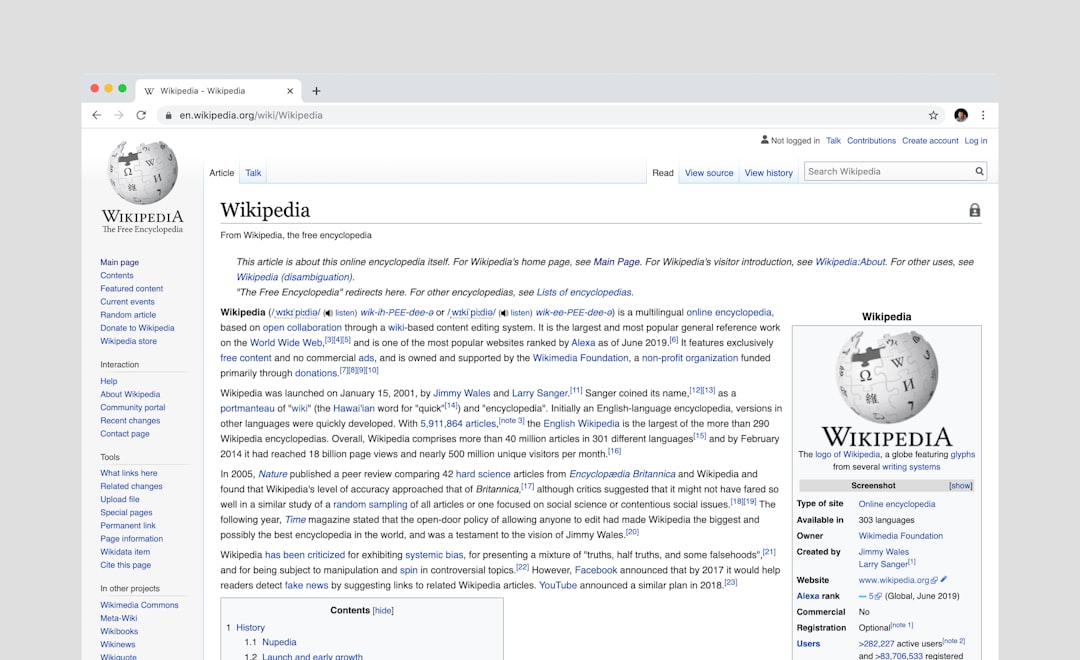
Wikipedia, celebrating its 25th anniversary, has announced significant new partnerships with major artificial intelligence companies, including Amazon, Meta Platforms, and Microsoft. This strategic move by the Wikimedia Foundation aims to monetize the online encyclopedia’s vast repository of knowledge.
These deals provide structured access to Wikipedia content for AI training, a notable evolution from the aggressive data scraping practices common in the generative AI space. The agreements, as reported by Fast Company, signal a pivotal shift for the platform.
For years, AI developers have freely leveraged Wikipedia’s extensive, human-curated database. Now, with these formal arrangements, the Wikimedia Foundation seeks to establish a sustainable model where companies pay for high-volume, high-speed access tailored to their specific needs, rather than relying solely on open scraping.
Monetizing knowledge in the age of generative AI
The rise of large language models (LLMs) has sparked intense debate over data ownership and compensation for content creators. While many publishers engage in legal battles over copyright infringement, as seen in various AI copyright lawsuits, Wikipedia founder Jimmy Wales has publicly welcomed the use of Wikipedia’s content for AI training. This stance positions the foundation uniquely in the evolving digital economy.
The Wikimedia Foundation previously signed Google as one of its first customers in 2022, followed by agreements with smaller AI players like search engine Ecosia last year. These new partnerships with tech giants further solidify a business model designed to support the non-profit’s mission, which centers on providing free knowledge to the world, while acknowledging AI’s reliance on quality data.
This approach offers a potential blueprint for other organizations holding vast repositories of information. It allows for controlled, compensated access, ensuring the longevity and quality of the source material, a critical concern as AI systems become more ubiquitous.
The future of open knowledge and AI
The financial specifics of these new Wikipedia AI deals remain undisclosed. However, the move highlights a growing trend where foundational data sources become valuable commodities in the AI ecosystem. This ensures that the creators and custodians of information are compensated for their contributions, rather than being exploited.
For Wikipedia, a platform built on volunteer contributions and the principle of free knowledge, these agreements represent a pragmatic evolution. They balance the original vision of open access and collaborative editing with the economic realities of maintaining one of the world’s most visited websites in an era dominated by powerful tech platforms.
As generative AI continues to reshape information consumption, the Wikimedia Foundation’s strategy sets a precedent. By actively engaging with AI companies, Wikipedia not only secures its financial future but also influences how ethical data sourcing and compensation models might develop across the digital landscape, ensuring its enduring relevance for another quarter-century.