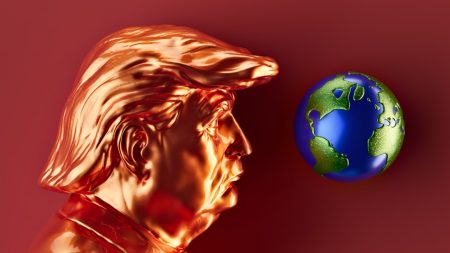
Donald Trump’s aggressive stance on foreign policy, marked by threats of military action and even territorial acquisition, signals a concerning shift towards what critics term Trump’s Robber-Baron Imperialism. This approach, exemplified by proposals to seize Greenland and interventions in Latin America, risks undermining long-standing international norms and alliances.
Such policies, where diplomacy appears to be a vehicle for personal or national enrichment and power projection, challenge the foundational principles of post-World War II global order. The recent capture of Venezuelan President Nicolás Maduro, as reported by Project Syndicate in January 2026, seems to have emboldened this hawkish trajectory.
This aggressive posture extends beyond direct interventions, raising alarm among allies and adversaries alike. The implications for global stability and the United States’ own economic and geopolitical interests are profound, demanding critical examination from both domestic and international observers.
Undermining global stability and alliances
The concept of Trump’s Robber-Baron Imperialism points to a foreign policy that prioritizes raw power and transactional gains over diplomatic cooperation and mutual respect. Threats against sovereign nations, including Cuba, Colombia, and Iran, signal a departure from established international law and norms of non-intervention.
Most notably, the suggestion of forcibly acquiring Greenland, a self-governing territory of Denmark and a key NATO ally, sent shockwaves through the diplomatic community. James C. O’Brien, writing for Project Syndicate, highlighted how normalizing such ‘territorial predation’ jeopardizes the very fabric of alliances crucial to US security and economic interests.
This transactional view of foreign relations can alienate traditional partners, forcing them to reconsider their reliance on US leadership. The long-term damage to trust and collective security frameworks could far outweigh any short-term perceived gains, weakening the US position globally.
Economic and credibility costs
Beyond geopolitical realignments, the economic fallout from an imperialistic foreign policy is significant. Unilateral actions and threats can disrupt global trade, deter foreign investment, and trigger retaliatory measures, directly impacting American businesses and consumers.
The weaponization of economic sanctions and the disregard for international agreements create an unpredictable environment. This uncertainty can lead to increased volatility in financial markets and erode confidence in the stability of global supply chains, affecting various sectors of the US economy.
Furthermore, the erosion of US credibility as a reliable partner and an upholder of international law has profound long-term consequences. When foreign policy is seen as driven by personal enrichment or transient power grabs, the nation’s soft power diminishes, making it harder to rally international support for critical global challenges.
The path of Trump’s Robber-Baron Imperialism, characterized by aggressive posturing and a disregard for established international protocols, presents a clear and present danger to the United States’ standing and prosperity. Addressing these challenges requires a commitment to diplomacy, rule of law, and a recognition that global cooperation remains paramount for sustained security and economic growth in an interconnected world.