New research from Aarhus University and HUN-REN Atomki indicates that the fundamental chemical building blocks for life, specifically protein precursors, can form in the harsh, cold vacuum of interstellar space. This discovery, detailed on ScienceDaily.com, fundamentally challenges long-held beliefs that complex life chemistry requires planetary environments, significantly boosting the probability of widespread life-friendly ingredients across the cosmos.
Scientists long assumed that complex organic molecules, vital for biological processes, emerged much later in cosmic evolution, typically within forming planetary systems. This recent experimental work dramatically shifts that perspective, showing that foundational steps for protein creation are already underway in vast, frigid clouds between stars.
The implications are profound for astrobiology and our understanding of the universe’s habitability. If life’s essential ingredients are widespread, forming in deep space, it suggests that the emergence of life might not be as rare or localized as once thought. This opens new avenues for exploring potential life beyond Earth.
Recreating the cold chemistry of space
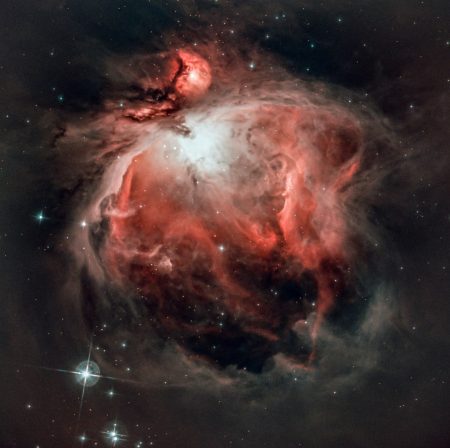
The groundbreaking experiments, led by Sergio Ioppolo and Alfred Thomas Hopkinson at Aarhus University and HUN-REN Atomki, meticulously recreated the extreme conditions of interstellar space. Inside specialized chambers, temperatures plummeted to approximately -260°C, combined with an ultra-high vacuum, mimicking cosmic dust clouds thousands of light-years away.
Researchers introduced simple amino acids, like glycine, into this simulated environment. They then bombarded them with simulated cosmic rays using an ion accelerator. The critical observation was the subsequent reaction: glycine molecules bonded, forming peptides and water, directly demonstrating the formation of protein precursors under these harsh conditions.
Dr. Ioppolo highlighted their focus: “We were interested in discovering if more complex molecules, like peptides, form naturally on the surface of dust grains before those take part in the formation of stars and planets.” This work confirms that complex astrobiology begins earlier than previously imagined.
Widespread implications for life beyond Earth
This discovery dramatically alters our understanding of the universe’s chemical factories. “We used to think that only very simple molecules could be created in these clouds,” explained Dr. Ioppolo. “But we have shown that this is clearly not the case,” suggesting key life-related molecules are far more widespread than once believed.
As interstellar dust clouds collapse, eventually forming stars and planets, these newly synthesized chemical building blocks can be delivered to nascent rocky worlds. “If those planets happen to be in the habitable zone, then there is a real probability that life might emerge,” Dr. Ioppolo posited, emphasizing the enhanced odds for life’s chemistry in space.
The chemical reaction linking amino acids into peptides follows universal rules, making this process potentially ubiquitous. This insight from Aarhus University strengthens the hypothesis that the basic ingredients for life are not unique to Earth’s early environment but are a common feature of the cosmos, ready to seed potential life, as explored in broader discussions on the interstellar medium.
While the exact origins of life remain a profound mystery, this research provides a crucial piece of the puzzle. It shifts the timeline for complex organic chemistry, demonstrating that the initial steps toward protein formation occur in the cold, dark recesses of space. Future studies will likely delve deeper into the full spectrum of molecules forming in these cosmic nurseries, refining our understanding of universal habitability.