NASA astronaut Suni Williams retires after 27 years, concluding a stellar career marked by 608 days in orbit and nine record-setting spacewalks. Her departure, effective December 27, 2025, signifies the end of an era for a true pioneer in human spaceflight.
Williams’ career helped bridge the gap between the Space Shuttle era and today’s commercial and deep-space missions. She commanded the International Space Station twice and played a pivotal role in shaping modern space exploration, setting benchmarks for future endeavors.
Her contributions have not only advanced science and technology but also laid crucial groundwork for upcoming Artemis missions aimed at returning humanity to the Moon and eventually venturing to Mars, solidifying her lasting impact on space exploration.
A career of endurance and groundbreaking firsts
Suni Williams has left an indelible mark on human spaceflight through her extraordinary achievements. She accumulated a total of 608 days in space, placing her second among all NASA astronauts for cumulative time off Earth. This remarkable endurance underscores her dedication to exploration.
Her record for spacewalks is equally impressive. Williams completed nine spacewalks, totaling 62 hours and 6 minutes outside the space station. This cumulative time stands as the highest ever achieved by a woman and the fourth-highest overall, a testament to her skill and resilience.
Beyond these records, Williams also made history as the first person to run a marathon while in space, demonstrating her unwavering spirit. According to a report by ScienceDaily, drawing from NASA, her career is defined by leadership and innovation.
NASA Administrator Jared Isaacman commended her influence, stating, “Suni Williams has been a trailblazer in human spaceflight, shaping the future of exploration through her leadership aboard the space station and paving the way for commercial missions to low Earth orbit.”
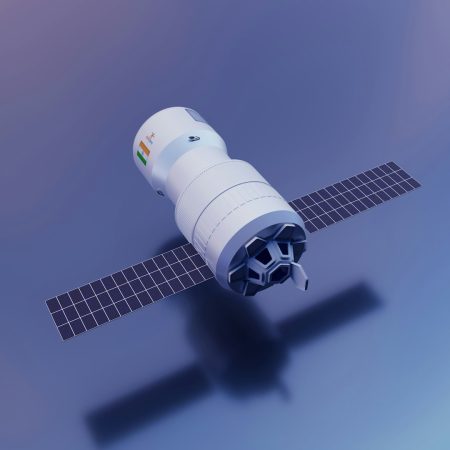
Her missions included her first trip aboard space shuttle Discovery in December 2006, serving as a flight engineer for Expeditions 14/15. She later commanded Expedition 33 in 2012. Her most recent mission began in June 2024 with Boeing’s Starliner spacecraft, where she again took command during Expedition 72.
Bridging eras: From shuttle to Starliner and beyond
Williams’ career trajectory uniquely spans significant periods in human spaceflight, from the Space Shuttle program to the advent of commercial crew vehicles like Boeing’s Starliner. Her direct involvement in these transitions was critical for advancing NASA’s capabilities.
Her leadership extended beyond active missions. Williams held various important roles, including participating in NEEMO (NASA Extreme Environments Mission Operations) in 2002, serving as deputy chief of NASA’s Astronaut Office, and later becoming director of Operations in Star City, Russia.
More recently, she was instrumental in establishing a helicopter training platform, designed to prepare astronauts for the complex lunar landings anticipated with the Artemis program. This demonstrates her foresight and commitment to future exploration efforts.
Vanessa Wyche, director of NASA’s Johnson Space Center, highlighted Williams’ impact: “From her indelible contributions and achievements to the space station, to her groundbreaking test flight role during the Boeing Starliner mission, her exceptional dedication to the mission will inspire the future generations of explorers.”
Williams’ retirement marks the end of an active flight career, but her legacy will undoubtedly continue to inspire new generations of astronauts and engineers. Her pioneering efforts in orbit and her leadership on Earth have set a high bar for future human endeavors into the solar system, ensuring her place in the annals of space exploration.