A new study from the University of Cambridge has positioned humans in an unexpected “elite league of monogamy,” ranking our species closer to animals like beavers and meerkats than to more promiscuous primates such as chimpanzees. This groundbreaking research, detailed on ScienceDaily.com, suggests that long-term pair bonding is remarkably common in humans, even across cultures that permit polygamy.
For centuries, the question of whether humans are “naturally” monogamous has fueled academic and public debate. While anthropological observations reveal vast diversity in human marriage systems, including widespread polygyny in pre-industrial societies, the genetic evidence now offers a nuanced perspective on the underlying patterns of human pairing.
This evolutionary shift towards stable pair bonding in humans is not merely a cultural phenomenon; it represents a significant departure from most other mammals and may have been a critical factor in fostering the cooperation that underpinned human social and global success.
Measuring monogamy through sibling ratios
The innovative methodology behind this ranking was developed by Dr. Mark Dyble, an evolutionary anthropologist at University of Cambridge’s Department of Archaeology. Instead of relying solely on traditional observations or fossil records, Dr. Dyble examined the ratio of full siblings to half-siblings across numerous mammal species and human populations spanning millennia.
This “sibling balance” acts as a powerful proxy for mating exclusivity. Societies or species with higher rates of monogamy tend to produce more children sharing both parents, whereas populations with more polygamous or promiscuous systems generate a greater proportion of half-siblings.
Dr. Dyble’s computational model links genetic data from recent studies to known reproductive strategies, yielding an estimated monogamy rating that can be compared across species and cultures.
According to the study, humans exhibit an overall full sibling rate of 66%. This places our species seventh out of eleven studied, firmly within the group considered socially monogamous, characterized by a preference for long-term pair bonds. This finding strongly supports the view that human monogamy is a dominant mating pattern, even amidst cultural variations.
How humans compare to other mammals
The comparative data reveals fascinating insights into human uniqueness. Beavers, for instance, show a 73% rate of full siblings, slightly higher than humans, while meerkats come in at 60%. Both demonstrate a strong tendency towards monogamy, albeit with some flexibility in their social structures.
The white-handed gibbon, with a 63.5% monogamy rate, is another highly ranked “monotocous” species, meaning it typically produces a single offspring per pregnancy rather than litters.
Notably, the moustached tamarin, a small Amazonian monkey, stands out as the only non-human primate in the top monogamous group, often giving birth to twins or triplets. This diversity underscores that while human monogamy is significant, it exists on a spectrum, with various evolutionary paths leading to similar outcomes.
Dr. Dyble emphasizes that “There is a premier league of monogamy, in which humans sit comfortably, while the vast majority of other mammals take a far more promiscuous approach to mating.” This research, published in Proceedings of the Royal Society: Biological Sciences, offers a robust, long-term view of human mating systems.
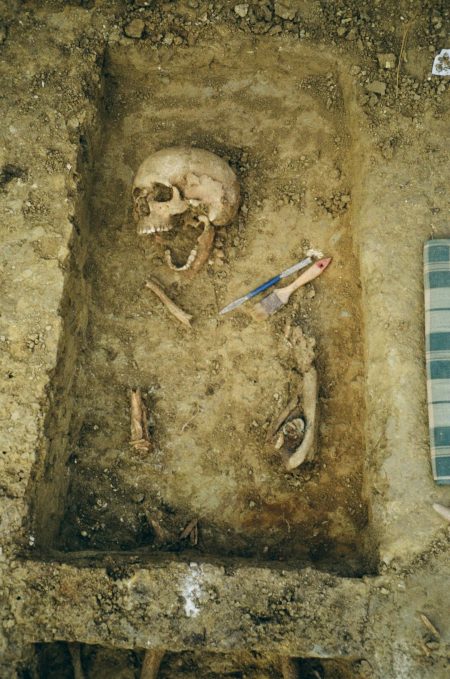
It leverages genetic evidence from archaeological sites, including Bronze Age burial grounds and Neolithic settlements, alongside ethnographic data from 94 diverse human societies, providing comprehensive insights into human pair bonding.
This Cambridge study provides compelling genetic evidence that reshapes our understanding of human mating behaviors, suggesting a deep-seated evolutionary preference for monogamy that transcends cultural variations.
The insights gained from comparing sibling ratios offer a novel lens through which to view human social evolution, highlighting the potential role of pair bonding in our species’ remarkable success. Future research could further explore the genetic underpinnings and environmental triggers that reinforce this unique human trait across different ecological contexts.