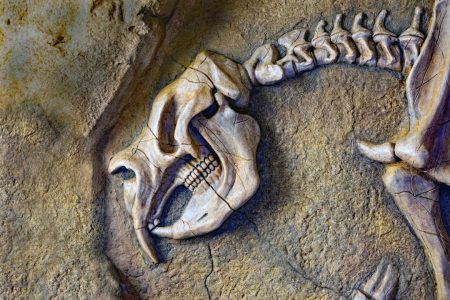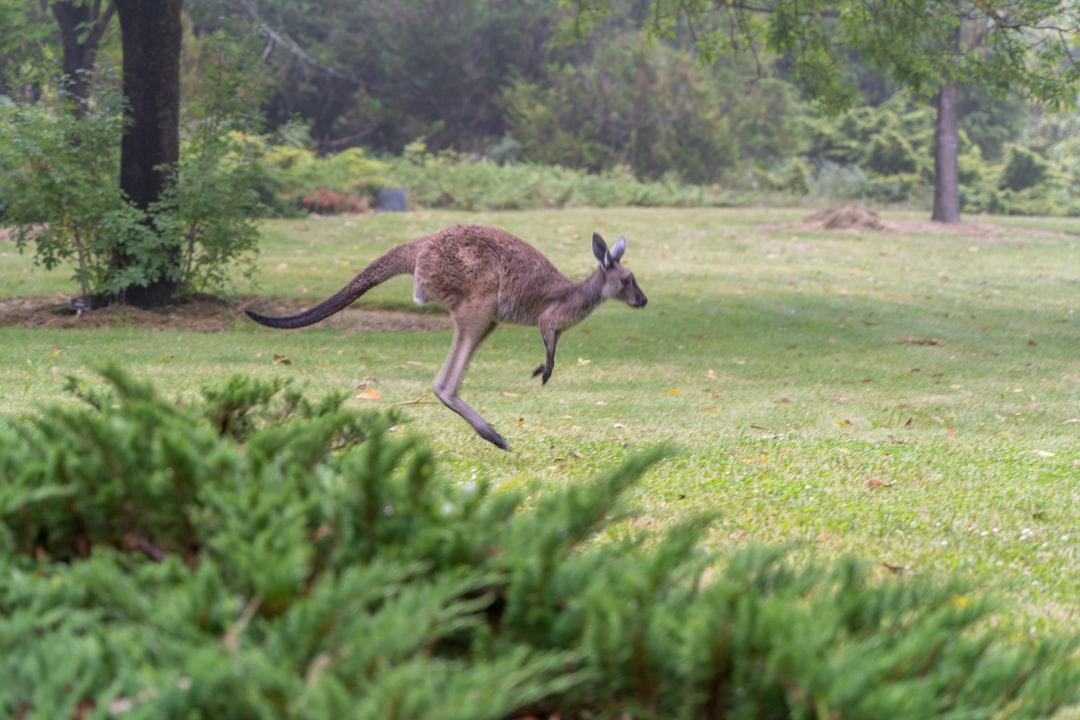
New research challenges long-held beliefs about the locomotion of ancient giant kangaroos, suggesting these massive marsupials, weighing up to 250 kilograms, were capable of hopping in short bursts. This finding, published in Scientific Reports, overturns previous assumptions that their immense size restricted them to a slower, more grounded movement.
For years, paleontologists debated the mobility of these prehistoric giants, which roamed Earth during the Pleistocene epoch, approximately 2.6 million to 11,700 years ago. Earlier studies proposed that kangaroos exceeding 160 kilograms were simply too heavy for their ankles to withstand the forces of hopping, limiting their movement capabilities.
However, the latest analysis by Megan Jones and her colleagues provides compelling biomechanical evidence to the contrary. Their work offers a fresh perspective on how these formidable creatures navigated their ancient landscapes, potentially using their hopping ability as a crucial survival mechanism against predators.
Revisiting the biomechanics of ancient giant kangaroos
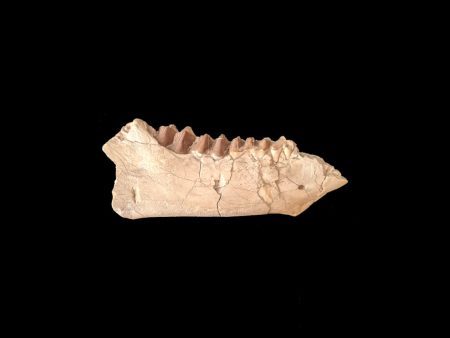
To understand the locomotion of these extinct giants, the research team conducted an extensive examination of hindlimbs. They analyzed 94 modern kangaroo and wallaby specimens, alongside 40 fossil specimens representing 63 different species, including members of the extinct giant kangaroo group Protemnodon.
A key focus was the fourth metatarsal, an elongated foot bone critical for hopping in modern kangaroos. By measuring its length and diameter, the researchers assessed the bone’s capacity to endure the significant forces generated during a hop. Their findings indicate that the metatarsals of all giant kangaroo species studied were sufficiently strong to tolerate these physical stresses.
Furthermore, the team compared the heel bones of giant kangaroos with those of living species to estimate the required size of the Achilles tendon. This tendon is vital for absorbing hopping forces. The study concluded that the heel bones were indeed large enough to accommodate the necessary tendon width, reinforcing the idea that ancient giant kangaroos could hop.
Efficiency and survival: Why short bursts mattered
While the biomechanical evidence suggests giant kangaroos were capable of hopping, the researchers emphasize that it was unlikely their primary mode of long-distance travel. Their substantial body mass would have made repeated, prolonged hopping an inefficient use of energy. Instead, the study proposes that these were short, rapid bursts of movement.
This occasional hopping strategy is observed in various smaller animals today, from rodents to marsupials. For ancient giant kangaroos, such bursts would have provided a vital advantage, particularly for evading formidable predators of the Pleistocene era, such as the extinct marsupial lions known as Thylacoleo.
The ability to execute quick escapes through hopping would have significantly enhanced their chances of survival in a challenging prehistoric environment. This new understanding reshapes our view of these magnificent creatures and their adaptations to a world vastly different from our own.
The implications of this research extend beyond mere locomotion, offering deeper insights into the ecological roles and survival strategies of megafauna. Future studies may explore the precise mechanics of these short bursts and their impact on the broader paleontology of marsupials, continuing to refine our understanding of Earth’s ancient inhabitants.