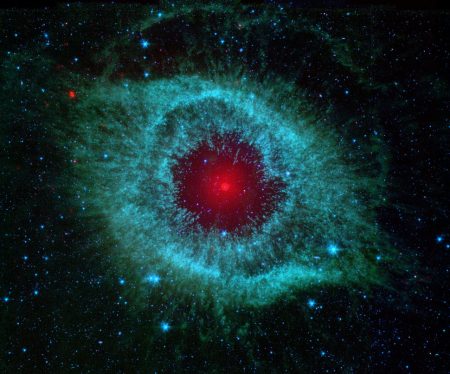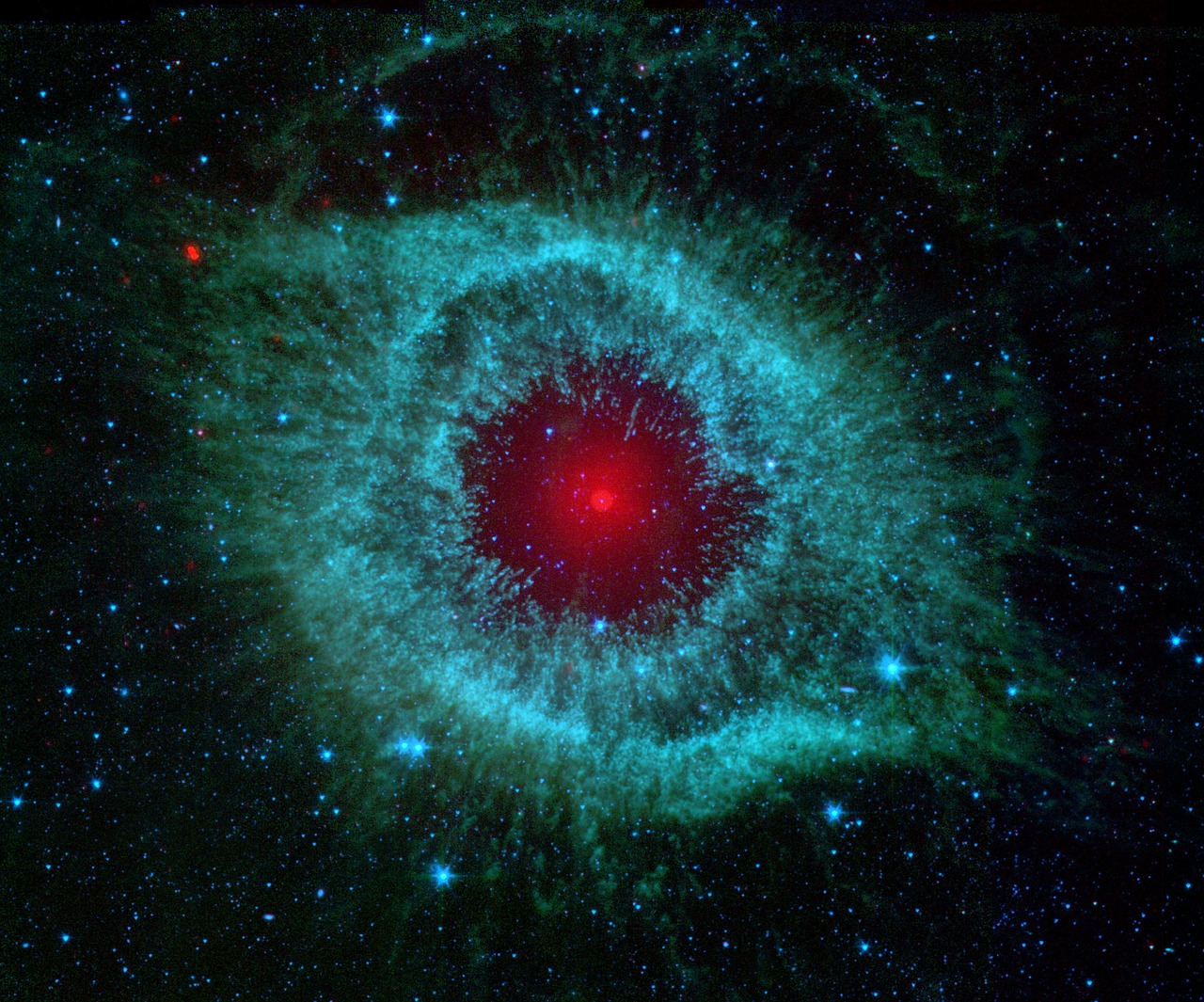
A recent image from the James Webb Space Telescope offers an extraordinary close-up of the Helix Nebula, showcasing the intricate final stages of a dying star. This detailed view, released on January 26, 2026, by ESA/Webb, reveals glowing knots of gas and stellar winds shaping the nebula, providing vital clues about cosmic recycling.
Known as one of the closest planetary nebulae to Earth, the Helix Nebula, located about 650 light-years away in the constellation Aquarius, has long fascinated astronomers. Its distinctive ring-like appearance makes it a prime target for studying stellar evolution, offering a rare opportunity to examine the final stages of a star’s life.
The new Webb Helix Nebula image delivers the most detailed infrared perspective to date. This clarity builds upon decades of observations from both ground and space-based telescopes, providing a profound glimpse into a process our own Sun will undergo billions of years from now.
By observing the star’s outer layers being shed and dispersed into space, scientists gain crucial insights. These stellar remnants eventually contribute to the formation of new stars and planetary systems, highlighting the cycle of cosmic regeneration.
Unpacking the dying star’s dramatic expulsion
Webb’s powerful NIRCam (Near-Infrared Camera) instruments allow scientists to zoom deep into the nebula, revealing structures previously unseen with such clarity. According to a report from ScienceDaily on January 26, 2026, the image highlights dense pillars of gas resembling comets with long, trailing tails.
These “comet-like knots” outline the inner edge of an expanding shell of material. They form as fast-moving, extremely hot winds from the dying star collide with cooler layers of dust and gas released earlier. These violent interactions sculpt the nebula, creating its intricate and textured appearance, a testament to stellar dynamics.
The central white dwarf, though just outside the frame of this specific Webb image, plays a critical role. Its intense radiation energizes the surrounding gas, creating a range of environments. Closest to the core, hot, ionized gas dominates, transitioning to cooler regions rich in molecular hydrogen farther out.
Cosmic colors and the building blocks of life
The colors within the Webb image are not merely aesthetic; they represent crucial scientific data. Blue tones indicate the hottest gas, energized by strong ultraviolet radiation from the white dwarf. Yellow areas signify cooler regions where hydrogen atoms bond to form molecules, a key step in chemical complexity.
Along the outer edges, red hues trace the coldest material, where gas thins out and dust begins to take shape. These regions are particularly significant because they contain the basic materials that can eventually help build new planets in other star systems. It is a vivid illustration of how stellar death fuels cosmic creation.
This process of shedding outer layers and enriching interstellar space with heavier elements is fundamental to astrophysics. It underscores how the death of one star directly contributes to the raw material for future worlds, a concept central to our understanding of stellar evolution and planetary formation.
The latest Webb Helix Nebula image offers more than just a stunning visual; it provides a profound scientific narrative. It vividly demonstrates the cycle of cosmic death and rebirth, showing how the demise of a star like our Sun is not an end, but a transformative event. The detailed observations from Webb continue to refine our models of stellar evolution and the origins of planetary systems, pushing the boundaries of astrophysical understanding.
Future observations with Webb and other advanced telescopes will likely provide even more intricate details. These will help scientists further unravel the complex chemical processes occurring in these stellar nurseries, potentially revealing new insights into how life’s building blocks emerge from the ashes of dying stars.