
The landscape of global business is constantly shifting, but some forecasts for 2026 are particularly audacious, suggesting significant turns in technology, energy, and the labor market. Inspired by the tradition of Byron Wien’s ‘Ten Surprises,’ a recent article on Fast Company outlines eight bold business predictions that challenge conventional wisdom and demand attention from investors and executives alike.
These predictions, while designed to spark discussion rather than guarantee certainty, offer a valuable framework for confronting assumptions about the near future. They highlight potential disruptions and transformations that could redefine market dynamics and operational strategies across various sectors, pushing leaders to consider a broader spectrum of outcomes.
Understanding these potential shifts is crucial for strategic planning, especially as the global economy navigates rapid technological advancement and geopolitical complexities. From the trajectory of tech giants to the fundamental cost of powering our world, the coming year could present a series of unexpected developments.
The future of tech stocks and AI’s complex role
One of the most striking business predictions for 2026 suggests a stall in tech stock performance, despite the ongoing enthusiasm around artificial intelligence. While companies like Nvidia report astounding AI profits and hyperscalers such as Google, Amazon, and Microsoft continue their dominance, the incremental value for AI end-users has not yet broadened significantly. This dynamic implies that the massive investments in AI capabilities are not yet translating into widespread economic uplift, raising questions about current valuations.
Historical tech cycles often include periods of consolidation or plateaus after intense growth, and the current AI investment, largely funded by cash rather than debt, points towards a potential stabilization rather than a dramatic crash, according to Fast Company’s analysis. This perspective encourages a cautious approach to tech portfolios, urging investors to look beyond immediate hype. Meanwhile, the article posits that AI will serve more as an excuse for layoffs than a direct cause in 2026. Businesses might cite AI-driven necessity for restructurings that primarily address overexpansion or evolving practices, using the technology as public cover for strategic shifts. This nuanced view challenges the popular narrative of AI-induced job displacement, suggesting a more complex interplay between technology and workforce management. A recent World Economic Forum report on the future of jobs indicates that while AI will transform roles, its net impact on employment can be positive if managed strategically.
The cybersecurity landscape is also predicted to reach crisis levels. While AI is touted by security firms as an enhancer for defense, enabling the identification of novel attacks, bad actors are simultaneously leveraging AI for more sophisticated exploits. The concern is that not every business or individual possesses cutting-edge protection, making widespread disruption a real possibility. As AI lowers the cost of launching attacks, the frequency and severity of cyber incidents are expected to climb, demanding that organizations prioritize robust cyber defenses. The Cybersecurity & Infrastructure Security Agency (CISA) continuously warns about escalating threats.
Energy costs and other economic shifts
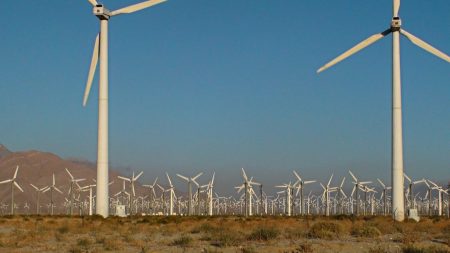
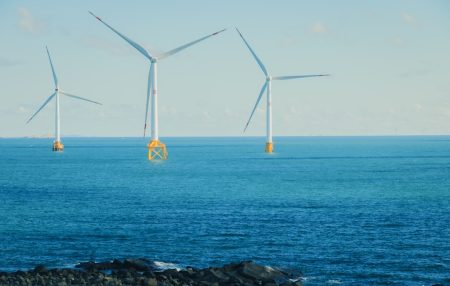
Contrasting the potential tech slowdown, another bold prediction for 2026 is that electricity costs will drop. Despite the significant energy demands of AI data centers, a larger global trend towards electrification, fueled by a decade of renewable energy investments, is gaining momentum. China, in particular, has heavily invested in renewables, contributing to a baseline of energy self-sufficiency in various parts of the developing world. This massive scale of renewable energy deployment is expected to outweigh the localized spikes caused by AI infrastructure, leading to overall cheaper electricity. Data from the International Energy Agency (IEA) consistently highlights the rapid expansion of renewable capacity globally.
These shifts underscore a broader rebalancing of economic forces. The predictions suggest a move away from the singular dominance of big tech in driving market sentiment, towards a more diversified set of factors including energy independence and the strategic, rather than purely generative, application of AI. While the specific mention of the U.S. winning the World Cup might seem out of place in a business forecast, it exemplifies the spirit of bold, unexpected outcomes that could capture public attention and shift narratives in unforeseen ways.
As we look towards 2026, these bold business predictions offer more than just speculative intrigue; they provide a critical lens through which to examine underlying economic currents. Investors and business leaders must consider the potential for tech market consolidation, the strategic implications of AI beyond simple automation, and the transformative power of renewable energy. Preparing for these potential shifts, even those that seem unlikely, can offer a crucial hedge against the inherent uncertainties of a rapidly evolving global economy.