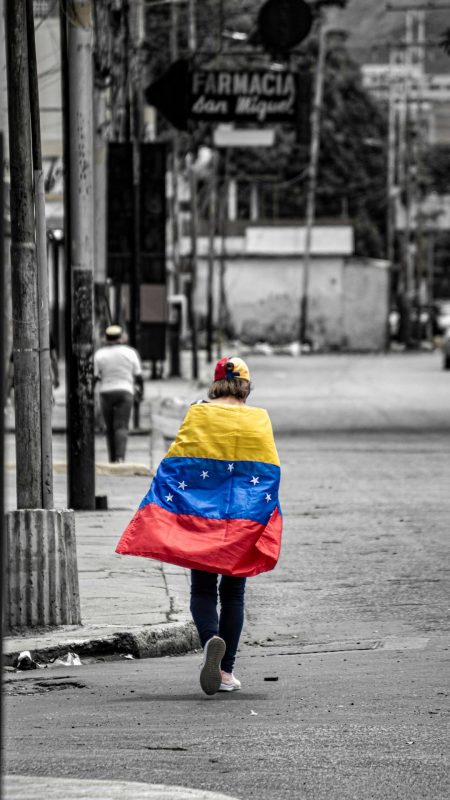
The recent ouster of Nicolás Maduro in Venezuela, following a U.S. government operation that included his capture and subsequent charges of narcoterrorism, starkly revealed the pervasive reach of deepfakes and AI-generated content in moments of intense political upheaval. As facts about the extraordinary events unfolded, the digital landscape was flooded with fabricated narratives, making it challenging to discern truth from sophisticated deception.
This dramatic shift in Venezuela’s leadership, reported by Fast Company in January 2026, created a fertile ground for disinformation campaigns. When the future is uncertain and information fragmented, generative artificial intelligence quickly fills the void, crafting content that reflects desired realities, often without factual basis. From meme-like images to highly convincing videos, AI-generated fabrications quickly became part of the public discourse.
The speed and sophistication of these digital forgeries underscore a critical vulnerability in our information ecosystem. While a significant portion of Venezuelans reportedly celebrated Maduro’s capture, even AI-generated crowds were depicted in widely shared videos, with some instances reportedly misleading prominent figures like X CEO Elon Musk, highlighting the difficulty of visual verification in real-time.
The erosion of trust in a digitally manipulated reality
The incident in Venezuela serves as a potent case study for the escalating challenge of media verification. Deepfake content related to the Venezuelan crisis experienced a notable spike, encompassing a vast spectrum of narratives from nationalist to anti-government, pro-U.S., and pro-unity perspectives. These narratives, often created with advanced image models, now pose an unprecedented threat to public trust and informed decision-making.
Ben Colman, cofounder and CEO of Reality Defender, a firm specializing in tracking deepfakes, highlighted the severity of the situation. According to Colman, the latest generation of image models has become so advanced that even seasoned fact-checkers and media verification experts struggle to manually distinguish genuine content from fakes. He stated, That battle (of manual, visual verification) is pretty much lost,
signaling a critical turning point in the fight against digital deception.
The implications extend beyond individual political events. The ease with which believable, yet fabricated, content can be created and disseminated threatens the integrity of news reporting, public perception, and democratic processes globally. As the lines blur between authentic footage and AI-generated illusions, the onus shifts to developing new verification technologies and fostering a more critical digital literacy among the populace.
Navigating the future of AI-driven disinformation
In response to the growing threat, technology companies and government bodies are attempting to adapt. OpenAI, for instance, has publicly stated its commitment to monitoring how such events unfold across its products and taking action against violations of its usage policies. Similarly, federal outfits like the U.S. State Department’s Global Engagement Center, established to counter disinformation campaigns abroad, are crucial in tracking and mitigating these sophisticated threats.
However, the scale and speed of AI-driven content generation often outpace detection and response efforts. The Venezuelan deepfake proliferation demonstrates that political instability provides an ideal environment for these technologies to flourish, shaping public opinion and potentially influencing outcomes. Building resilience against this new wave of digital manipulation requires a multi-faceted approach, combining technological advancements with robust journalistic practices and enhanced public education.
The events surrounding Nicolás Maduro’s ouster in Venezuela offer a stark preview of an information landscape where distinguishing fact from fiction becomes increasingly arduous. As generative AI tools become more accessible and sophisticated, the pervasiveness of deepfakes will continue to challenge media, governments, and citizens alike, demanding constant vigilance and innovative solutions to safeguard truth in the digital age.