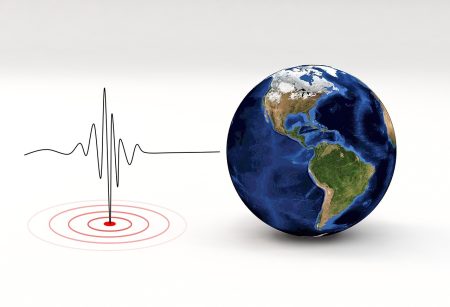
A groundbreaking mathematical approach from the Stevens Institute of Technology could fundamentally reshape the field of earthquake science, allowing for significantly faster seismic simulations and more practical risk assessments. This innovative modeling breakthrough, detailed in a recent report by ScienceDaily.com on January 6, 2026, promises to enhance our understanding of seismic hazards without attempting to predict individual quakes.
While the precise timing and location of earthquakes remain elusive to scientists, the ability to accurately map the Earth’s hidden subsurface layers is crucial for determining how strongly the ground will shake. Earthquakes are a daily occurrence, with the U.S. Geological Survey (USGS) estimating approximately 20,000 worldwide annually, many with devastating consequences.
Their financial impact continues to escalate, particularly as more populations reside in seismically active regions. A 2023 report from USGS and FEMA indicated earthquake damage costs the U.S. an estimated $14.7 billion annually. Improving preparedness through advanced understanding of ground motion is therefore an urgent global priority.
Unlocking subsurface secrets for better earthquake science
Understanding the varied composition beneath our feet is paramount for accurate earthquake risk assessment. Kathrin Smetana, Assistant Professor in the Department of Mathematical Sciences at Stevens, emphasizes that seismic waves behave differently through materials like solid rock compared to sand or clay, directly influencing surface shaking. This variability necessitates precise subsurface imaging.
Scientists traditionally employ Full Waveform Inversion (FWI), a sophisticated seismic imaging technique, to reconstruct these underground structures. FWI involves generating computer-based earthquakes, tracking simulated wave patterns, and comparing them against real seismograms. This iterative process refines a subsurface model until it closely matches actual earthquake measurements, offering a detailed picture of the Earth’s interior.
Smetana explains the practical application: “You compare the data from your computer simulation with actual data that you got from earthquakes. This allows you to find out what the subsurface looks like and what effect an earthquake has on the composition of the subsurface — and that ultimately, helps determine the risk for an earthquake at a certain location.” While effective, this method is computationally intensive, often requiring thousands of simulations with millions of variables, making it prohibitively expensive and time-consuming for ongoing monitoring.
Accelerating seismic simulations: A new mathematical paradigm
To overcome the significant computational bottlenecks of traditional FWI, Professor Smetana collaborated with computational seismologists Rhys Hawkins and Jeannot Trampert from Utrecht University, alongside Matthias Schlottbom and Muhammad Hamza Khalid from the University of Twente. Their joint effort yielded a streamlined mathematical model that drastically speeds up these complex seismic simulations.
This innovative approach accelerates the simulation process by a factor of approximately 1,000. Such a profound increase in efficiency means that detailed subsurface mapping, which previously took hours even on advanced computing clusters for a single simulation, can now be performed with unprecedented speed. This breakthrough could revolutionize how frequently and extensively seismic simulations are run globally, especially in high-risk zones.
The implications for earthquake science are immense. While it does not offer a predictive tool for future quakes, the ability to rapidly assess and update subsurface models allows cities and emergency planners to better understand and prepare for potential ground shaking. This practical advancement in earthquake risk assessment can directly inform building codes, infrastructure development, and evacuation strategies.
The development of this ultra-fast simulation model marks a pivotal moment in our approach to seismic hazards. By transforming complex calculations into manageable processes, researchers can now conduct more frequent and comprehensive subsurface analyses. This mathematical trick, though simple in concept, promises to significantly reduce the financial and human toll of earthquakes by enabling more informed and timely preparedness efforts worldwide.