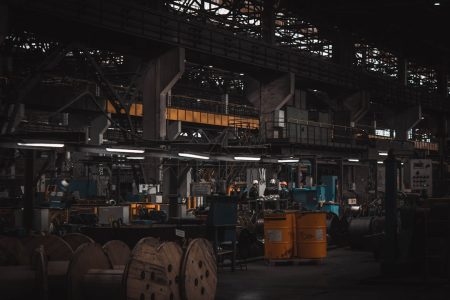

The economic landscape of East Asia faces profound changes as US tariffs and China’s evolving industrial structure intensify pressure on key regional economies. This dynamic is leading to a significant hollowing out of industry, particularly affecting countries like Japan and South Korea, reshaping global value chains.
For decades, East Asian nations thrived on intricate supply networks, often acting as manufacturing hubs for global markets. However, recent policy shifts from the United States, alongside China’s strategic economic transformation, are fundamentally altering these established trade relationships.
This new reality demands a critical examination of how nations once central to global manufacturing are now contending with reduced domestic production and investment. The implications extend beyond immediate economic metrics, touching on long-term industrial resilience and regional stability.
The dual pressure on regional manufacturing
The primary catalyst for this industrial shift stems from a dual pressure point: high and unpredictable US tariffs, coupled with China’s changing economic structure. These external forces compel regional players to re-evaluate their long-standing industrial strategies and supply chain dependencies.
According to a recent commentary on www.project-syndicate.org, published in January 2026, these factors are creating an unprecedented challenge for East Asian economies. The article highlights how Japan and South Korea are under intensifying pressure from these converging trends.
US tariffs, initially aimed at strategic competition, have inadvertently fragmented global supply chains, forcing companies to seek alternatives. Information on current US trade policy can be found on the official USTR website, detailing the complex tariff landscape affecting international trade.
Simultaneously, China’s ‘Made in China 2025’ initiative and its focus on indigenous innovation mean it increasingly produces sophisticated goods previously sourced from its neighbors. This reduces demand for parts and components from countries like Japan and South Korea, as explored in analyses by institutions like CSIS regarding China’s industrial ambitions.
The result is a decline in foreign direct investment into traditional manufacturing sectors in these nations, as multinational corporations redirect capital elsewhere. Domestic industries struggle to compete with China’s growing capabilities and global market access, impacting economic indicators such as those tracked by the OECD for South Korea’s industrial output.
Strategies for resilience and diversification
Faced with these significant headwinds, East Asian nations are exploring new strategies to safeguard their industrial bases. A key approach involves deepening engagement with each other and with other reliable partners beyond traditional alliances, fostering greater regional self-reliance.
This includes fostering stronger intra-regional trade agreements and investment flows, aiming to create more resilient supply chains less susceptible to external geopolitical pressures. Diversification of markets and production bases is becoming a critical watchword for policymakers across the region.
Moreover, there is a renewed emphasis on innovation and moving into higher-value, specialized manufacturing and services. Countries like South Korea are investing heavily in areas such as semiconductors and advanced materials, seeking to maintain a competitive edge in global technological race.
Japan, too, is re-evaluating its industrial policy, promoting investment in green technologies and digital transformation to offset declines in traditional sectors. The IMF’s country reports for Japan often highlight these ongoing economic transformations and policy responses.
These nations recognize that adapting to the shifting global economic order requires agility and strategic foresight, moving beyond the manufacturing models that once defined their success. The future demands a more robust and diversified economic foundation.
The hollowing out of East Asian industry is more than an economic trend; it signals a fundamental restructuring of global production. Japan and South Korea’s ability to navigate this complex landscape will depend on their capacity for innovation, regional cooperation, and strategic diversification of their economies.
Their future industrial strength will likely emerge from a blend of advanced technological expertise and robust, diversified partnerships, rather than a return to past manufacturing paradigms that are now under severe global pressure.