Mesmerizing patterns, long admired for their aesthetic appeal, are now proving to be powerful instruments for solving complex mathematical problems. Recent findings from Freie Universität Berlin reveal how geometric tessellations, beyond mere decoration, provide precise analytical tools, bridging the gap between visual beauty and advanced computation.
This innovative approach, detailed in a study published in Applicable Analysis, transforms the study of planar tiling into a method for tackling challenging mathematical equations. Mathematicians Heinrich Begehr and Dajiang Wang demonstrated that these structures, which cover a surface without gaps or overlaps, can serve as precise problem-solving tools.
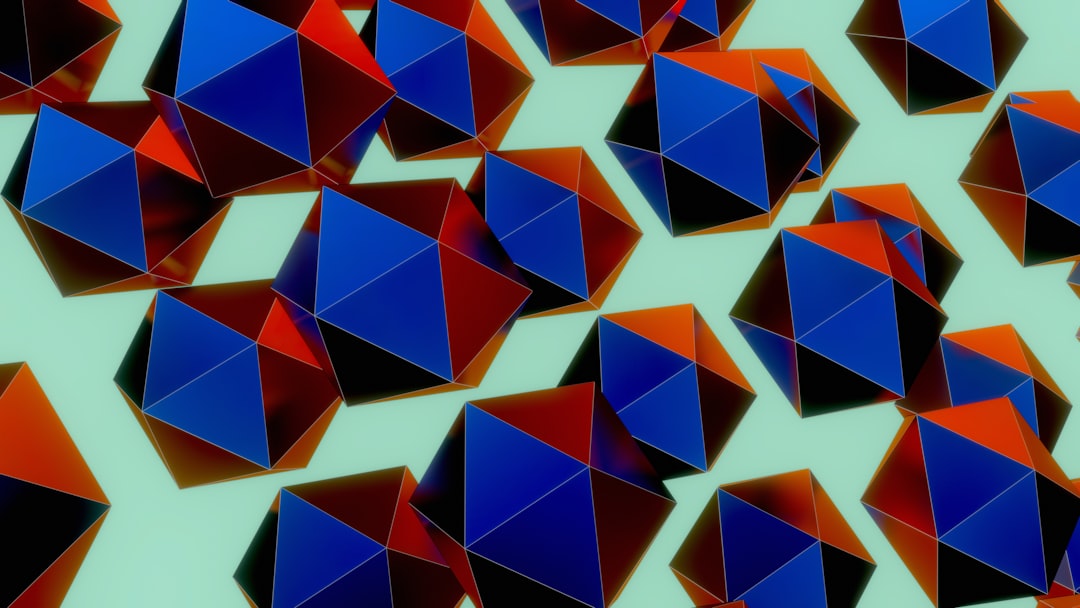
The core of their work, highlighted by ScienceDaily.com on January 7, 2026, centers on the “parqueting-reflection principle.” This method involves repeatedly reflecting geometric shapes across their edges to fill a plane, creating highly ordered and symmetrical patterns, much like the famous artwork of M.C. Escher.
The parqueting-reflection principle: solving boundary problems
Beyond their visual allure, these systematic reflections play a crucial practical role in mathematical analysis. Researchers have shown they can help solve classic boundary value problems, such as the Dirichlet problem or the Neumann problem, which are fundamental in fields like physics and engineering.
Professor Heinrich Begehr emphasizes that “beauty in mathematics is not only an aesthetic notion, but something with structural depth and efficiency.” This method allows for the generation of new tessellations, offering practical ways to represent functions within these tiled regions, with significant implications for mathematical physics.
A key outcome is the ability to derive exact formulas for kernel functions, including the Green, Neumann, and Schwarz kernels. These are vital for solving boundary value problems, thereby linking intricate geometric patterns with rigorous analytical formulas, bridging intuitive visual thinking and mathematical precision.
Beyond flat spaces: hyperbolic geometry and growing applications
The parqueting-reflection principle’s versatility extends beyond familiar flat, or Euclidean, spaces. It also applies to hyperbolic geometries, which are frequently utilized in theoretical physics and modern spacetime models. This expansion significantly broadens the potential scope of its application across scientific disciplines.
Interest in this area has surged over the past decade, attracting many early-career researchers. Since its introduction, fifteen dissertations at Freie Universität alone have focused on the topic, along with seven others internationally, indicating a burgeoning field of study and innovation.
Begehr’s earlier work, including a paper titled “Hyperbolic Tessellation: Harmonic Green Function for a Schweikart Triangle in Hyperbolic Geometry,” published in Complex Variables and Elliptic Equations, demonstrated the principle’s use in constructing harmonic Green functions in the hyperbolic plane.
The research group at Freie Universität Berlin’s Institute of Mathematics has explored “Berlin mirror tilings” for nearly two decades, building on Hermann Amandus Schwarz’s unified reflection principle. These designs enable explicit integral representations of functions, essential in many analytical contexts.
These findings underscore how deep mathematical beauty can translate into practical problem-solving. As Dajiang Wang suggests, the results may resonate beyond pure mathematics and physics, potentially inspiring innovation in fields like architecture, engineering, and computer graphics, where the elegance of geometric patterns could unlock new design paradigms.