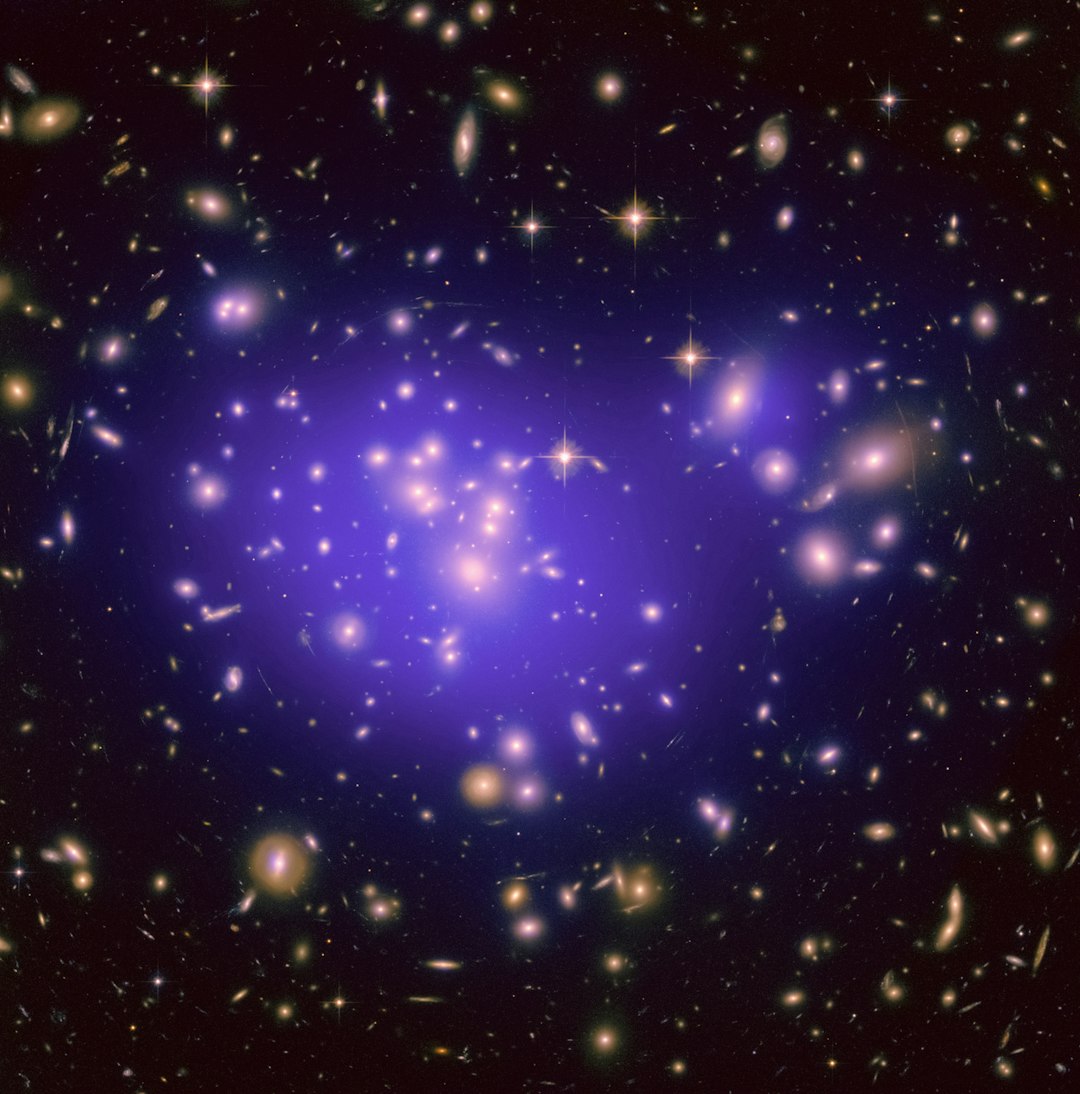
Scientists are making critical advances in unraveling the universe’s biggest mystery: dark matter and dark energy. These enigmatic components, comprising 95% of the cosmos, are now within reach thanks to groundbreaking detector technologies. This research promises to fundamentally reshape our understanding of physics.
For decades, humanity’s view of the universe has been incomplete. The matter we observe – stars, planets, and everything around us – accounts for merely 5% of what exists. The vast remainder, dark matter and dark energy, remains unseen, influencing the cosmos through gravitational forces yet evading direct detection. This profound knowledge gap has driven intense research efforts worldwide.
Leading these efforts is Dr. Rupak Mahapatra, an experimental particle physicist at Texas A&M University. His team designs advanced semiconductor detectors equipped with cryogenic quantum sensors, pushing the boundaries of what’s detectable. As highlighted in a ScienceDaily report, Mahapatra puts it, “It’s like trying to describe an elephant by only touching its tail. We sense something massive and complex, but we’re only grasping a tiny part of it.”
Understanding dark matter and dark energy
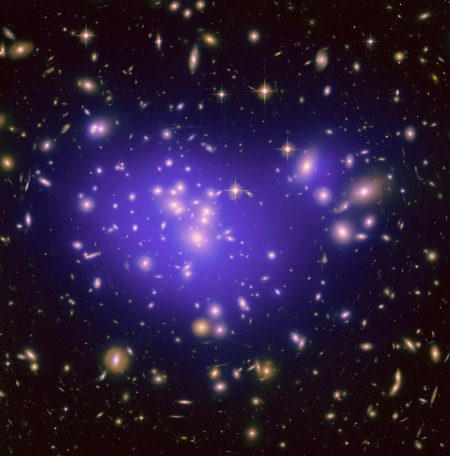
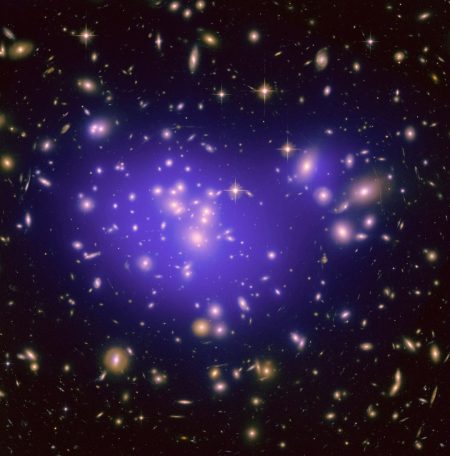
These two cosmic constituents are named for their elusive nature. Dark matter forms the majority of mass within galaxies and clusters, acting as a gravitational scaffold that shapes cosmic structures. Without it, galaxies would simply fly apart. Its presence is inferred solely through its gravitational effects on visible matter and light.
Dark energy, conversely, is the mysterious force driving the accelerating expansion of the universe. It dominates the cosmos, accounting for approximately 68% of its total energy, while dark matter contributes about 27%. Neither interacts with light, making direct observation impossible and presenting one of science’s most profound puzzles.
Detecting the invisible: new frontiers
The challenge lies in detecting particles that interact with ordinary matter only rarely. Dr. Mahapatra’s group at Texas A&M focuses on developing detectors with extraordinary sensitivity, capable of spotting interactions that might occur only once a year or even a decade. Their work was recently featured in the respected journal Applied Physics Letters.
One such innovation includes the TESSERACT detector, a leading global dark matter search where Texas A&M plays a key role. Mahapatra emphasizes the need for “innovation,” explaining, “We’re finding ways to amplify signals that were previously buried in noise.” This drive for precision is crucial given the weak interaction strength of potential dark matter particles.
The team also has a long history with the SuperCDMS experiment, one of the world’s most sensitive dark matter searches. In a landmark 2014 paper published in Physical Review Letters, Mahapatra and his collaborators introduced voltage-assisted calorimetric ionization detection. This breakthrough significantly improved the ability to study low-mass WIMPs, a leading dark matter candidate, opening new avenues for detection.
Further research, co-authored by Mahapatra in 2022, explored combining direct, indirect, and collider searches for WIMPs. He stresses that “no single experiment will give us all the answers. We need synergy between different methods to piece together the full picture.” This collaborative approach is vital for such a complex problem.
The pursuit of dark matter and dark energy extends beyond academic curiosity. Successfully detecting these components would unlock fundamental principles governing the universe itself. As Mahapatra states, “If we can detect dark matter, we’ll open a new chapter in physics.” The implications for cosmology, particle physics, and our place in the cosmos are immense, promising a new era of scientific discovery.