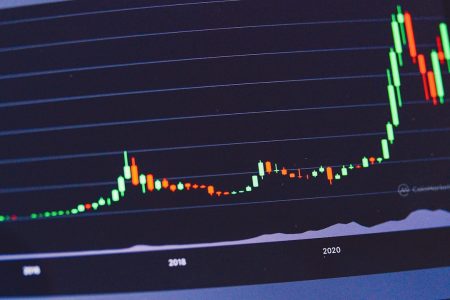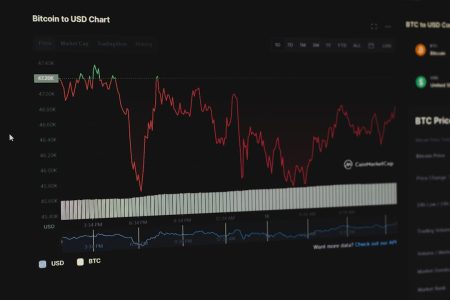
Bitcoin and a selection of privacy-focused cryptocurrencies are experiencing a notable rally, a trend intensified by escalating political tensions, particularly the anticipated friction between a potential Trump administration and the Federal Reserve under Chair Jerome Powell. This market movement suggests investors are increasingly seeking hedges against traditional financial system volatility and potential governmental overreach.
The confluence of political uncertainty and a perceived challenge to central bank independence often drives capital towards alternative assets. Digital currencies, especially those offering decentralization and enhanced anonymity, become attractive havens during such periods. A recent report, among others, from The Block highlighted a similar trend, indicating a broader market awareness of these dynamics.
Historically, market instability stemming from political disputes or shifts in monetary policy has prompted investors to diversify portfolios beyond conventional stocks and bonds. This current rally in Bitcoin and privacy coins underscores a growing belief in their utility as stores of value and mediums of exchange resistant to centralized control, a sentiment amplified by the specter of political influence on economic policy.
Political currents and crypto’s appeal
The prospect of renewed conflict between a presidential administration and the Federal Reserve, reminiscent of past eras, casts a long shadow over financial markets. A president’s desire for lower interest rates or specific monetary policies often clashes with the Fed’s mandate for price stability and maximum employment, independent of political pressures. Such discord can introduce significant uncertainty, weakening investor confidence in traditional assets.
In this environment, Bitcoin’s decentralized nature makes it a compelling alternative. It operates outside the direct control of any single government or central bank, offering a perceived immunity to political manipulation. Data from CoinDesk and Glassnode consistently shows Bitcoin’s price reacting to macroeconomic and geopolitical shifts, often acting as a digital safe haven asset, similar to gold, for those wary of fiat currency devaluation or systemic risk.
The rise of privacy coins
Beyond Bitcoin, privacy coins like Monero (XMR), Zcash (ZEC), and Dash (DASH) are witnessing particularly strong gains. These cryptocurrencies are designed to obscure transactional details, offering a higher degree of anonymity than Bitcoin. This feature becomes paramount when concerns about financial surveillance, asset freezes, or capital controls escalate.
The appeal of privacy coins lies in their ability to offer greater financial autonomy. As governments explore digital currencies and potentially increased oversight, the demand for truly private alternatives grows. According to a CoinDesk analysis, these assets provide a critical counterpoint to centralized digital systems, ensuring transactions remain confidential and resistant to censorship, a vital characteristic for investors anticipating a more controlled financial future.
This rally is not merely a speculative surge; it reflects a deeper structural shift in investor behavior. As the global political and economic landscape becomes increasingly unpredictable, digital assets, particularly Bitcoin and privacy coins, are cementing their role as crucial components in a diversified portfolio designed for resilience against systemic shocks and governmental influence. The ongoing narrative of political tension only accelerates this re-evaluation of value and control.