Alarming levels of microscopic plastic particles are suspended in urban air, far exceeding prior estimates and revealing a pervasive new dimension of environmental contamination. Research from the Chinese Academy of Sciences identifies the atmosphere as a critical, yet underestimated, pathway for urban air plastic pollution, raising concerns for global ecosystems and human health.
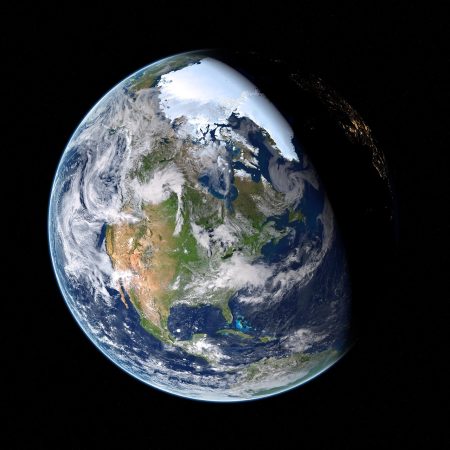
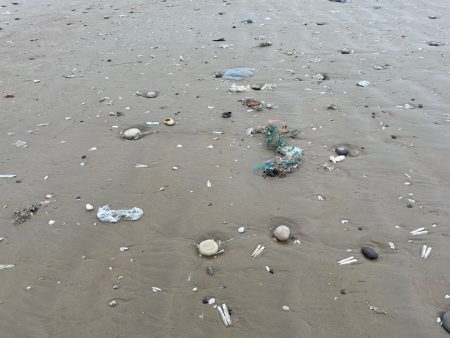
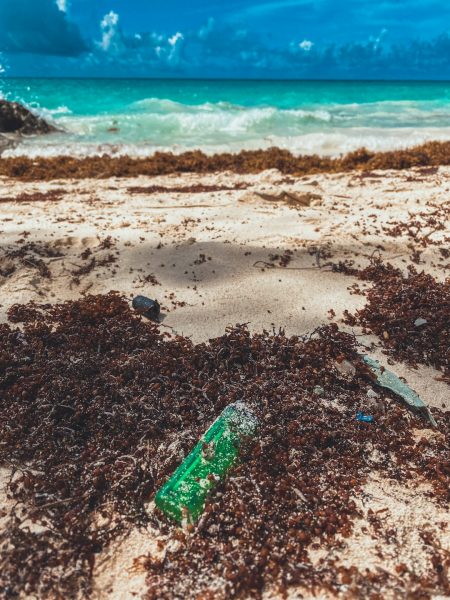
For decades, plastic pollution was predominantly associated with oceans and landfills, painting a picture of visible waste. However, growing scientific consensus points to a more insidious threat: tiny plastic fragments, known as microplastics (MPs) and nanoplastics (NPs), now permeate every major part of Earth’s systems.
Their widespread distribution, from the deepest oceans to the highest mountains, has become a pressing concern for researchers studying biogeochemical cycles and climate change. This pervasive presence suggests an environmental challenge far greater than previously understood.
Despite increasing awareness, many fundamental questions about plastic pollution remain unanswered. Scientists struggle to precisely quantify how much plastic exists, its origins, its environmental transformations, and its ultimate accumulation points.
These knowledge gaps are especially significant for atmospheric plastics, where detection and analysis of microscopic to nanoscale particles pose considerable challenges to traditional methods. The recent findings aim to bridge these crucial information gaps, offering a clearer picture of an invisible threat.
Revealing the hidden scale of atmospheric plastic
To tackle the limitations of conventional detection, researchers from the Chinese Academy of Sciences (IEECAS) developed an innovative semi-automated microanalytical technique. This method quantifies plastic particles in the atmosphere and tracks their movement across various environmental pathways.
These pathways include airborne particles, dustfall, rain, snow, and dust resuspension. The team applied this advanced approach in two major Chinese cities, Guangzhou and Xi’an, leveraging computer-controlled scanning electron microscopy for more consistent identification and a broader size range than manual inspections.
The results were stark. Concentrations of plastic in total suspended particulates (TSP) and dustfall fluxes were found to be two to six orders of magnitude higher than levels previously reported using visual identification methods, as highlighted in a recent ScienceDaily report on the study.
These findings strongly suggest that earlier studies may have drastically underestimated the true extent of urban air plastic pollution. Furthermore, the estimated movement of MPs and NPs varied widely across atmospheric pathways, by two to five orders of magnitude, primarily driven by road dust resuspension and wet deposition.
Implications for climate, ecosystems, and human health
This groundbreaking study marks the first time nanoplastics as small as 200 nm have been reliably detected within complex environmental samples, offering an unprecedented quantitative view of plastics in the atmosphere.
The atmosphere remains the least understood reservoir in the global plastic cycle, making these insights particularly valuable. By clarifying how plastics move through the air, transform during transport, and are eventually removed, the research provides new understanding into their potential effects.
The presence of vast quantities of airborne plastic particles raises serious questions about their impact on climate processes, given their potential to influence cloud formation and solar radiation absorption.
For ecosystem health, these particles can settle on plants, enter food chains, and affect soil composition. Crucially, the direct inhalation of microplastics and nanoplastics poses an emerging concern for human well-being, with potential respiratory and broader systemic health implications that require urgent investigation.
The full findings were published in Science Advances on January 7, 2026, by a team led by Tafeng Hu and Junji Cao.
The discovery of such a shocking amount of plastic floating in city air compels a re-evaluation of global pollution strategies. It underscores the urgent need for comprehensive policies addressing plastic production, use, and disposal, extending beyond oceans and landfills.
These efforts must now encompass the invisible threats in our atmosphere. Future research must focus on the long-term health and environmental consequences of this pervasive urban air plastic pollution, informing public health initiatives and sustainable urban planning to mitigate this invisible, yet ever-present, environmental challenge.