A new generative AI system, CytoDiffusion, has demonstrated superior accuracy and confidence compared to human experts in identifying dangerous abnormalities in blood cells, potentially transforming the diagnosis of diseases like leukemia. Developed by researchers from the Universities of Cambridge, University College London, and Queen Mary University of London, this technology promises to reduce missed diagnoses and enhance clinical support.
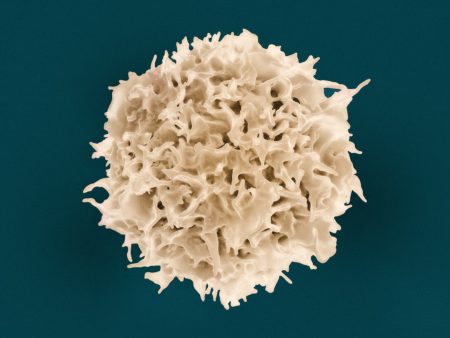
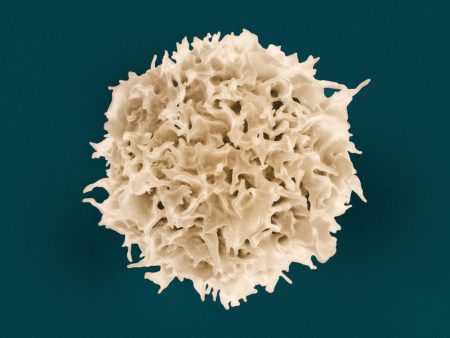
The meticulous examination of thousands of cells in a single blood smear has long burdened hematologists, often leading to fatigue and potential diagnostic inconsistencies. CytoDiffusion addresses this by leveraging advanced AI to scrutinize the intricate shape and structure of cells, flagging subtle deviations that might escape the human eye.
This innovation arrives as medical fields increasingly seek automated solutions to improve efficiency and precision, offering a promising path to overcome current diagnostic limitations. Its findings, published in Nature Machine Intelligence, highlight a significant leap forward in diagnostic technology, providing a robust tool for clinicians worldwide.
AI blood cell analysis: boosting diagnostic precision
The ability to discern minute differences in blood cell morphology is crucial for diagnosing numerous blood disorders. However, mastering this skill demands years of experience, and even seasoned specialists can encounter disagreements in complex cases.
Simon Deltadahl from Cambridge’s Department of Applied Mathematics and Theoretical Physics, the study’s first author, emphasized the importance of recognizing unusual blood cells for accurate disease diagnosis, as reported by ScienceDaily.
The sheer volume of cells in a standard blood smear makes comprehensive human examination impractical. Dr. Suthesh Sivapalaratnam, a co-senior author from Queen Mary University of London, recounted his personal experience as a junior hematology doctor, facing overwhelming numbers of blood films.
He realized the immense potential for AI to perform better, noting that CytoDiffusion automates this process by triaging routine cases and highlighting anomalies for human review, thus optimizing clinical workflows significantly.
Generative AI’s edge in identifying rare cells
To train CytoDiffusion, researchers utilized an unprecedented dataset of over half a million blood smear images from Addenbrooke’s Hospital in Cambridge. This extensive collection included a wide array of cell types, including rare examples often challenging for conventional automated systems.
The AI’s approach of modeling the entire range of blood cell appearances makes it resilient to variations from different hospitals, microscopes, and staining techniques, significantly enhancing its adaptability.
During testing, CytoDiffusion demonstrated significantly higher sensitivity than existing systems in detecting abnormal cells linked to leukemia. It matched or surpassed leading models, even with fewer training examples, and crucially, could quantify its own prediction confidence.
Professor Michael Roberts, co-senior author from the University of Cambridge, noted that the system “would never say it was certain and then be wrong,” a key differentiator from human error. This robust evaluation against real-world medical AI challenges underscores its reliability.
The advent of CytoDiffusion marks a pivotal moment in medical diagnostics, offering a powerful complement to human expertise. By enhancing the detection of dangerous blood cells with unparalleled accuracy and reliability, this generative AI system holds the potential to expedite diagnoses and improve patient outcomes.
Furthermore, its capacity for self-assessment regarding uncertainty promises a new standard for AI integration in critical medical applications, potentially alleviating diagnostic burdens on healthcare professionals.