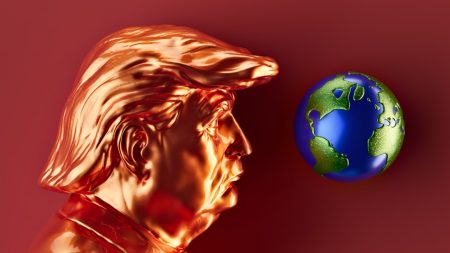

The concept of “Trump’s Anti-Moral Morality” has become a critical lens through which to examine the shifting landscape of global power. This approach, characterized by a belief that power dictates right, fundamentally challenges traditional international norms and institutions. It raises profound questions about the future of diplomacy, human rights, and the very foundation of a rules-based global order.
This worldview posits that a nation’s strength is its ultimate arbiter, allowing leaders to act as they please on the world stage, constrained only by their own subjective moral compass. Such a philosophy reverberates across geopolitical strategies, trade negotiations, and even humanitarian interventions, redefining what constitutes acceptable international conduct.
The implications extend far beyond immediate policy decisions, influencing the long-term stability and ethical underpinnings of global governance. The potential for a reversion to unbridled dominance by great powers, as explored by analysts, signals a precarious future for multilateralism.
This shift demands a closer look at the mechanisms through which international law and ethical considerations might either adapt or erode under such a paradigm. Understanding this “anti-moral morality” is essential for comprehending contemporary geopolitical trends.
The challenge to established moral frameworks
At the core of “Trump’s Anti-Moral Morality” is a stark departure from the post-World War II consensus on international ethics. This era emphasized cooperation, human rights, and the peaceful resolution of disputes, often codified in international treaties and organizations like the United Nations.
However, a philosophy prioritizing national interest above all, and interpreting international agreements as mere suggestions, undermines these foundational principles. This approach signals a significant challenge to the ethical underpinnings of global governance.
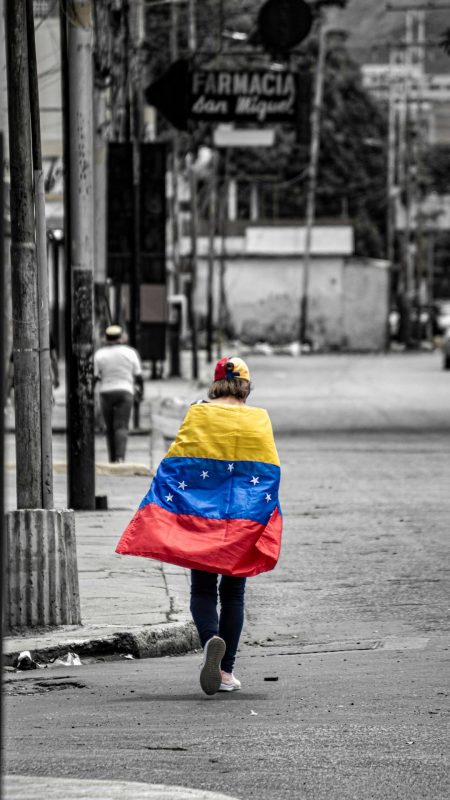
Peter Singer, in a commentary published on Project Syndicate on January 14, 2026, highlights this very tension. Singer discusses how Donald Trump’s assertion that only his own morality limits his actions on the global stage, particularly in hypothetical scenarios like military strikes against Venezuela, exemplifies this shift.
The commentary notes that Deputy Chief of Staff Stephen Miller’s hypothetical response regarding US control over Venezuela perfectly captured a “might makes right” governing philosophy. This perspective suggests that power, rather than universal ethics, serves as the ultimate guide for international conduct.
This perspective often views universal moral principles as impediments to national sovereignty or strategic advantage. For instance, according to a 2023 report by the Council on Foreign Relations, the erosion of respect for international humanitarian law has been a growing concern.
This erosion is exacerbated by rhetoric that questions its applicability to powerful states. It indicates a broader pattern where strategic imperatives increasingly overshadow ethical considerations, creating a challenging environment for global diplomacy.
The implications are far-reaching, affecting everything from climate agreements to nuclear non-proliferation. When a leading global power signals a reduced commitment to shared moral obligations, it creates a vacuum that other nations may fill, potentially leading to a more fragmented and less predictable international environment.
This erosion of trust in shared values makes collective action on global challenges significantly more difficult. The fabric of international cooperation becomes strained, impacting responses to crises and shared global threats.
Geopolitical ramifications and the future of global order
The operationalization of “Trump’s Anti-Moral Morality” has tangible geopolitical consequences. Alliances traditionally built on shared values and mutual defense commitments become transactional, their utility measured purely by immediate national gain.
This can destabilize regions and encourage other state actors to adopt similar unilateral approaches, further eroding the framework of international cooperation. Such shifts redefine diplomatic engagement and mutual responsibilities.
For example, a study by the RAND Corporation in 2024 explored how shifts in US foreign policy under a “transactional” approach impacted NATO cohesion and perceptions of reliability among allies.
Such an approach prioritizes short-term gains over long-term strategic partnerships, potentially weakening the collective security apparatus that has underpinned global stability for decades. This redefines expectations of loyalty and commitment among nations.
Moreover, the emphasis on power as the ultimate arbiter risks legitimizing authoritarian regimes that already operate outside established moral norms. If the powerful can disregard international law with impunity, it sets a dangerous precedent for weaker states, diminishing the perceived value of adhering to universal principles.
This scenario could lead to increased regional conflicts and a greater propensity for states to pursue their interests through coercive means. The global landscape becomes more volatile, with less predictable outcomes.
The struggle to reconcile this “anti-moral morality” with the demands of a complex, interconnected world will define the next era of international relations. The global community faces a critical juncture.
It must either reinforce and adapt existing moral and legal frameworks, or witness their gradual unraveling in favor of a more anarchic, power-driven order. The choice carries profound implications for human security and global stability.
Ultimately, “Trump’s Anti-Moral Morality” represents more than a political philosophy; it signals a fundamental re-evaluation of what constitutes legitimate international behavior. The global response to this challenge will determine whether the world moves towards a system where might genuinely makes right, or if the enduring appeal of shared values and collective responsibility can reassert itself.
Navigating this ideological divide will require astute diplomacy, a commitment to multilateralism, and a clear articulation of an alternative moral vision for global governance. This period demands a robust defense of international norms.