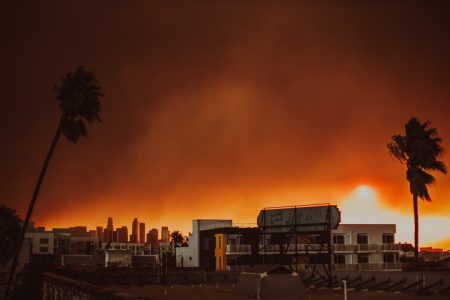
Arctic Alaska is currently experiencing wildfire activity at levels not observed in the last 3,000 years, signaling a dangerous new fire era for the region. This dramatic increase is largely attributed to rapidly warming temperatures that dry out soils and foster the expansion of woody shrubs, creating ideal conditions for intense blazes.
The shift represents a profound transformation in one of Earth’s most sensitive ecosystems, with significant implications beyond the immediate destruction. Historically, the North Slope of Alaska saw minimal fire activity, a pattern that has sharply reversed over the past century, raising alarms among scientists and environmentalists alike.
New research, detailed on ScienceDaily.com, combines ancient peat core analysis with modern satellite data to reveal this alarming trend. The findings underscore how interconnected climatic changes are pushing the Arctic into a hotter, more extreme fire regime, challenging long-held assumptions about the region’s ecological stability.
Unearthing 3,000 years of fire history
To understand the current surge in the Alaska Arctic fire era, an international team of scientists, including researchers from the University of Alaska Fairbanks’ Toolik Field Station, meticulously reconstructed the region’s fire history. Led by Angelica Feurdean, a senior researcher at Goethe University in Germany, the team extracted peat cores up to half a meter deep from nine tundra locations north of the Brooks Range.
These peat layers, dating back roughly 3,000 years to around 1000 B.C., contained invaluable clues such as charcoal fragments, pollen, and plant remains. By measuring these materials and using radiocarbon and lead dating, researchers pieced together a detailed timeline of wildfire activity, vegetation shifts, and soil moisture levels over millennia.
For the initial 2,000 years of this record, fires were remarkably rare. A modest increase in activity was noted between approximately A.D. 1000 and 1200, coinciding with a period when tundra soils began to dry. However, fire levels then subsided, remaining low for the subsequent seven centuries, illustrating a historically stable and fire-resistant landscape.
A sharp rise and hotter burns
The turn of the 20th century marked a critical turning point for the Alaska Arctic fire era. Around 1900, wildfire activity began to escalate once more, surging to unprecedented levels by 1950. This period saw peat soils reaching extreme dryness and a significant expansion of woody shrubs, both directly linked to rising temperatures.
Fire activity continued its upward trajectory, with soils becoming progressively drier through 2015, the year samples were collected. Randy Fulweber, a study co-author and GIS manager at UAF’s Toolik Field Station, highlighted that combining satellite imagery with charcoal data provided deeper insights than just fire frequency.
“Evidence from recent large fires may be indicative of these fires burning hotter, consuming more fuel and leaving behind less charcoal,” Fulweber noted, suggesting a shift towards a more intense fire regime. This collaborative research environment at Toolik Field Station, integrating paleoecology, GIS, and remote sensing specialists, was crucial for these findings, as detailed in the journal Biogeosciences.
The data unequivocally points to a new, dangerous chapter for Alaska’s Arctic, where wildfires are no longer a rare event but a recurring, intense threat. This transformation poses significant challenges for ecosystems, permafrost stability, and global climate patterns. Understanding these shifts is crucial for developing adaptation strategies and mitigating the broader impacts of a rapidly warming Arctic, a region whose changes reverberate worldwide.