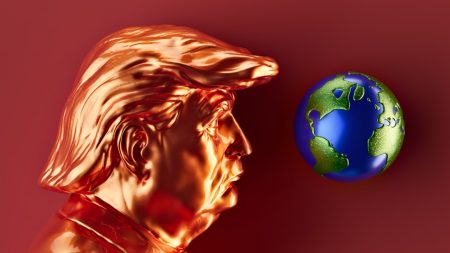
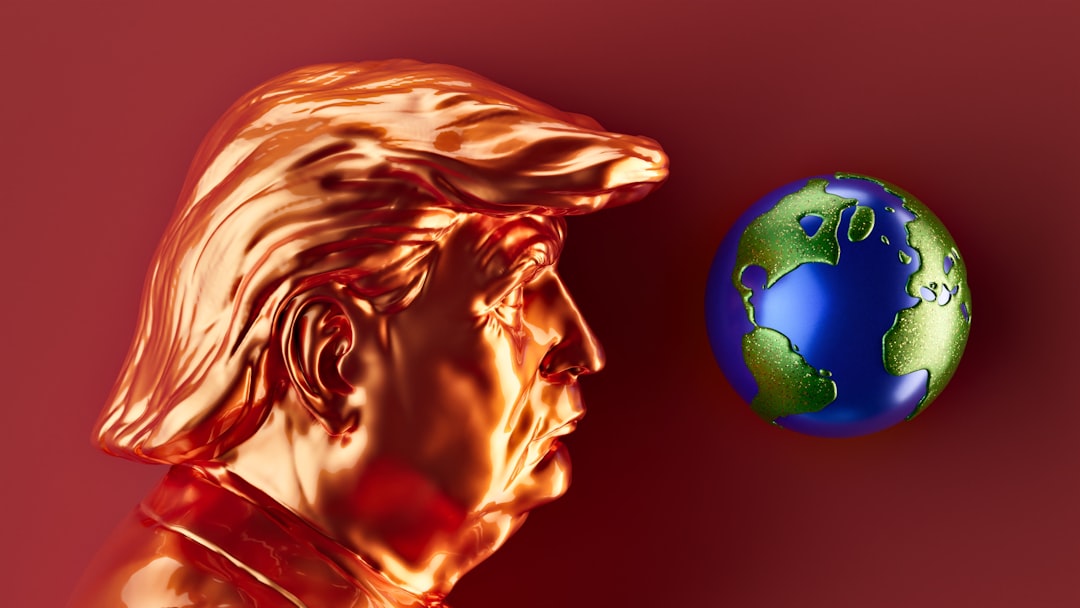
President Donald Trump’s foreign policy, often perceived as erratic, increasingly points towards a deliberate strategy: a return to what some call Trump’s New Old World Order. This approach seeks to restore an international order reminiscent of the era before World War I, where America’s global ambitions were more restrained and its neighborhood security paramount.
This perspective, highlighted by analysis from Project Syndicate, argues that recent developments, such as the intervention in Venezuela, are not policy schizophrenia. Instead, they represent an administration-wide effort to re-establish a more insular foreign posture, contrasting sharply with decades of multilateral engagement.
The paradox lies in actions like the deposal of Venezuelan dictator Nicolás Maduro, which seemingly contradict Trump’s past platform renouncing “regime change” and “nation building.” This particular move has been dubbed the “Donroe Doctrine,” merging aggressive transactional diplomacy with the 19th-century assertion of US hemispheric guardianship.
The resurgence of hemispheric focus
A central tenet of this “new old” order is a renewed emphasis on the Americas. The Monroe Doctrine, historically asserting US dominance in the Western Hemisphere, finds a modern echo in this administration’s actions. This shift prioritizes regional stability and influence, often at the expense of broader global commitments.
For instance, while the US has historically engaged in interventions globally, this administration appears to streamline its focus. According to a report by the Council on Foreign Relations, recent US foreign policy has shown a noticeable pivot towards domestic interests and regional security concerns over distant conflicts.
Critics argue this approach could undermine international institutions and alliances built over decades. However, proponents suggest it allows the US to conserve resources and concentrate on immediate threats, redefining its role on the global stage. The long-term implications for global governance remain a significant point of debate.
Economic nationalism and altered alliances
Beyond geographical focus, Trump’s New Old World Order is deeply intertwined with economic nationalism. The “America First” agenda translates into protectionist trade policies, renegotiation of existing agreements, and a skepticism towards global trade frameworks. This impacts allies and adversaries alike.
Trade disputes, tariffs, and a push for bilateral agreements characterize this era. The Peterson Institute for International Economics highlighted in a recent analysis that these policies often lead to increased uncertainty in global markets and strain economic relationships with key partners. Read more on trade policy impacts here.
This reorientation extends to security alliances. While traditional partnerships are not entirely abandoned, there is a clear demand for allies to bear more of the financial and strategic burden. This transactional approach aims to redefine mutual obligations, potentially leading to a more fragmented international security landscape.
The push for a pre-WWI order fundamentally challenges the post-World War II consensus of multilateralism and collective security. It suggests a future where great powers primarily pursue national interests within defined spheres of influence, rather than through extensive global cooperation. This shift could reshape global dynamics for decades.
As the administration continues to articulate and implement this vision, the world watches to see how this “new old” approach will navigate complex geopolitical challenges. The balance between national sovereignty and international collaboration hangs in a delicate equilibrium, with significant implications for global stability and economic prosperity.