Researchers have unveiled a significant advancement in quantum technology: tiny 3D-nanoprinted ‘light cages’ designed to efficiently store quantum information. This innovative approach, detailed in a recent study, promises to overcome critical hurdles in developing a global quantum internet and more powerful quantum computing systems.
The ambition for a quantum internet, offering unparalleled security and speed, faces a critical challenge: maintaining signal integrity over vast distances. Traditional communication systems struggle with quantum information loss, limiting how far data can travel.
Quantum memories are vital for enabling quantum repeaters. These devices allow information to “hop” across networks via entanglement swapping, preventing the signal from simply fading. This new development directly addresses that need.
The innovation behind 3D-printed light cages
A recent study published in Light: Science & Applications highlights this breakthrough. Teams from Humboldt-Universität zu Berlin, the Leibniz Institute of Photonic Technology, and the University of Stuttgart introduced a new quantum memory.
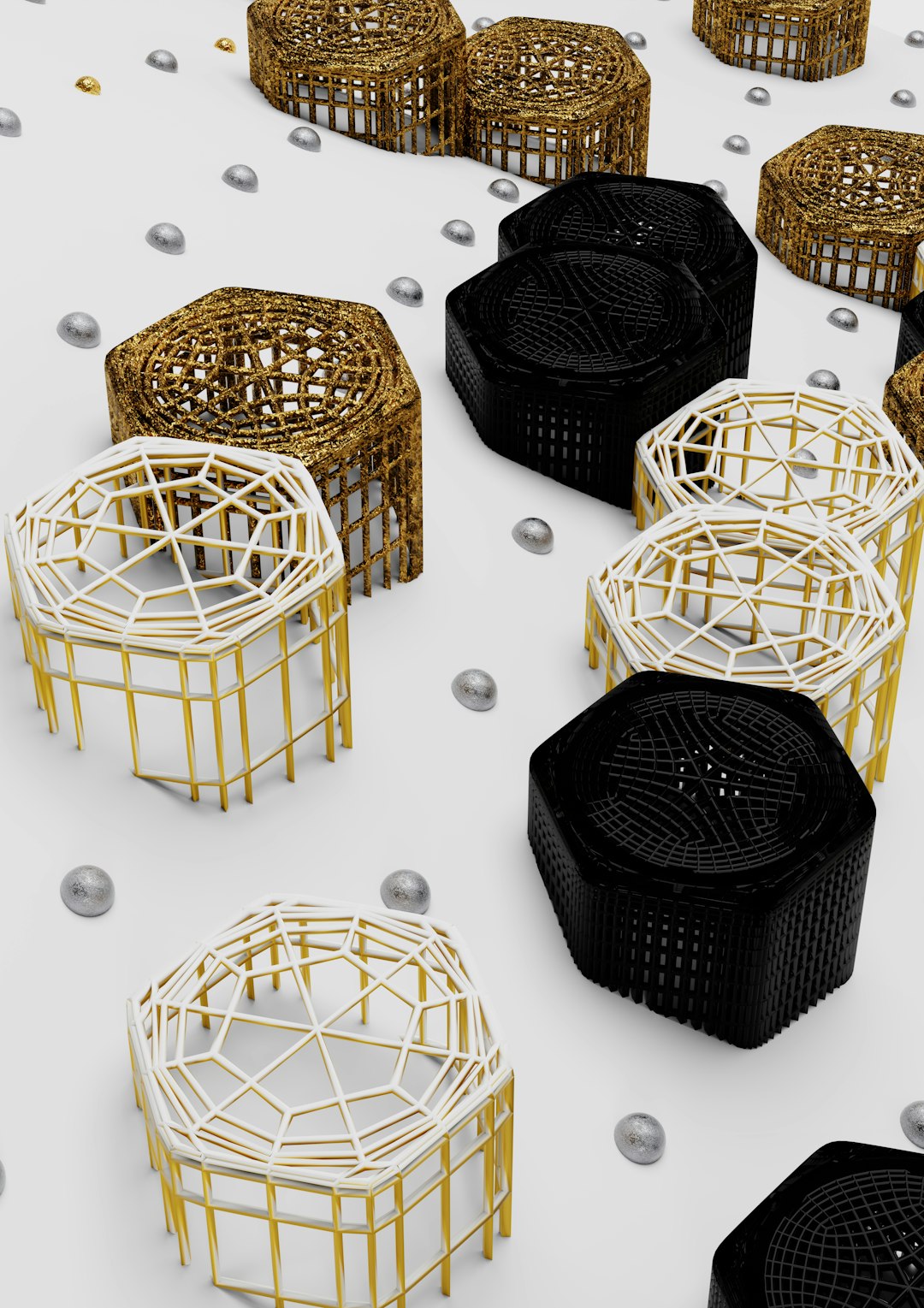
This memory is built from 3D-nanoprinted ‘light cages’ filled with atomic vapor, bringing light and atoms together on a single chip. The platform is designed for scalability and seamless integration into quantum photonic systems, marking a significant advance in the field.
Light cages are hollow-core waveguides engineered to tightly guide light while allowing access to their interior. This design offers a key advantage over conventional hollow-core fibers, which can take months to fill with atomic vapor.
The open structure of these cages allows cesium atoms to diffuse into the core much faster, reducing the filling process to just days. This rapid diffusion does not compromise optical performance, a crucial factor for practical applications.
Fabricated using two-photon polymerization lithography with commercial 3D printing systems, researchers can directly print intricate waveguides onto silicon chips with extreme precision. A protective coating ensures device longevity, with tests showing no degradation after five years.
Scaling quantum information storage
Inside the light cages, incoming light pulses are efficiently converted into collective excitations of the surrounding atoms. A control laser then reverses this process, releasing the stored light precisely when needed.
Researchers successfully stored very weak light pulses, containing only a few photons, for several hundred nanoseconds. They believe this method can extend to storing single photons for many milliseconds, a vital capability for quantum systems.
A major milestone was the integration of multiple light cage memories on a single chip within a cesium vapor cell. This demonstrated that different light cages of the same design delivered nearly identical storage performance.
This high level of consistency is critical for building scalable quantum systems. The strong reproducibility stems from the precision of the 3D-nanoprinting process, keeping variations within a single chip below 2 nanometers.
According to ScienceDaily, the research team explained, “We created a guiding structure that allows quick diffusion of gases and fluids inside its core… This enables true scalability of this platform.”
These 3D-printed light cages address several long-standing challenges in quantum technology. For quantum repeater networks, they could synchronize multiple single photons simultaneously, significantly boosting the efficiency of long-distance quantum communication.
In photonic quantum computing, these memories provide a controlled environment for light manipulation. The ability to produce multiple chips with the same performance opens doors for spatial multiplexing, potentially increasing the number of quantum memories operating together on one device.
This advancement represents a crucial step towards realizing a robust and expansive quantum internet. By offering a scalable, reliable, and efficient method for quantum information storage, these tiny structures could indeed unlock the future of quantum communication and computation.