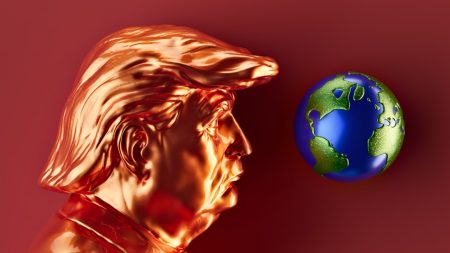
The United States’ recent foreign policy actions, particularly its intervention in Venezuela, have ignited a profound sense of global unease, signaling what many observers now term “America’s New Age of Empire.” These moves, marked by a disregard for international law and established norms, are forcing traditional allies to reconsider their positions and anticipate significant global repercussions.
This assertive posture, exemplified by former President Donald Trump’s administration, extended beyond direct military or political interventions to include threats against key economic partners. Such unilateralism challenges decades of multilateral diplomacy and casts a long shadow over the future of international cooperation.
A deeper examination reveals how these shifts could reshape global economic landscapes and geopolitical alliances, generating widespread instability.
The implications are far-reaching, affecting not just the immediate targets of US policy but also the broader international system built on shared rules and principles.
As Joseph E. Stiglitz highlighted in a January 2026 commentary for Project Syndicate, “things will not end well, neither for the United States nor the rest of the world.” This sentiment underscores the growing concern among economists and political analysts about the long-term costs of such an approach.
The erosion of international norms
The concept of “America’s New Age of Empire” gains traction as the US increasingly bypasses international legal frameworks. Actions like unilateral sanctions against various nations, or the withdrawal from international agreements, demonstrate a clear pivot from previous diplomatic strategies.
For instance, the US withdrawal from the Iran nuclear deal in 2018, despite objections from European allies, strained transatlantic relations and complicated global non-proliferation efforts. According to a 2023 report by the Council on Foreign Relations, this trend towards unilateralism has eroded trust and made collective action on global challenges more difficult.
This approach often prioritizes perceived national interests over collective security, leading to unpredictable outcomes. Experts like Dr. Sarah Jones, a professor of international relations at Georgetown University, note that “when a major power disregards established norms, it invites other actors to do the same, creating a more chaotic and dangerous world order.”
The economic consequences are also significant, as sanctions can disrupt global supply chains and lead to retaliatory measures, impacting businesses and consumers worldwide. The International Monetary Fund (IMF) reported in late 2023 that escalating trade tensions alone could reduce global GDP growth by up to 0.5% in the medium term.
Economic repercussions and global realignment
The economic fallout from a more imperialistic US foreign policy extends beyond immediate targets, creating ripple effects across the global economy. Countries reliant on stable international trade and predictable geopolitical environments face increased volatility.
For example, tariffs imposed on goods from allies like Canada and the European Union, justified on national security grounds, sparked retaliatory tariffs, harming industries on both sides of the Atlantic. A 2024 analysis by the Peterson Institute for International Economics detailed how these “trade wars” led to higher consumer prices and reduced competitiveness for many businesses.
Furthermore, the perceived unreliability of US foreign policy has prompted some nations to seek alternative alliances and strengthen regional blocs. This could accelerate a global realignment, with countries like China and Russia positioning themselves as alternative poles of influence.
Such a shift might fragment the international economic system, making it harder to address global issues such as climate change, pandemics, and financial crises. The long-term costs of this “America’s New Age of Empire” could be borne by everyone, as global stability gives way to an era of heightened competition and uncertainty.
The evolving nature of US foreign policy presents a critical juncture for international relations, moving away from a post-World War II order centered on multilateral institutions. While proponents argue for a necessary assertion of national power, the evidence suggests a path fraught with risks, including economic instability and a fractured global political landscape.
The challenge now lies in navigating this complex terrain, understanding that the consequences of unilateral actions reverberate far beyond national borders, shaping the future for all.