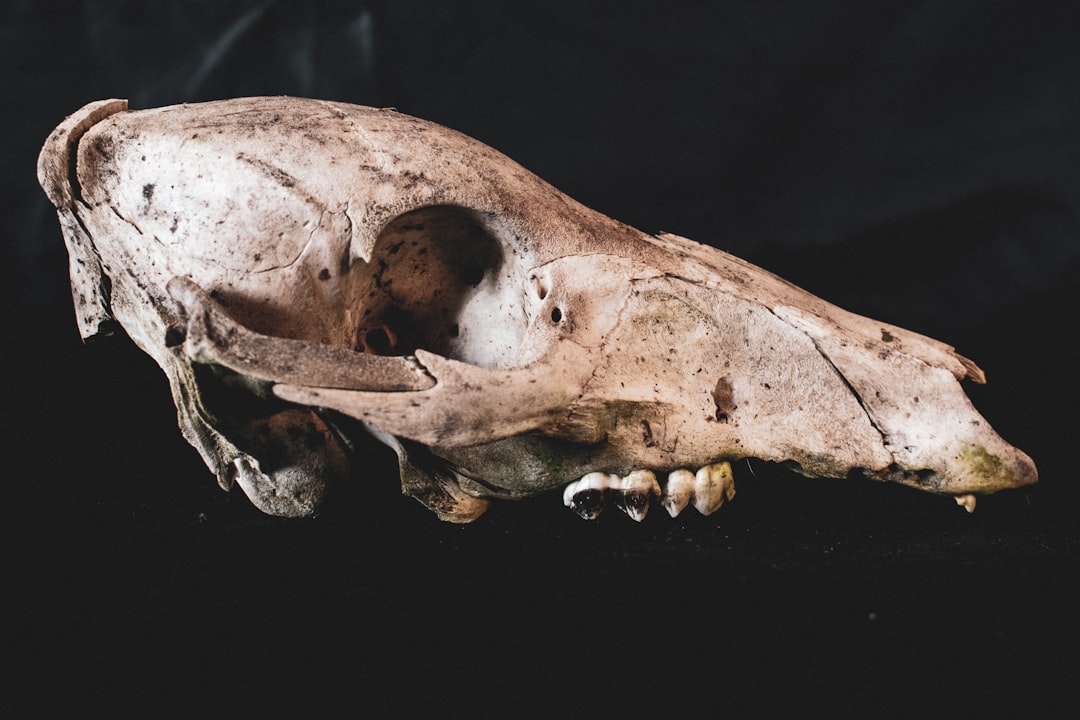
New archaeological research has significantly reshaped our understanding of canine evolution, revealing that dogs began diversifying in size and shape at least 11,000 years ago. This global analysis, detailed in a study led by researchers from the University of Exeter and the French CNRS, challenges the long-held belief that most dog diversity is a recent product of modern breeding practices, instead pointing to a deep history of coevolution with humans.
For decades, many scientists attributed the vast array of dog breeds we see today primarily to selective breeding efforts of the last few centuries, particularly since the Victorian era. However, this groundbreaking study, published in Science, demonstrates that early dogs were already adapting rapidly to varied roles within human societies millennia before any formal kennel clubs existed.
The extensive project, which commenced in 2014, involved examining 643 canid skulls, spanning approximately 50,000 years from the Pleistocene to the present. Scientists from over 40 institutions collaborated to create detailed 3D models, utilizing geometric morphometrics to precisely compare the subtle yet significant changes in size and shape over time.
Early diversity challenges conventional wisdom
The sophisticated analysis uncovered that by the Mesolithic and Neolithic periods, dogs already exhibited a broad spectrum of skull shapes and body sizes. This early diversification likely reflected the multitude of tasks dogs performed in nascent human communities, including assisting in hunting, herding livestock, guarding settlements, and providing companionship.
Dr. Carly Ameen, co-lead author from Exeter’s Department of Archaeology and History, highlighted this profound insight. According to a report on ScienceDaily regarding the research, Dr. Ameen states, ‘Diversity among dogs isn’t just a product of Victorian breeders, but instead a legacy of thousands of years of coevolution with human societies.’ This finding underscores a much more ancient and intricate bond between humans and their canine companions.
Tracing ancient canine forms across continents
The study pinpointed the oldest confirmed domestic dog skull to the Russian Mesolithic site of Veretye, dating back approximately 11,000 years. Researchers also identified early domestic dogs in the Americas, around 8,500 years ago, and in Asia, roughly 7,500 years ago, based on distinctive skull shapes indicative of domestication processes.
Following these initial appearances, the variation among dogs accelerated considerably. Dr. Allowen Evin, co-lead author from the CNRS based at the Institut of Evolutionary Science-Montpellier, detailed the timeline: ‘A reduction in skull size for dogs is first detectable between 9,700-8,700 years ago, while an increase in size variance appears from 7,700 years ago. Greater variability in skull shape begins to emerge from around 8,200 years ago onwards.’
While modern breeds display more extreme morphologies, such as the brachycephalic bulldog or the dolichocephalic borzoi, these were absent in early archaeological specimens. Nevertheless, the Neolithic period saw a substantial amount of diversity, already double that of Pleistocene specimens and about half the range observed in dogs today.
The research also illuminated the inherent challenges in identifying the very earliest stages of dog domestication. None of the Late Pleistocene specimens examined, some previously proposed as ‘proto-dogs,’ exhibited skull features consistently aligning with full domestication. This suggests that the initial genesis of the domestication process remains largely hidden within the archaeological record, as noted by Professor Greger Larson, a senior author from the University of Oxford.
Ultimately, this monumental analysis of 11,000-year-old dog skulls irrevocably alters our perspective on canine origins, emphasizing that the remarkable diversity of our four-legged friends is a testament to an enduring, ancient partnership. Understanding this deep history offers invaluable insights into the complex interplay between human societies and the evolutionary path of one of our oldest allies.