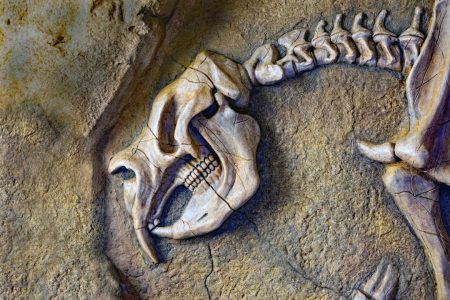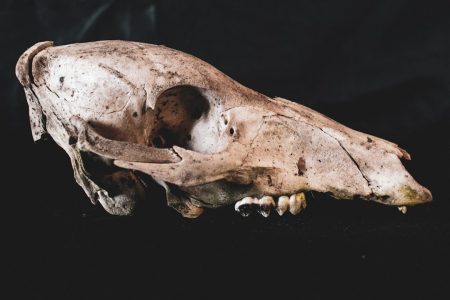
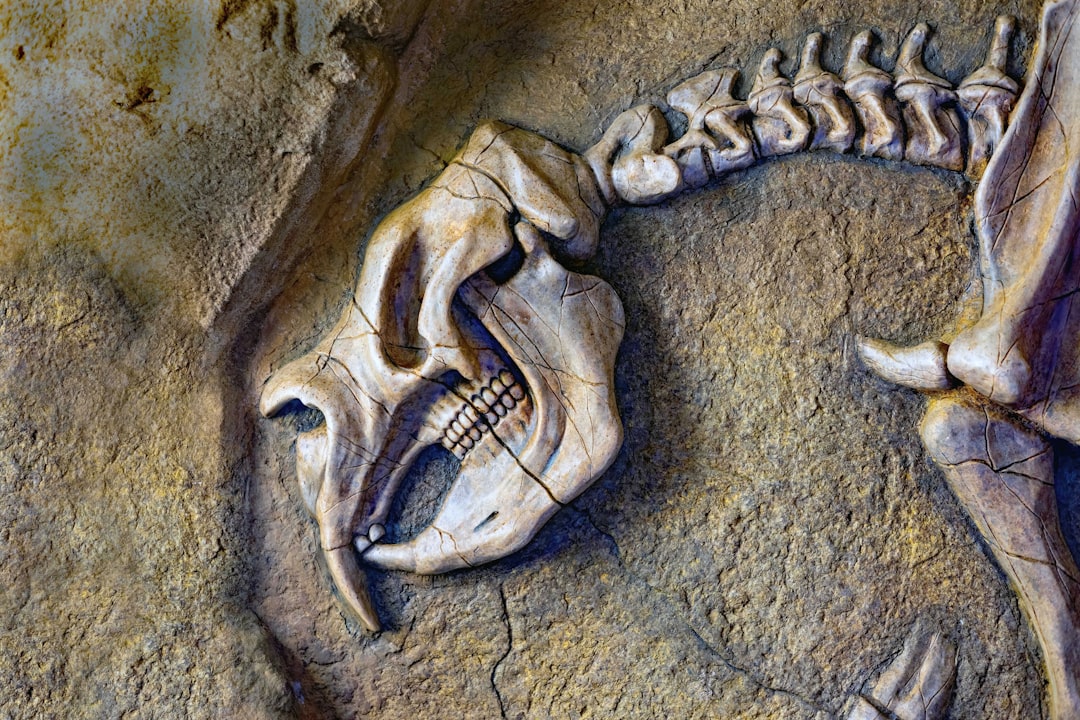
A 250-million-year-old fossil of a mammal ancestor, Thrinaxodon, has unveiled new insights into the origins of mammal hearing, suggesting this crucial sensory ability developed far earlier than previously thought. Researchers from the University of Chicago modeled sound movement through the skull, finding evidence of an early eardrum capable of detecting airborne sounds. This discovery significantly reshapes our understanding of mammal hearing evolution, pushing its timeline back by nearly 50 million years, as reported by ScienceDaily.
Modern mammals possess a highly sensitive middle ear system, including an eardrum and tiny bones, which allows for the detection of a wide range of sounds at varying volumes. This advanced hearing was likely a critical advantage for early mammals, many of whom were nocturnal, enabling them to thrive in environments dominated by dinosaurs. The long-held belief was that these ancient creatures primarily sensed vibrations through their jaws or bones, a concept now challenged by the new findings.
For decades, paleontologists debated how early mammal ancestors, particularly cynodonts, perceived their surroundings. The traditional view, often termed “jaw listening,” posited that these animals detected ground vibrations by pressing their lower jaws against the earth. However, this new research provides compelling evidence that a more sophisticated auditory mechanism was already in place during the Triassic period.
Rethinking ancient auditory mechanics
The study, led by graduate student Alec Wilken at the University of Chicago, employed advanced computational biomechanics to analyze the skull and jaw of a Thrinaxodon liorhinus specimen. Using detailed CT scans from the University of California Berkeley Museum of Paleontology, researchers created a high-resolution 3D model. This digital replica allowed them to perform a finite element analysis, a method commonly used in engineering to simulate how complex structures respond to forces.
The simulations focused on how sound would travel through Thrinaxodon’s anatomy, testing the hypothesis proposed by paleontologist Edgar Allin about 50 years ago. Allin suggested that cynodonts might have possessed a membrane stretched across a hooked part of the jawbone, functioning as a primitive eardrum. Wilken and his team, including Professors Zhe-Xi Luo and Callum Ross, confirmed this theory, indicating that such an eardrum would have been large enough to efficiently detect airborne sounds, thus significantly improving the animal’s ability to hear.
Implications for mammal ancestry
Thrinaxodon belonged to cynodonts, a group from the early Triassic period that exhibited a fascinating blend of reptilian and mammalian characteristics. These features included specialized teeth and changes in the palate and diaphragm, supporting more efficient breathing and metabolism. Crucially, in early cynodonts like Thrinaxodon, the ear bones—malleus, incus, and stapes—were still connected to the jaw, unlike the distinct middle ear of modern mammals.
The separation of these bones from the jaw, a later evolutionary development, was long considered a critical step for improved hearing sensitivity. However, the discovery of an early eardrum in Thrinaxodon suggests that the ability to hear airborne sounds was established before this anatomical separation. This finding pushes back the timeline for the development of sensitive mammal hearing evolution, providing a new perspective on the complex transitional stages from reptile to mammal.
This research not only refutes the “jaw listening” theory for these specific ancestors but also highlights the power of modern imaging and computational techniques in paleontological studies. It reveals that key features of modern mammal hearing were already taking shape deep in prehistory, offering a more complete picture of how our ancient ancestors navigated their world. Future studies may explore the exact frequency ranges these early eardrums could detect, further refining our understanding of early mammalian sensory ecology.