New research on 3.7-billion-year-old volcanic rocks from Western Australia offers compelling evidence about the violent origins of Earth and the Moon. These ancient formations reveal how a catastrophic cosmic impact likely created our natural satellite and, surprisingly, delayed the emergence of Earth’s continents for hundreds of millions of years.
The groundbreaking study, led by PhD student Matilda Boyce from the University of Western Australia, meticulously analyzed tiny feldspar crystals. These minerals act as geological time capsules, preserving critical chemical signals from billions of years ago. Their findings significantly challenge previous assumptions regarding the precise timeline of Earth’s crustal development.
Published in Nature Communications, this research provides an invaluable glimpse into the planet’s primordial conditions. Researchers focused on anorthosites, some of the oldest known rocks on Earth, collected from Western Australia’s Murchison region. These formations are crucial for understanding the earliest stages of Earth and Moon formation.
Theia impact and Earth’s delayed continental growth
Chemical evidence from these ancient rocks indicates Earth’s continents did not form immediately after the planet’s genesis. Significant continental growth appears to have begun around 3.5 billion years ago, roughly one billion years later. This revised timeline challenges assumptions about early crustal development, offering new context for Earth’s evolution.
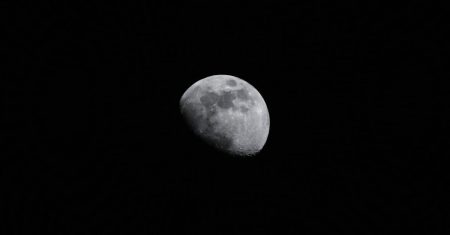
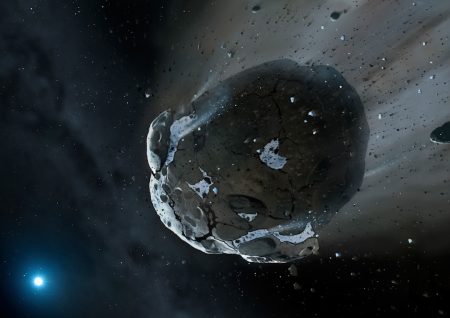
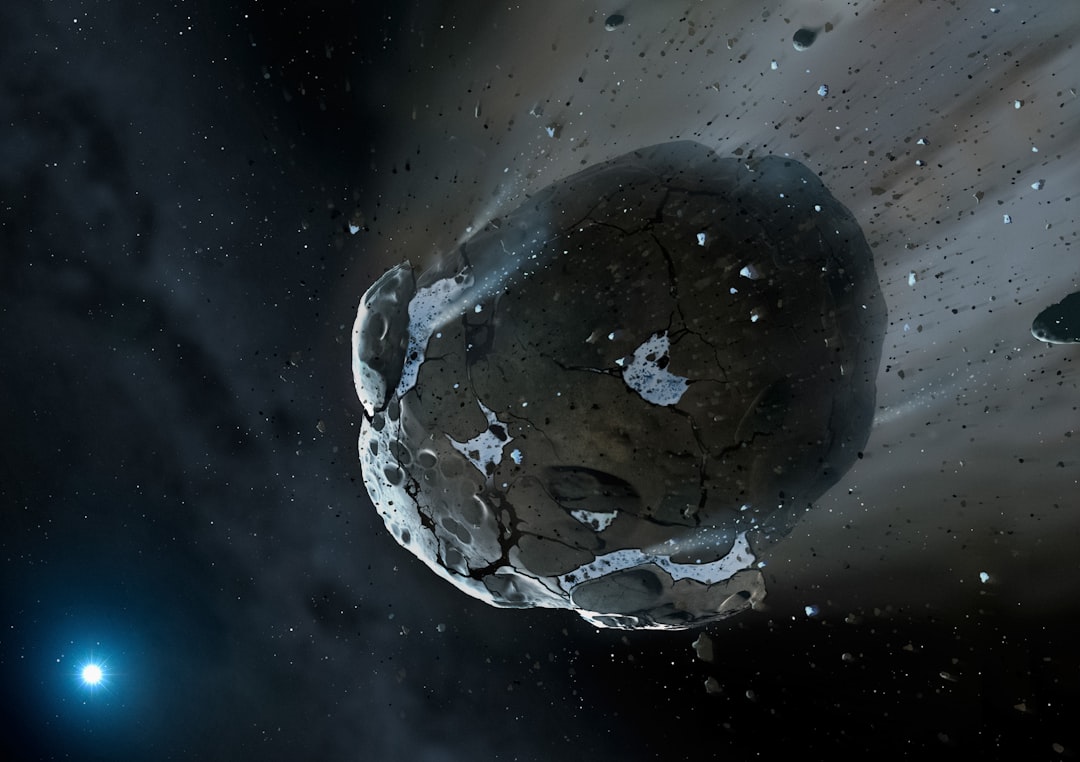
This delayed start for continental growth aligns strikingly with the aftermath of a massive cosmic collision. A Mars-sized protoplanet, dubbed Theia, is theorized to have impacted early Earth. This catastrophic event ejected vast amounts of material, which then coalesced to form the Moon, profoundly altering Earth’s geological processes.
The high-energy impact would have stripped away much of Earth’s early crust and mantle, leading to a molten surface that took considerable time to cool and differentiate. This prolonged instability hindered the rapid formation of stable continental landmasses, explaining the delay in significant growth for hundreds of millions of years.
Matching Earth’s past with lunar samples
A crucial aspect of this research involved comparing the ancient Australian rocks with lunar anorthosites brought back by NASA’s Apollo missions. Matilda Boyce, the lead PhD student, highlighted the significance of this comparison: “Anorthosites are rare rocks on Earth but very common on the Moon.” This geological similarity provides a key link between the two celestial bodies.
The comparison revealed a remarkable match, consistent with both Earth and the Moon sharing the same starting composition approximately 4.5 billion years ago. This finding strongly reinforces the idea that the Moon originated from a high-energy impact event with early Earth, rather than forming independently or being captured gravitationally, as detailed by ScienceDaily.
The insights from these 3.7-billion-year-old rocks not only refine our understanding of Earth and Moon formation but also underscore the dramatic and violent processes that shaped our solar system. Future research may further detail the exact mechanisms of continental growth post-impact, continuing to unravel the complex geological tapestry of our ancient planet.