
NASA’s Artemis II mission has taken a monumental step forward as its Space Launch System (SLS) rocket and Orion spacecraft successfully reached Launch Pad 39B at Kennedy Space Center on January 17, 2026. This critical maneuver initiates the final countdown to the first crewed Artemis II Moon mission, an ambitious journey around the Moon and back, propelling humanity closer to a sustainable lunar presence and eventual Mars exploration, as reported by ScienceDaily.
The painstaking overnight crawl from the Vehicle Assembly Building (VAB) spanned nearly 12 hours, covering a four-mile journey at a top speed of just 0.82 mph. This slow, deliberate process, carried out by NASA’s crawler-transporter 2, ensured the safe delivery of the fully stacked rocket and Orion spacecraft to its launching point. A brief pause was necessary for teams to adjust the crew access arm, a vital structure for astronaut entry on launch day.
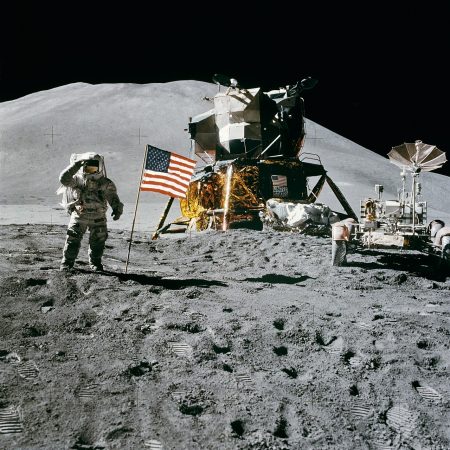
This mission holds immense significance, not just as a return to lunar orbit with astronauts Reid Wiseman, Victor Glover, Christina Koch from NASA, and Jeremy Hansen from the Canadian Space Agency (CSA), but as a foundational precursor. It lays the groundwork for future U.S.-crewed landings on the Moon, aiming to establish a long-term human presence there, and the ultimate objective of sending astronauts to Mars, building on decades of space exploration.
Preparing for critical pre-launch testing
With the Artemis II stack now firmly on the pad, engineers are immediately focusing on a series of crucial pre-launch tests, most notably the wet dress rehearsal. This two-day simulation, targeted for no later than February 2, will meticulously mimic launch day procedures, including the loading of super-cold cryogenic propellants into the rocket and a full countdown sequence before safely draining the fuels. This comprehensive test is designed to validate all ground and flight systems.
These rigorous tests are indispensable to ensure every system on the SLS rocket and Orion spacecraft is fully prepared for the complexities of a crewed flight. NASA officials have indicated the possibility of conducting more than one wet dress rehearsal if additional adjustments or inspections are deemed necessary, potentially involving a temporary return of the rocket to the Vehicle Assembly Building for further refinements.
The Artemis II mission goals and future horizons
The 10-day Artemis II test flight will orbit the Moon, verifying the spacecraft’s systems with humans aboard before returning to Earth. This mission is a direct stepping stone toward future U.S.-crewed landings on the Moon, aiming to establish a long-term human presence there. Such a presence is vital for developing technologies and strategies for deeper space exploration, including resource utilization.
Beyond the Moon, the Artemis program is strategically designed to serve as a proving ground for the ambitious goal of sending the first humans to Mars. Each stage of Artemis, including this critical Artemis II Moon mission, provides invaluable data and experience, pushing the boundaries of human capability and solidifying humanity’s multi-planetary future. It represents a significant commitment to space exploration.
The presence of Artemis II on Launch Pad 39B signifies more than just a physical relocation; it represents the culmination of years of engineering and preparation, marking the tangible beginning of humanity’s next chapter in lunar and interplanetary exploration. The upcoming tests will be closely watched by the global community, shaping the trajectory for deep space missions for decades to come and inspiring a new generation of explorers.