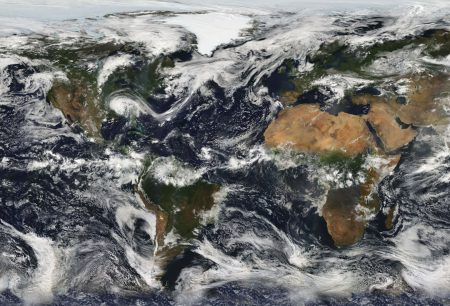
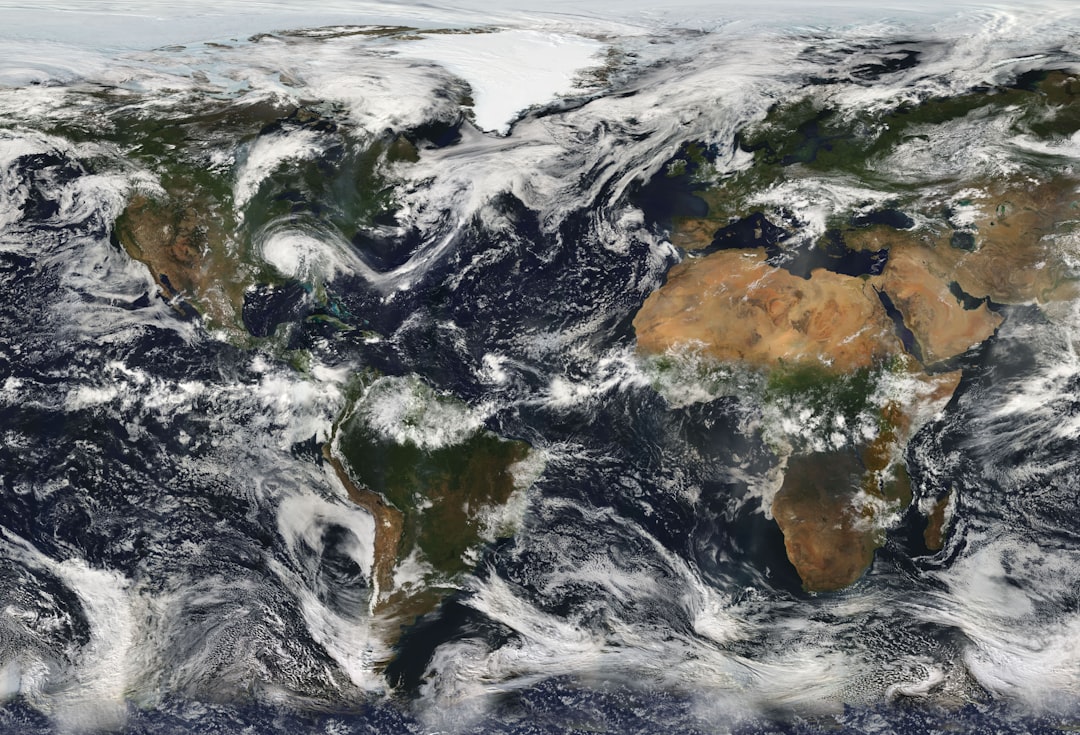
New research from the University of Texas at Austin reveals that El Niño and La Niña are synchronizing global floods and droughts link across continents, profoundly affecting water availability, agriculture, and global trade. This groundbreaking study indicates that these recurring climate patterns intensify and connect far-apart regions, leading to simultaneous extreme wet or dry conditions worldwide. The findings underscore that water crises are not isolated events but part of a larger, interconnected planetary system.
The implications of this discovery, published in AGU Advances, are significant for global planning, particularly in food production and humanitarian aid. By understanding these synchronized water extremes, nations can better anticipate and prepare for widespread environmental challenges. The research also highlights a concerning global shift observed over the last decade, where dry extremes have become more prevalent than wet ones, adding urgency to climate adaptation strategies.
For two decades, scientists at the UT Jackson School of Geosciences meticulously tracked Earth’s total water storage, a critical climate indicator encompassing rivers, lakes, snow, soil moisture, and groundwater. Lead author Ashraf Rateb, a research assistant professor, noted that most previous studies focused on counting rare extreme events. Instead, their team examined how these extremes are spatially connected, providing a more comprehensive understanding of the patterns driving droughts and floods globally.
The synchronized rhythm of water extremes
El Niño and La Niña, collectively known as the El Niño-Southern Oscillation (ENSO), emerged as the primary drivers of these extreme changes in total water storage. The study found that ENSO tends to align these extremes, causing different continents to experience unusually wet or dry conditions simultaneously. Bridget Scanlon, a research professor and co-author, emphasized the real-world consequences, stating, “Looking at the global scale, we can identify what areas are simultaneously wet or simultaneously dry. And that of course affects water availability, food production, food trade — all of these global things.”
To measure these vast changes, the researchers utilized gravity measurements from NASA’s GRACE and GRACE Follow-On (GRACE-FO) satellites. These advanced satellites detect shifts in water mass over large areas, approximately 300 to 400 kilometers wide. By classifying wet extremes as water storage levels above the 90th percentile and dry extremes below the 10th percentile, the team observed how unusual ENSO activity pushes widely separated regions into simultaneous extreme conditions, with El Niño and La Niña often exhibiting opposite effects.
A decade of shifting global water patterns
The study also revealed compelling real-world examples of this synchronization. During the mid-2000s, an El Niño event coincided with severe dryness in South Africa, while another El Niño in 2015-2016 was linked to a significant drought in the Amazon. Conversely, the La Niña period of 2010-2011 brought exceptionally wet conditions to diverse regions such as Australia, southeast Brazil, and South Africa, showcasing the far-reaching and varied impacts of these climate cycles.
Beyond individual events, a broader and more concerning trend was identified: a global shift in water behavior around 2011-2012. Before this period, unusually wet conditions were more common worldwide. However, after 2012, dry extremes began to dominate the planet’s water landscape. Researchers attribute this change to a long-lasting climate pattern in the Pacific Ocean, which significantly influences how ENSO impacts global water distribution, exacerbating the global floods droughts link.
These findings provide a critical framework for understanding the interconnectedness of Earth’s climate systems and the escalating challenges of water management. As El Niño and La Niña continue to intensify, the synchronized nature of floods and droughts demands a coordinated global response, moving beyond localized solutions to address a planetary problem that impacts billions.