A new study suggests a faint radio signal from the universe’s “Dark Ages” could be a crucial clue to understanding dark matter, the mysterious substance making up most of our cosmos. Researchers from the University of Tsukuba used simulations to show how this ancient hydrogen emission might carry a measurable fingerprint of dark matter, paving the way for future lunar telescope discoveries.
The universe experienced a profound “Dark Ages” for roughly 100 million years after the Big Bang, a period before the first stars ignited. During this epoch, the cosmos, though devoid of light, was not entirely silent; hydrogen atoms emitted subtle radio waves at a 21-cm wavelength, believed to hold vital information about cosmic evolution. This era, approximately 400,000 years after the Big Bang, offers a unique window into the earliest stages of the universe.
Scientists have long theorized about this primordial hydrogen signal, but its potential to directly probe dark matter is a relatively new and exciting prospect. The challenge lies in detecting such an incredibly weak cosmic echo amidst terrestrial interference, making the lunar surface an ideal, undisturbed observatory for this ambitious quest to find the dark matter signal.
Simulating the early universe’s echo
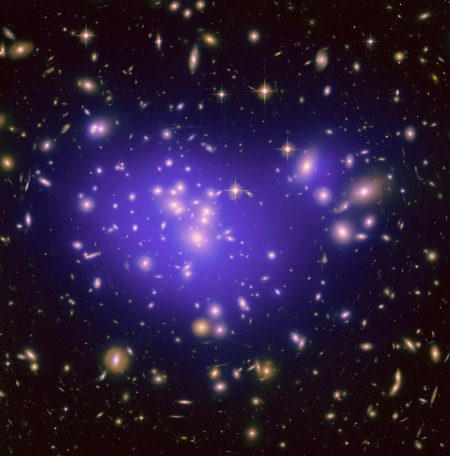
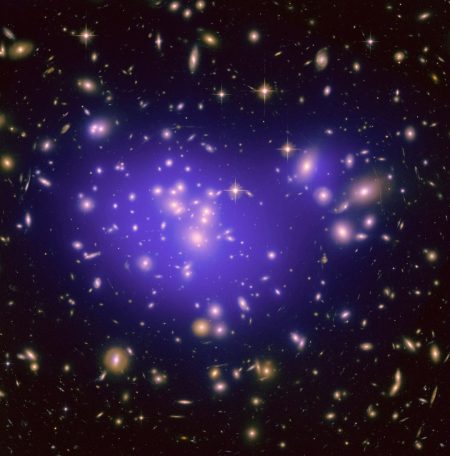
Using advanced numerical simulations, a team including Hyunbae Park, Rennan Barkana, and Naoki Yoshida from the University of Tsukuba and The University of Tokyo explored how the 21-cm signal might behave under different theories of dark matter. Their findings, published in Nature Astronomy in late 2025, indicate that dark matter, which constitutes about 80% of all matter, could subtly alter this signal.
By meticulously recreating the structure and movement of gas and dark matter in the young universe on powerful supercomputers, the researchers predicted the strength of the radio emission during the Dark Ages with unprecedented accuracy. They suggest that hydrogen gas during this period produced a distinct signal with a brightness temperature of roughly 1 millikelvin when averaged across the sky. Critically, dark matter is expected to cause variations in this signal of a similar magnitude, providing a unique dark matter signal.
The moon: Humanity’s next cosmic observatory
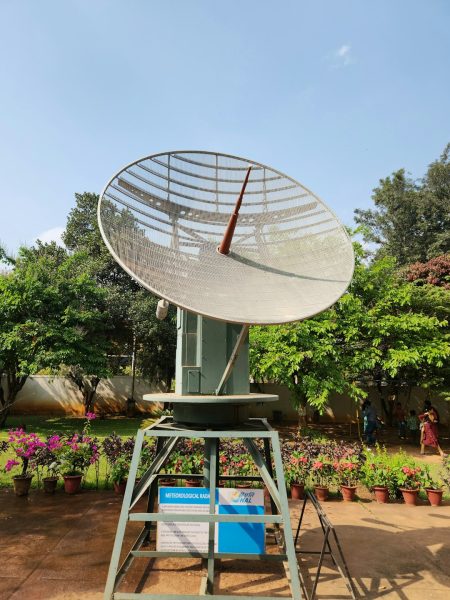
Detecting such an extremely weak signal requires an environment free from the significant interference caused by Earth’s atmosphere and human technology. This is precisely why astronomers are now looking to the Moon as the ideal location for the next generation of radio telescopes. Several upcoming lunar missions, including Japan’s Tsukuyomi Project, are designed to place such instruments on the lunar surface, far from terrestrial noise.
If these lunar instruments succeed in capturing the ancient radio signal, measuring its overall strength across a wide frequency range (around 45 MHz) could provide critical information about dark matter. This includes insights into the mass and speed of its particles, potentially unraveling one of astronomy’s greatest mysteries. The Moon offers a quiet vantage point, essential for distinguishing the faint cosmic echoes from the cacophony of Earth.
The prospect of detecting this faint dark matter signal promises to revolutionize our understanding of the universe’s earliest moments and the fundamental nature of dark matter. As lunar missions advance, the dream of peering into the cosmos’s infancy, guided by these ancient radio whispers, moves closer to reality, offering profound implications for astrophysics and cosmology.