Astronomers from Maynooth University in Ireland may have finally cracked one of the universe’s most enduring mysteries: how black holes grew to such enormous sizes so quickly after the Big Bang. New simulations published in Nature Astronomy suggest that chaotic conditions in the early cosmos created perfect ‘feeding frenzy’ environments for nascent black holes, supercharging their growth.
This breakthrough, highlighted in a report by ScienceDaily.com on January 26, 2026, directly addresses puzzling observations from the James Webb Space Telescope, which has detected surprisingly massive black holes existing far earlier than many established theories predicted. The scale of their rapid development has long challenged astrophysical models.
For decades, scientists grappled with how these cosmic leviathans could amass millions or even billions of solar masses in just a few hundred million years after the universe’s birth. The conventional understanding of black hole growth seemed insufficient to explain such accelerated development, leaving a significant gap in our cosmic narrative.
The chaotic conditions fueling extreme growth
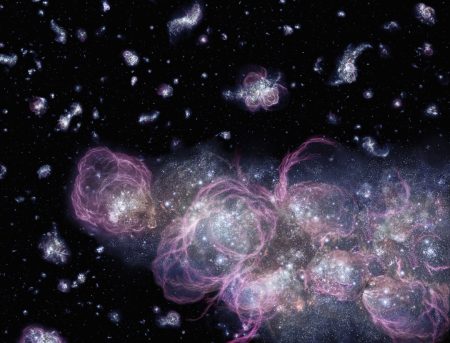
The Maynooth University research team, led by PhD candidate Daxal Mehta, utilized advanced computer simulations to reconstruct the behavior of the first black holes. They found that dense, gas-rich early galaxies were not just incubators for stars, but also provided ideal conditions for what’s known as ‘super Eddington accretion’, a process where black holes devour matter at unprecedented rates.
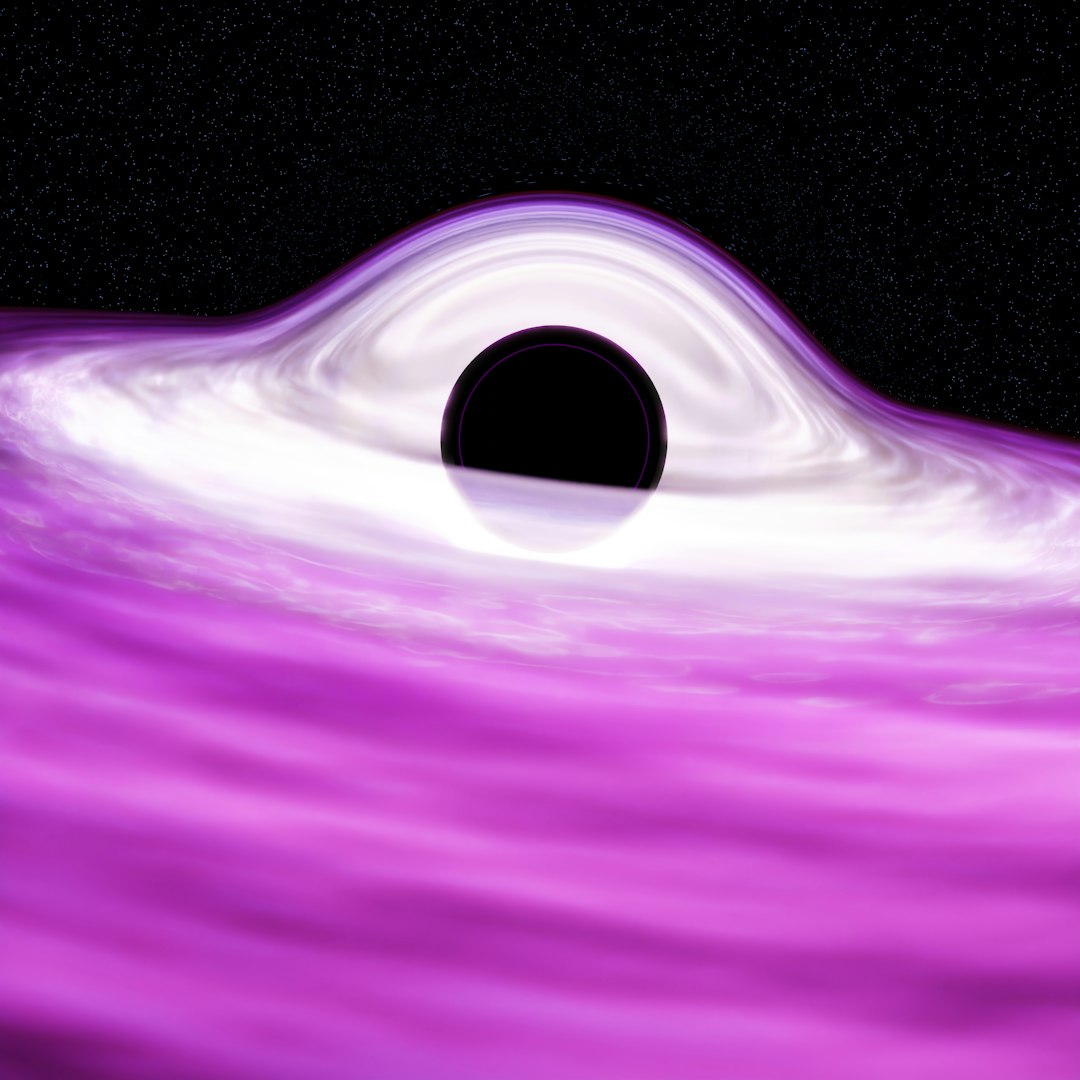
During super Eddington accretion, a black hole pulls in material faster than the outward radiation pressure from the infalling gas would typically allow. According to Mehta, these ‘feeding frenzies’ transformed modest ‘light seed’ black holes—initially only tens to a few hundred times the Sun’s mass—into gargantuan entities tens of thousands of times more massive, far exceeding previous expectations for their growth potential.
Dr. Lewis Prole, a postdoctoral fellow on the team, emphasized that these findings provide a crucial link. ‘This breakthrough unlocks one of astronomy’s big puzzles,’ Prole stated, explaining how black holes observed by the James Webb Space Telescope managed to reach such super-massive sizes so quickly. The early universe, it seems, was far more turbulent and productive in fostering black hole growth.
Rethinking the origins of supermassive black holes
Until now, many theories posited that only ‘heavy seed’ black holes, those already born with masses up to a hundred thousand times that of the Sun, could explain the early existence of supermassive black holes. The new simulations challenge this long-standing assumption by demonstrating the spectacular growth capability of their ‘light seed’ counterparts.
Dr. John Regan, leader of the Maynooth research group, noted that ‘heavy seeds are somewhat more exotic and may need rare conditions to form.’ He further explained, ‘Our simulations show that your “garden variety” stellar mass black holes can grow at extreme rates in the early Universe.’ This implies a much larger and more active population of massive black holes in the infant cosmos than previously imagined.
The implication is profound: the universe’s earliest epochs were far more dynamic and conducive to extreme early universe black hole growth evolution. This revised understanding suggests that the mechanisms driving cosmic evolution shortly after the Big Bang were more vigorous and efficient than previously modeled, potentially reshaping our entire cosmological timeline.
These findings not only solve a critical mystery in astrophysics but also open new avenues for research, particularly for interpreting future data from advanced telescopes. Understanding how these cosmic giants formed so rapidly is key to unraveling the full story of galaxy formation and the structural evolution of the universe itself, providing a clearer picture of our cosmic origins.