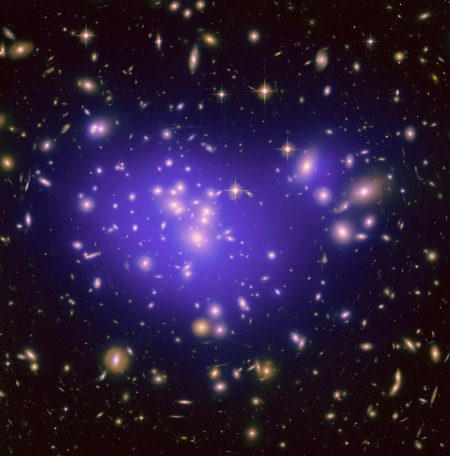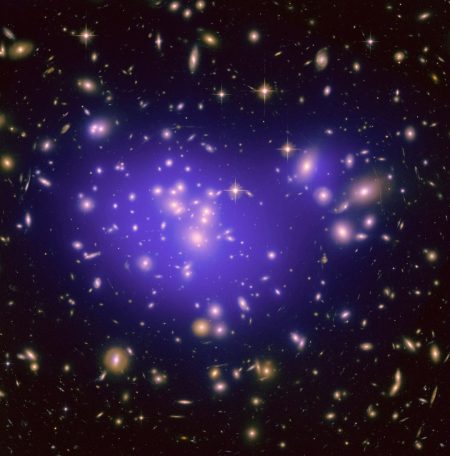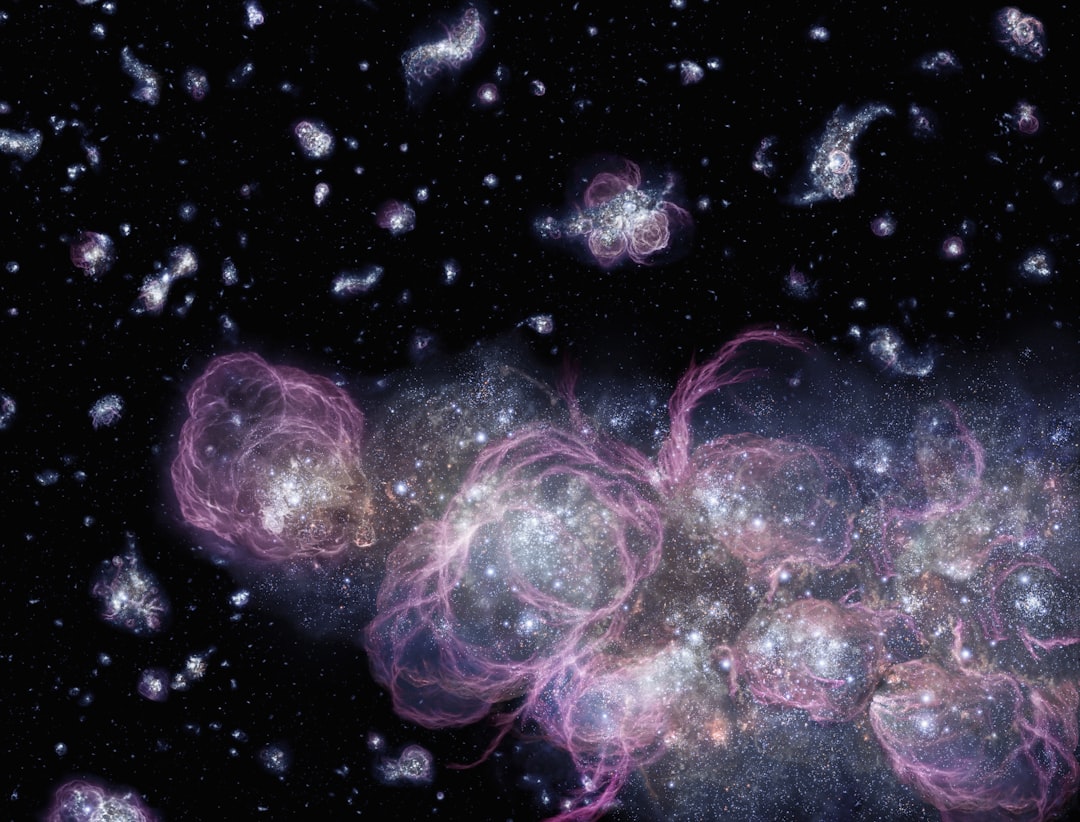
Astronomers have uncovered a young galaxy cluster, designated SPT2349-56, exhibiting immense heat and energy levels far exceeding predictions for its cosmic age. This groundbreaking discovery, detailed in a study led by researchers from the University of British Columbia, challenges established models of how galaxy clusters form and evolve in the early universe, suggesting a more dynamic and energetic beginning than previously theorized.
Dating back merely 1.4 billion years after the Big Bang, this cluster is unexpectedly ablaze with gas at temperatures at least five times hotter than anticipated. Current cosmological theories propose that such massive structures gradually accumulate heat over billions of years as gravity pulls them together, reaching extreme temperatures only much later in their development. The observation of such early and intense heating forces a critical re-evaluation of these long-held assumptions.
The implications extend beyond just this single cluster. Understanding the forces that shaped SPT2349-56 provides crucial insights into the formation of the largest galaxies in the universe, which predominantly reside within these vast cosmic structures. The findings suggest that powerful, early universe activity played a more significant role in shaping these environments than scientists once thought, potentially driven by supermassive black holes.
Unraveling the extreme energy in a young galaxy cluster
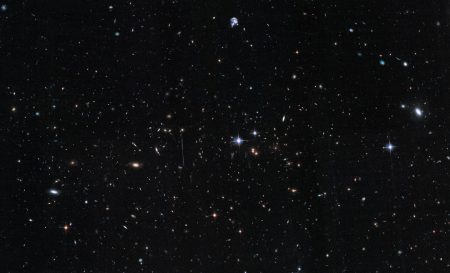
The research team, utilizing the advanced capabilities of the Atacama Large Millimeter/submillimeter Array (ALMA), peered approximately 12 billion years into the past to study SPT2349-56. This cluster, despite its youth, is already remarkably large, with a central region spanning roughly 500,000 light-years, comparable to the Milky Way’s halo. It hosts over 30 active galaxies, furiously producing new stars at a rate more than 5,000 times higher than that of our own galaxy.
To gauge the cluster’s intense thermal energy, the scientists employed the Sunyaev-Zeldovich effect, a technique that allows for the estimation of the intracluster medium’s heat—the gas existing between the galaxies. According to a ScienceDaily report from January 7, 2026, lead author Dazhi Zhou, a PhD candidate at the UBC department of physics and astronomy, initially doubted the strength of the signal due to its unexpected intensity. “In fact, at first I was skeptical about the signal as it was too strong to be real,” Zhou stated, highlighting the profound surprise this discovery brought to the scientific community.
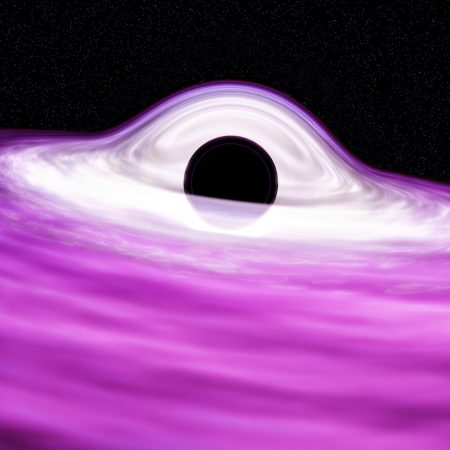
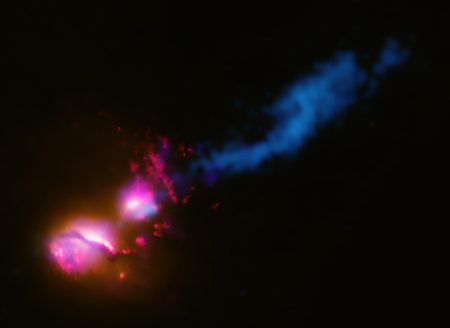
Dr. Scott Chapman, a co-author and professor at Dalhousie University, emphasized the role of powerful cosmic engines. “This tells us that something in the early universe, likely three recently discovered supermassive black holes in the cluster, were already pumping huge amounts of energy into the surroundings and shaping the young cluster, much earlier and more strongly than we thought.” This suggests that these colossal black holes were not passive entities but active architects of their cosmic neighborhoods, influencing their environments with enormous energy output.
Rethinking galaxy cluster formation models
The conventional wisdom posits that the gas within galaxy clusters slowly gathers and heats up as gravitational forces pull an unstable cluster inward over vast stretches of time. This gradual process is expected to culminate in a stable, hot environment as the cluster matures. The new observations from SPT2349-56 present a radically different narrative, one of a far more violent and rapid heating process occurring in the universe’s infancy.
Published in the journal Nature on January 5, 2026, these findings necessitate a significant revision of theoretical models concerning galaxy cluster evolution. Researchers must now explore how intense star formation, the activity of supermassive black holes, and this superheated atmosphere interact so profoundly within such a young, compact system. The interplay of these forces holds the key to understanding how present-day galaxy clusters, and by extension, the largest galaxies, were ultimately constructed.
Future studies will focus on dissecting these complex interactions. Scientists aim to determine the precise mechanisms through which supermassive black holes inject such tremendous energy, and how this process influences the overall structure and thermal state of nascent galaxy clusters. This work promises to refine our understanding of cosmic evolution, shedding light on the energetic beginnings that shaped the universe we observe today.