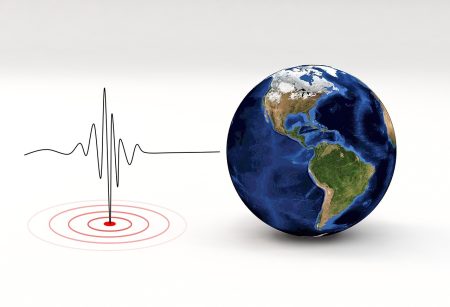
Earthquake sensors are now being repurposed to monitor a growing threat from above: falling space junk. Scientists at Johns Hopkins University have pioneered a novel method, detailed recently on ScienceDaily.com, using existing seismic networks to detect the sonic booms created by re-entering debris, offering unprecedented real-time tracking capabilities.
This innovative approach addresses a critical challenge as thousands of human-made objects orbit Earth, with many eventually re-entering the atmosphere. Each re-entry carries potential risks, ranging from the release of toxic particles to the physical impact of surviving fragments on populated areas. Traditional tracking methods often lack the precision needed for immediate response.
Benjamin Fernando, a postdoctoral research fellow at Johns Hopkins who studies earthquakes, highlights the urgency. “Re-entries are happening more frequently. Last year, we had multiple satellites entering our atmosphere each day, and we don’t have independent verification of where they entered,” he stated. This growing problem demands better solutions for space junk tracking and mitigation.
Seismometers hear space debris re-entry
The core of this new Johns Hopkins University technique lies in detecting shock waves. As space debris plunges into the atmosphere at hypersonic speeds, it generates powerful sonic booms, much like military jets. These shock waves travel through the air and ground, triggering networks of seismometers designed to measure ground motion from earthquakes.
By analyzing the precise timing and location of these seismic signals, researchers can reconstruct the object’s flight path. Fernando and his coauthor, Constantinos Charalambous from Imperial College London, demonstrated this by analyzing the April 2, 2024, re-entry of debris from China’s Shenzhou-15 spacecraft. This module, roughly 3.5 feet wide and over 1.5 tons, posed a significant potential hazard.
Using data from 127 seismometers across Southern California, the team mapped the Shenzhou-15 module’s trajectory and speed. They found it streaked through the atmosphere at Mach 25-30, moving northeast over Santa Barbara and Las Vegas. Crucially, their seismic analysis also allowed them to estimate the debris’s altitude and pinpoint when it broke apart.
This detailed information, published in the journal Science, showed the debris traveled about 25 miles north of the path predicted by U.S. Space Command, which relies on pre-reentry orbital tracking.
The critical need for precise atmospheric reentry monitoring
Accurate atmospheric reentry monitoring is more than an academic exercise; it’s a public safety and environmental imperative. When debris burns up, it can release toxic particles that linger in the atmosphere, drifting with weather patterns and potentially affecting human health. Knowing the exact path helps authorities understand exposure risks to populations.
Fernando cited the 1996 re-entry of Russia’s Mars 96 spacecraft. Its radioactive power source, initially believed to have burned up, landed intact in the ocean. Later, scientists found artificial plutonium in a Chilean glacier, suggesting contamination from the power source rupturing during descent.
This historical event underscores the importance of advanced satellite re-entry hazards detection and the critical need for independent tracking tools.
The ability of existing earthquake sensors to provide near real-time, independent verification of re-entry events marks a significant leap forward. This new methodology promises to enhance safety measures, improve environmental impact assessments, and facilitate the rapid recovery of potentially dangerous space debris, creating a safer planet from the growing celestial junkyard.