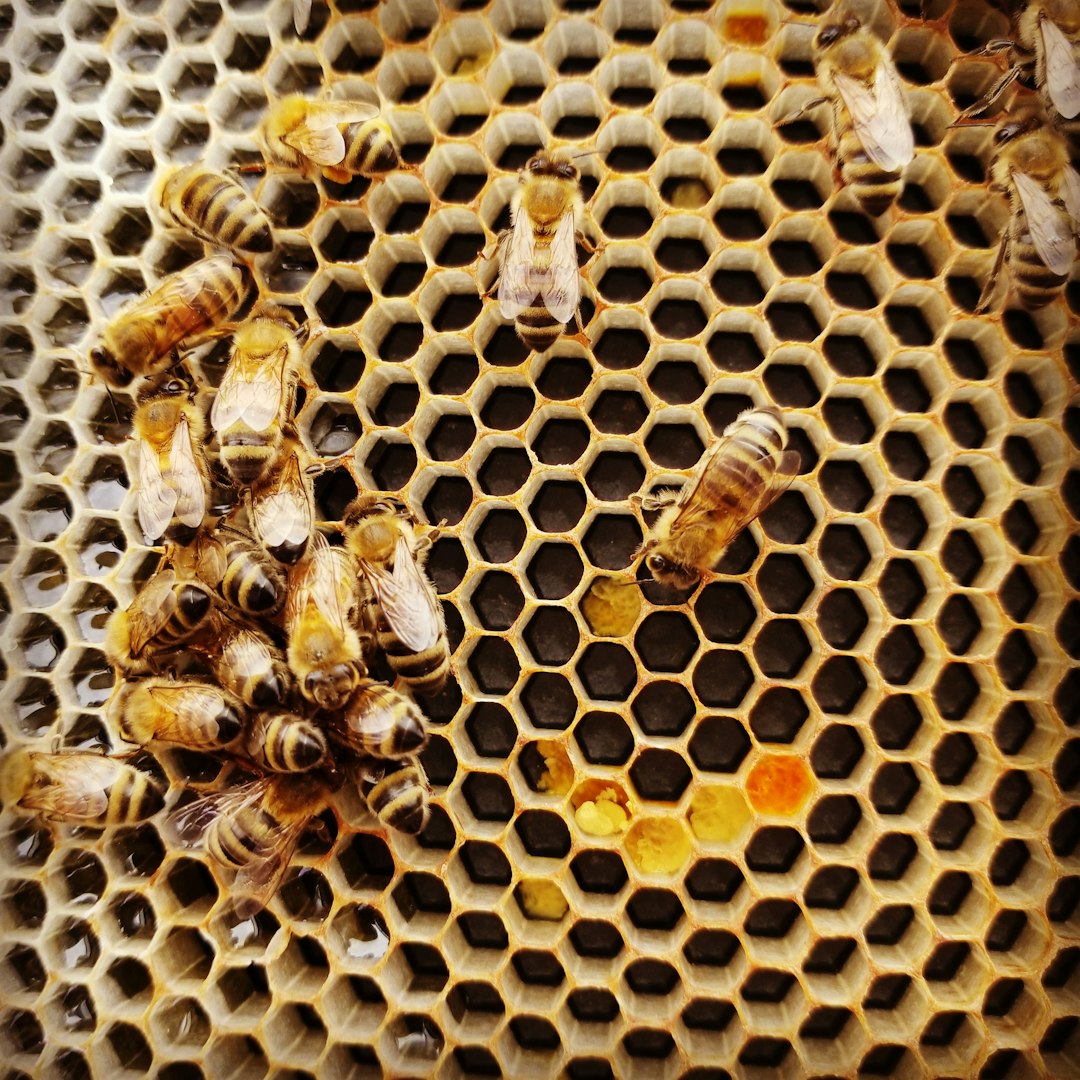
Prolonged periods of extreme heat are now overwhelming the sophisticated natural cooling systems of honey bees, leading to significant temperature fluctuations within hives and causing colony population declines. This alarming discovery, detailed in a recent study, highlights a growing threat to these crucial pollinators as global temperatures continue their upward trend.
Researchers tracking honey bee colonies during a scorching Arizona summer found that temperatures frequently exceeded 40°C (104°F) over a three-month period. This intense heat exposed developing bees to stressful conditions, signaling a critical vulnerability that could impact agricultural systems worldwide.
The findings, published in Ecological and Evolutionary Physiology, underscore an urgent challenge for beekeepers and agricultural sectors alike. Honey bees are critical for pollinating a vast array of crops, and their diminished capacity to cope with heat stress has far-reaching economic and ecological implications.
The mechanics of honey bee heat stress
Honey bees typically maintain an ideal brood temperature of 34-36°C for healthy development through complex thermoregulation behaviors, including fanning and evaporative cooling. However, the Arizona study revealed that these mechanisms are pushed past their limits during severe heat waves.
Although colonies managed to keep average brood temperatures within the optimal range, daily internal fluctuations were significant. Bees at the brood’s center experienced about 1.7 hours daily below and 1.6 hours above optimal temperatures. More critically, young bees near the brood edges endured up to eight hours outside the safe temperature window each day, according to ScienceDaily reporting on the study in January 2026.
These repeated temperature swings had clear biological consequences. Colonies exposed to higher peak air temperatures and greater internal temperature variation experienced noticeable declines in population size. The study authors, including Jun Chen and Jennifer H. Fewell, noted that “excessive heat, with maximal temperatures exceeding 40°C, can reduce colony populations by impairing the thermoregulation of brood or by exposing adults to temperatures that shorten their lifespans.”
Climate change and future challenges for pollination
The study also highlighted the significant role of colony size in mitigating heat effects. Larger colonies demonstrated a superior ability to maintain stable internal temperatures, with fluctuations of approximately 6°C at the outer brood edges compared to up to 11°C in smaller hives. This stability allowed larger colonies to better protect both developing and adult bees from extreme temperatures.
With climate projections indicating a potential global average temperature rise of 2.7°C by the century’s end, and up to 4°C under higher emission scenarios, the challenges observed in Arizona are likely to become more widespread. Experts from the Intergovernmental Panel on Climate Change (IPCC) consistently warn of more frequent and intense heat waves globally.
Furthermore, increased humidity could exacerbate the problem, as it significantly reduces the effectiveness of evaporative cooling—the primary mechanism honey bees use to regulate hive temperatures. This creates a double bind for bee colonies, making their essential task of thermoregulation even more difficult. The Food and Agriculture Organization of the United Nations (FAO) emphasizes the critical role of pollinators for food security, making these findings particularly concerning.
Beekeepers and agricultural communities must consider adaptive management practices. These include providing supplemental water sources, strategically placing hives in shaded areas, improving hive design and insulation, and ensuring access to diverse, high-quality forage. Such proactive steps will become increasingly vital to help honey bees withstand rising heat stress and maintain colony stability in a warming world, securing the future of global pollination services.