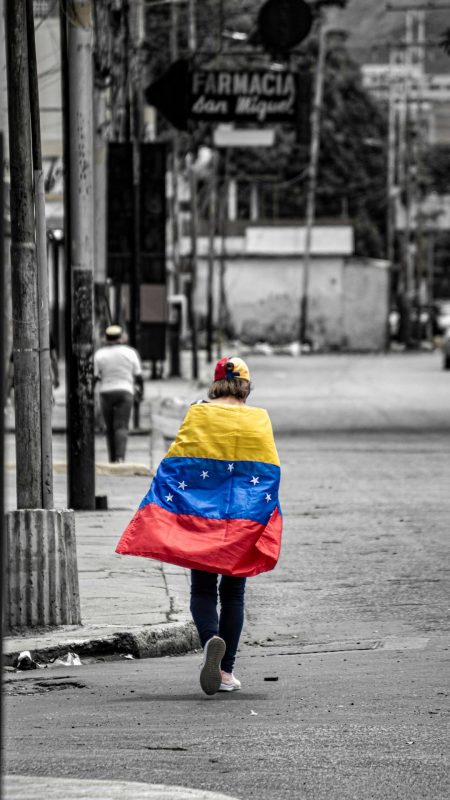
As the World Economic Forum convened in Davos, the traditional pledges of stakeholder capitalism and sustainable development found themselves overshadowed by stark geopolitical realities. In January 2026, the global stage witnessed significant unilateral actions, including the United States asserting control over Venezuela’s oil infrastructure and pressuring European nations over Greenland, creating a profound disconnect between the forum’s stated goals and the emerging global disorder. This unsettling backdrop, highlighted by economist Mariana Mazzucato, underscores a critical juncture where stated intentions diverge sharply from real-world events.
This chasm between rhetoric and reality, as articulated by Mazzucato in a commentary for Project Syndicate, casts a long shadow over the efficacy of such high-profile gatherings. The forum, under the banner “A Spirit of Dialogue,” struggled to reconcile its vision with a world increasingly defined by aggressive national interests and a disregard for multilateral consensus. The events unfolding demonstrate how deeply geopolitics can challenge the very foundations of global economic cooperation, making the phrase “History Marches Past Davos” resonate with new urgency.
The critical question emerging from this scenario is whether the World Economic Forum can adapt its approach to genuinely address the complex, often confrontational, dynamics of international relations. Without concrete frameworks for accountability and risk-sharing, the annual gathering risks becoming what some critics describe as mere theater, detached from the pressing challenges facing nations and global citizens. The world demands more than dialogue; it requires tangible solutions and binding commitments in the face of escalating crises.
The widening gap between rhetoric and reality
Davos has long been a platform for discussions on global challenges, from climate change to inclusive growth. However, the 2026 meeting served as a potent reminder of the limitations of dialogue when confronted by power politics. Mazzucato’s critique points to the absence of binding conditionalities that could distinguish genuine value creation from rent extraction, suggesting that many pledges remain performative rather than transformative.
For instance, while the WEF championed purpose-driven business, the unilateral seizure of Venezuela’s oil infrastructure by the U.S. presented a stark contrast to principles of international cooperation and sovereignty. This action, described by President Donald Trump as an “indefinite” American administration of petroleum reserves, directly challenged the spirit of multilateralism that Davos purports to foster. Such moves undermine trust and make collaborative problem-solving significantly more difficult on a global scale.
Furthermore, the pressure exerted on European countries regarding Greenland illustrates a pattern of aggressive diplomacy that prioritizes national gain over collective stability. A recent report from the Chatham House Centre for Global Studies (2025) highlighted a trend of increasing unilateralism among major powers, noting a significant decline in effective multilateral initiatives over the past two years. This trend suggests a fundamental reordering of international relations, where traditional forums like Davos may struggle to maintain their influence.
Geopolitical shifts and the future of global cooperation
The events surrounding Davos in 2026 are indicative of deeper, ongoing geopolitical shifts that are reshaping the global order. The rise of assertive national interests, coupled with a decline in adherence to international norms, presents a formidable challenge to institutions designed for collective action. This environment makes it increasingly difficult for the World Economic Forum to bridge divides or foster genuine consensus among global leaders.
Experts at the International Monetary Fund (IMF) have also cautioned that geopolitical fragmentation could severely impede global economic recovery and long-term stability (IMF World Economic Outlook, 2025). The weaponization of economic tools, such as sanctions or control over vital resources, creates an unpredictable landscape that deters investment and hinders sustainable development efforts, directly counteracting the WEF’s stated objectives.
In this evolving landscape, the role of forums like Davos must be re-evaluated. If they are to remain relevant, they must move beyond aspirational rhetoric to confront the gritty realities of power dynamics and geopolitical competition. This requires not just dialogue, but also mechanisms for accountability and an honest assessment of how global institutions can genuinely influence state behavior, rather than merely observing the march of history.
The 2026 Davos meeting serves as a powerful testament to the fact that history does not pause for dialogue. The stark realities of geopolitical aggression and unilateral actions demand a more robust and pragmatic approach from global institutions. Moving forward, the World Economic Forum, and similar platforms, must either evolve to address these profound shifts with binding frameworks and genuine risk-sharing, or risk becoming increasingly peripheral to the forces shaping our world. The future of global cooperation hinges on this critical adaptation.