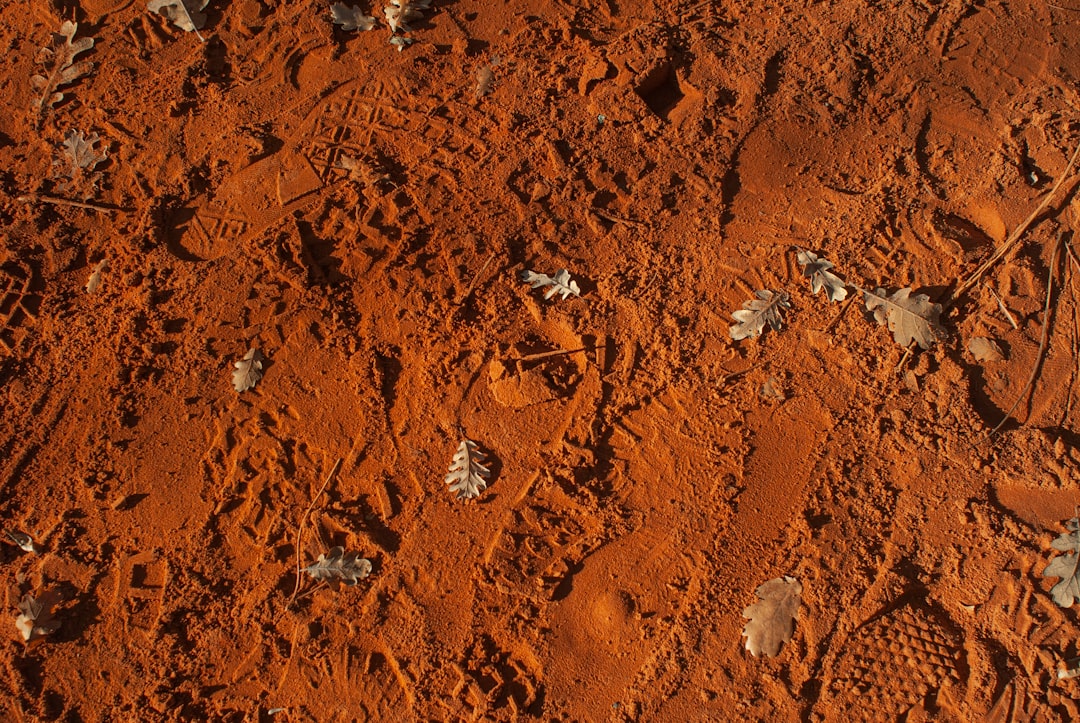
Scientists are exploring how Earth’s toughest microbes could help humans live on Mars, transforming the hostile Martian soil into sturdy building materials. This innovative approach, detailed in recent research, proposes leveraging microbial processes for sustainable Mars colonization, significantly reducing the need to transport resources from Earth.
Building a lasting human presence on the Red Planet presents immense challenges, primarily due to its extreme environmental conditions. Mars lacks a thick atmosphere, has thin air composed mostly of carbon dioxide, and experiences wild temperature swings, coupled with constant cosmic radiation. Any shelter must function as a self-sustaining refuge designed to withstand a world built to break down living systems.
Shipping large quantities of construction materials from Earth is economically unfeasible and logistically complex. The cost of sending just one kilogram of payload to Mars is astronomical, making reliance on Earth-based supplies unsustainable for long-term missions. Therefore, in-situ resource utilization (ISRU) becomes paramount.
ISRU, or using local Martian materials, such as regolith, as the raw ingredient for infrastructure, is a concept central to any long-term human settlement plan. NASA actively explores ISRU technologies, recognizing their critical role in reducing mission costs and enabling sustained human exploration beyond Earth. This includes extracting water ice, producing oxygen, and now, potentially, creating building materials.
Biocementation: The microbial solution for Martian habitats
Inspired by Earth’s earliest life forms, researchers are investigating biomineralization, a natural process where microorganisms create minerals as part of their metabolism. This phenomenon has profoundly shaped Earth’s landscapes for billions of years, from the formation of ancient microbial mats to the creation of durable coral reefs. The challenge now is to adapt and replicate this powerful biological process on Mars.
The most promising route for Martian construction, according to recent studies, is biocementation. This method involves specific microorganisms producing cement-like substances, such as calcium carbonate, at ambient temperatures. This offers a sustainable way to transform loose Martian soil, or regolith, into sturdy, concrete-like building material, as highlighted in a report by ScienceDaily.com in January 2026. This process could enable the 3D-printing of habitats directly on the Martian surface.
A microbial duo for extraterrestrial construction
Central to this vision is a highly cooperative system involving two specific bacteria. One is Sporosarcina pasteurii, an Earth microbe renowned for its ability to create calcium carbonate through a process called ureolysis. This bacterium effectively binds particles together, forming solid structures.
The other key player is Chroococcidiopsis, a robust cyanobacterium. This extremophile is capable of thriving in harsh environments, including conditions simulating those found on Mars. Its resilience to extreme temperatures, radiation, and thin atmospheres makes it an ideal candidate for extraterrestrial applications, aligning with ESA’s vision for Mars exploration.
Together, these microbes form a symbiotic partnership crucial for advancing Mars colonization microbes research. Chroococcidiopsis releases oxygen, which is vital for creating a more supportive microenvironment for Sporosarcina pasteurii to function. Furthermore, it produces an extracellular polymeric substance that offers critical protection to Sporosarcina pasteurii from the damaging UV radiation prevalent on the Martian surface.
In exchange, Sporosarcina secretes natural polymers that not only support mineral formation but also significantly aid in binding the Martian regolith. This intricate biological interaction effectively transforms loose soil into a solid, concrete-like material, perfectly suited for constructing essential structures. This ingenious biological solution offers a practical path to build essential structures directly on Mars, minimizing logistical burdens from Earth.
The prospect of leveraging Earth’s toughest microbes for Martian construction represents a significant leap in space exploration and sustainable off-world living. This bio-inspired approach not only offers a cost-effective and sustainable method for building habitats, but also highlights the broader potential of adapting life to extreme extraterrestrial conditions. As humanity looks towards establishing permanent off-world settlements, these tiny organisms could very well be the unsung architects of our future on Mars, paving the way for a new era of exploration and habitation.