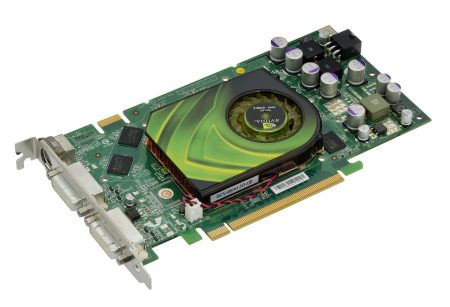
At CES 2026, a groundbreaking collaboration emerged as Nvidia and Siemens revealed a fusion energy partnership, aiming to accelerate the development of carbon-free power. This alliance leverages advanced AI and digital twin technology to revolutionize the quest for sustainable energy solutions, marking a significant stride in industrial innovation.
The announcement, made during Siemens President and CEO Roland Busch’s keynote, highlighted a new era of AI-driven industrial revolution. Jensen Huang, Nvidia’s CEO, joined Busch on stage to detail how this expanded partnership will reinvent all aspects of manufacturing, production, and supply chain management, with a keen focus on energy innovation.
This strategic alliance comes at a critical time when global demand for clean, reliable energy sources is escalating. Fusion energy, long considered the holy grail of power generation, promises virtually limitless, safe, and carbon-free electricity, but its realization has faced significant technological hurdles. The integration of AI and high-performance computing aims to overcome these complex challenges.
Accelerating fusion with digital twin technology
The core of the Nvidia Siemens fusion energy partnership involves a significant collaboration with Commonwealth Fusion Systems (CFS). Based in Massachusetts, CFS is currently constructing SPARC, a prototype fusion power plant. The new initiative will create a sophisticated digital twin, an online simulation of the physical SPARC machine, as reported by Fast Company on January 7, 2026.
This digital replica, powered by Nvidia’s AI platforms and Siemens’ industrial software, allows researchers to ask complex questions of the simulation, rapidly testing scenarios and optimizing designs without the immense cost and time associated with physical experimentation. CFS CEO Bob Mumgaard emphasized that this approach will significantly speed up progress on the physical machine, which is already approximately 70% complete. AI will play a crucial role in analyzing vast datasets generated by the simulation, identifying optimal parameters for plasma confinement and energy extraction.
The broader impact on clean energy and industrial AI
The implications of this partnership extend far beyond the realm of fusion energy. The methodologies developed for simulating and optimizing fusion reactors could profoundly impact other complex industrial processes. Industries from automotive to aerospace, and even climate modeling, stand to benefit from the advancements in AI-driven digital twin technology pioneered by this collaboration.
By leveraging cutting-edge AI, Nvidia and Siemens are not only pushing the boundaries of fusion research but also setting new benchmarks for industrial efficiency and innovation. This collaboration underscores the growing importance of interdisciplinary approaches, combining advanced computing with deep engineering expertise, to tackle some of humanity’s most pressing challenges, particularly in the pursuit of a sustainable energy future. The success of such initiatives could redefine global energy landscapes and accelerate the transition to a carbon-neutral world.
The alliance between Nvidia, Siemens, and Commonwealth Fusion Systems represents a pivotal moment in the global quest for clean energy. By harnessing the power of artificial intelligence and digital twin technology, this partnership at CES 2026 has laid a robust foundation for potentially unlocking the immense promise of fusion power, bringing us closer to a future powered by sustainable and abundant energy sources.