Recent scientific breakthroughs show that quantum structured light could transform secure communication and computing, ushering in an era of unprecedented data security and computational power. Scientists are now engineering light in complex, multidimensional ways, allowing individual photons to carry significantly more information than previously imagined.
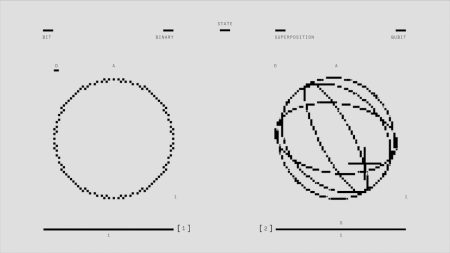
This advancement moves beyond traditional two-dimensional qubits, introducing high-dimensional quantum states known as qudits. By controlling properties like polarization, spatial modes, and frequency simultaneously, researchers can create photons capable of encoding vast amounts of data, marking a critical shift from theoretical curiosity to practical application, as highlighted in a January 2026 review in Nature Photonics.
The implications are far-reaching, promising to enhance the security of data transmission, boost the efficiency of quantum computers, and improve the sensitivity of sensors. This innovative approach is rapidly gaining momentum, driven by international collaborations and significant technological progress.
Boosting secure communication and computing
The integration of quantum structured light dramatically enhances the security and capacity of quantum communication. Packing more information into each photon strengthens encryption and allows for multiple communication channels to operate concurrently, while also improving tolerance to errors and background noise.
For quantum computing, this technology simplifies circuit designs and accelerates processing speeds. It enables the creation of complex quantum states essential for advanced simulations and calculations. Professor Andrew Forbes from the University of the Witwatersrand, a corresponding author on the Nature Photonics review, notes that the field has evolved dramatically, stating, “Twenty years ago the toolkit for this was virtually empty. Today we have on-chip sources of quantum structured light that are compact and efficient.”
Advancements in imaging, sensing, and materials
Beyond communication and computing, quantum structured light is driving significant progress in other scientific domains. Researchers point to enhanced resolution techniques in imaging, including the recent development of the holographic quantum microscope, which allows for detailed images of delicate biological samples without causing damage.
Extremely sensitive sensors that rely on quantum correlations are also emerging, offering new capabilities in various fields. Furthermore, structured light can simulate complex quantum systems, aiding scientists in modeling molecular interactions and potentially accelerating the discovery of new materials. Adam Vallés from the UAB Department of Physics emphasizes this turning point, stating that quantum structured light is “no longer just a scientific curiosity, but a tool with real potential to transform communication, computing and image processing.”
While the field has made amazing progress, challenges remain, particularly concerning the limited distance reach for structured light. This ongoing hurdle, however, stimulates further research into exploiting more abstract degrees of freedom. The global collaboration, exemplified by the partnership between UAB and Forbes, continues to push the boundaries of what is possible, promising a future where quantum structured light fundamentally reshapes our technological landscape.