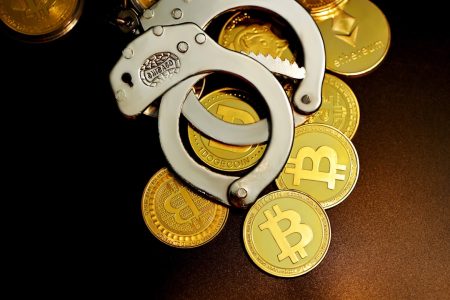
South Korean authorities have reportedly dismantled an extensive cryptocurrency money laundering operation valued at approximately $102 million. This significant action signals an escalation in the nation’s efforts against digital asset crime, highlighting the increasing sophistication of illicit financial activities leveraging blockchain technology.
The bust underscores the proactive stance taken by Seoul to safeguard its financial markets. A recent report from The Block detailed the operation, which involved complex transactions designed to obscure the origins of funds, marking a critical moment in the fight against crypto laundering.
This development comes as global regulators grapple with the challenges of overseeing the rapidly evolving digital asset space. South Korea, a major player in the crypto market, has been at the forefront of implementing stringent regulations, making such enforcement actions a testament to its commitment.
The anatomy of digital asset crime
The alleged $102 million crypto laundering scheme reportedly utilized various sophisticated methods to move illicit funds across borders, exploiting the pseudonymous nature of some digital assets. Investigators uncovered intricate networks involving multiple wallets, mixing services, and potentially offshore exchanges to complicate tracing efforts.
Such operations often involve converting fiat currency into cryptocurrencies, moving them through several layers to obscure the trail, and then converting them back into fiat in different jurisdictions. This particular bust demonstrates that even with advanced techniques, law enforcement agencies are developing equally sophisticated tools for blockchain forensics. According to the Financial Intelligence Unit (FIU) of South Korea, international cooperation is increasingly vital in dismantling these cross-border criminal enterprises.
South Korea’s evolving regulatory landscape
South Korea has consistently pursued a robust regulatory framework for digital assets, aiming to balance innovation with financial stability and consumer protection. The nation’s Financial Services Commission (FSC) has introduced several key measures, including the Virtual Asset User Protection Act, which came into effect in 2023.
This act mandates strict reporting requirements for virtual asset service providers (VASPs) and enhances penalties for market manipulation and illicit trading. Experts like Kim Young-jun, a financial crime analyst based in Seoul, note that “South Korea’s regulatory environment is among the strictest globally, which, while challenging for some businesses, is proving effective in curbing illicit activities.” This proactive approach positions South Korea as a leader in crypto enforcement.
The successful disruption of this large-scale South Korea crypto laundering operation reinforces the message that digital assets are not a safe haven for illegal activities. It signals a continued push by authorities to enhance surveillance and enforcement capabilities, suggesting a future where blockchain’s transparency will increasingly be used against those who seek to exploit its anonymity. The global crypto community watches closely as nations like South Korea refine their strategies against financial crime in the digital age.