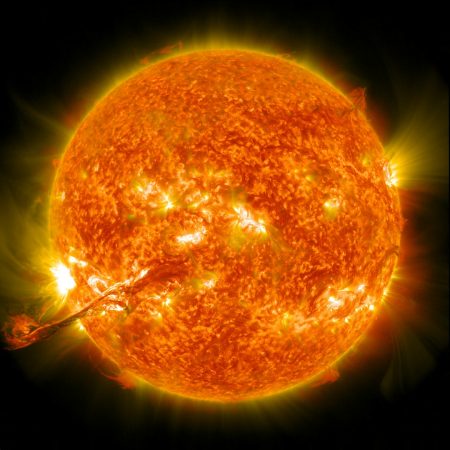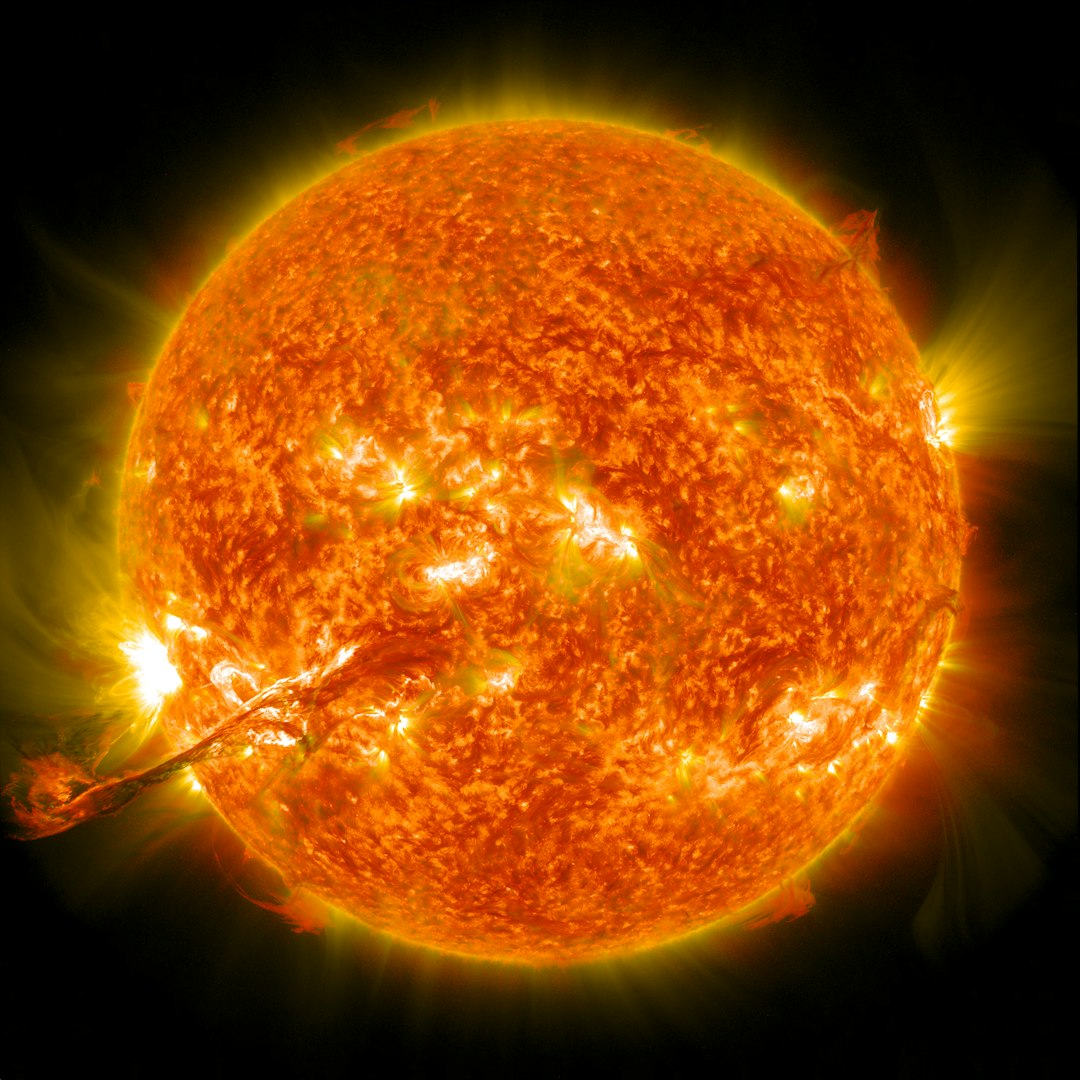
The European Space Agency’s Solar Orbiter spacecraft has captured unprecedented evidence of a “magnetic avalanche,” a cascading phenomenon that ignites giant solar explosions known as solar flares. These groundbreaking observations, detailed in a study published in Astronomy & Astrophysics on January 21, 2026, illuminate the complex mechanisms behind the most powerful eruptions in our solar system.
For years, scientists grappled with understanding the precise trigger for these immense energy releases. The new data, gathered during Solar Orbiter’s close approach to the Sun on September 30, 2024, offers a rare glimpse into the precursor events of a major flare. This insight is crucial for predicting space weather phenomena that can disrupt Earth’s technologies.
Solar flares, when powerful enough, can unleash streams of high-energy particles and radiation that travel across millions of miles, potentially impacting geomagnetic fields and satellite communications on Earth. Unraveling their origins is not merely an academic pursuit but a practical necessity for safeguarding our technological infrastructure.
Unpacking the magnetic avalanche
The core discovery centers on what researchers are calling a “magnetic avalanche.” This process begins with subtle, localized magnetic disturbances that rapidly amplify, triggering a sequence of increasingly stronger explosions. Pradeep Chitta, lead author from the Max Planck Institute for Solar System Research, highlighted the rarity of such detailed observations, stating the team was “very lucky to witness the precursor events of this large flare in such beautiful detail.”
These observations, detailed in a report by ScienceDaily on January 21, 2026, reveal that the flare grew through a cascading effect. Small, weak magnetic disturbances quickly multiplied, igniting more powerful explosions that accelerated particles to extreme speeds. This ultimately produced streams of glowing plasma blobs that rained through the Sun’s atmosphere, a dramatic visual signature of the event.
The underlying mechanism for these powerful eruptions is known as magnetic reconnection, where immense energy stored in twisted magnetic fields is suddenly released. Magnetic field lines, previously pointing in opposite directions, break apart and rapidly reconfigure. This violent rearrangement heats plasma to millions of degrees and hurls energized particles away, initiating the solar flare.
Solar Orbiter’s unprecedented view
A combination of four instruments aboard the Solar Orbiter made this breakthrough possible. The Extreme Ultraviolet Imager (EUI) provided remarkably detailed images of the Sun’s outer atmosphere, the corona, resolving features merely hundreds of kilometers across and recording changes every two seconds. Concurrently, SPICE, STIX, and PHI studied different layers of the Sun, from the hot corona down to its visible surface. This multi-instrument approach allowed scientists to track the flare’s buildup over approximately 40 minutes.
The ability to capture such fine details of the magnetic structures and their rapid evolution is a testament to the advanced capabilities of the Solar Orbiter mission, a collaboration between ESA and NASA. Understanding these intricate processes, particularly the role of magnetic reconnection, is vital for improving our models of space weather and its potential impact on Earth’s technologies and astronauts in orbit. For more on the mission, visit the European Space Agency’s official page.
The strongest solar flares can trigger geomagnetic storms on Earth, posing risks to power grids, satellite operations, and even radio communications. Predicting these events accurately is a key challenge for space weather forecasters, and the new insights into the “magnetic avalanche” mechanism provide a crucial piece of the puzzle. NASA’s research on solar flares further emphasizes their potential terrestrial impacts.
The insights from Solar Orbiter represent a significant leap in heliophysics, moving us closer to predicting the onset of powerful solar flares and mitigating their effects. As our reliance on satellite technology grows, a deeper understanding of these “magnetic avalanches” becomes increasingly critical for global infrastructure. Future missions and continued analysis of Solar Orbiter’s data will undoubtedly refine our comprehension of the Sun’s dynamic and sometimes volatile nature, promising enhanced preparedness for future space weather events.