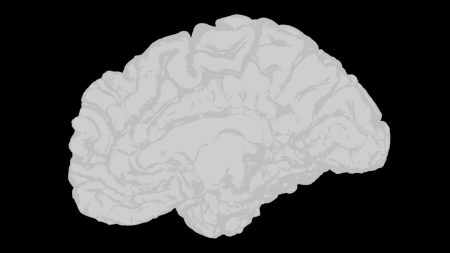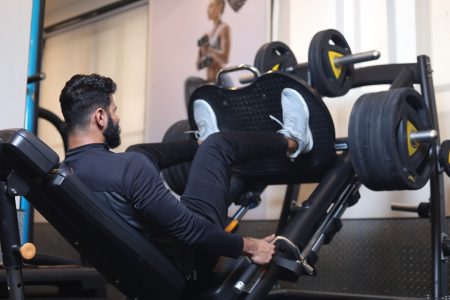
Scientists have discovered a brain trick that makes exercise feel easier, allowing individuals to push harder without perceiving increased effort. This revelation could transform exercise motivation, particularly for those struggling to maintain physical activity.
The groundbreaking research, led by Université de Montréal professor Benjamin Pageaux in collaboration with Université Savoie Mont Blanc, delves into how the brain interprets physical exertion. Published on ScienceDaily in January 2026, the study highlights a simple yet powerful intervention: vibrating tendons before a workout. This method effectively creates a mismatch between the body’s actual effort and the brain’s perception of it.
Understanding why exercise feels easier for some than others has long been a focus in sports science. Beyond fitness levels and muscle strength, the brain plays a critical role in shaping the subjective experience of effort. This perception dictates whether someone adheres to an exercise routine or abandons it, making the feeling of effort a central barrier to a more active lifestyle.
Altering the perception of effort
The core finding demonstrates that a brain trick makes exercise feel easier by manipulating sensory input. Researchers used a wearable vibrating device on participants’ Achilles and knee tendons for 10 minutes before a cycling session. Strikingly, after this vibration, individuals produced more power and showed higher heart rates, yet their self-reported sense of effort remained unchanged.
This suggests the body was working harder, but the brain didn’t register the increased strain. “By changing the information traveling from the muscles to the brain, vibration appears to reshape how movement and exertion are perceived,” explains Pageaux, from the Université de Montréal’s School of Kinesiology and Physical Activity Sciences. This could be a game-changer for encouraging sustained physical activity.
The science behind tendon vibration
While the precise mechanisms are still under investigation, early hypotheses suggest tendon vibration influences neural signals. Pageaux proposes that depending on the amplitude and frequency, vibration can either excite or inhibit neurons in the spinal cord. Furthermore, prolonged vibration alters the reactivity of neuromuscular spindles, which are sensory receptors within muscles that send signals to the brain about muscle length and tension.
By modulating these signals, the brain receives a modified interpretation of the body’s exertion. This physiological intervention effectively tricks the brain into believing the workout is less strenuous than it actually is. The research team from Université Savoie Mont Blanc and Montréal is continuing to explore these biological pathways, planning to use tools like electroencephalography (EEG) and magnetic resonance imaging (MRI) to observe brain activity during exercise with and without vibration.
The potential implications extend far beyond enhanced athletic performance. For sedentary individuals, the daunting feeling of effort is often the biggest hurdle to starting and maintaining an exercise regimen. If a simple brain trick makes exercise feel easier, it could provide a crucial psychological boost, making physical activity more approachable and enjoyable.
Although the initial tests were limited to short cycling sessions, the results are highly promising. Future research aims to understand how pain and fatigue amplify perceived effort, and ultimately, to develop practical strategies that lower this barrier to physical activity. This innovative approach offers a glimpse into a future where exercise adherence is significantly improved through neuroscience-informed interventions.