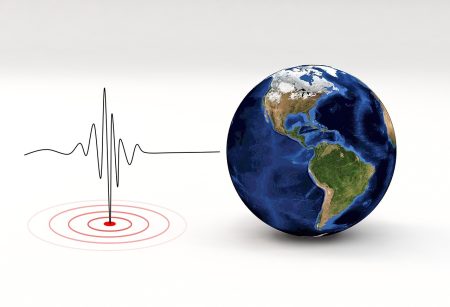

Unfelt micro-earthquakes are uncovering a dangerously complex fault system beneath Northern California, challenging long-held assumptions about seismic risks at the critical juncture where the San Andreas Fault meets the Cascadia subduction zone.
This intricate seismic crossroads, located offshore from Humboldt County, is now understood to involve far more than the previously assumed three major tectonic plates. The new findings offer crucial insights into an area capable of generating highly destructive seismic events.
A recent study, published in Science and highlighted by ScienceDaily.com on January 17, 2026, details how scientists tracked swarms of these tiny tremors to map the hidden geological structures. This research involved experts from the U.S. Geological Survey, the University of California, Davis, and the University of Colorado Boulder.
Unraveling California’s hidden seismic complexity
The research reveals that the Mendocino Triple Junction, a key seismic crossroads, consists of five moving pieces, not just three major plates. Two of these components are deeply hidden below the surface, fundamentally altering our understanding of the regional tectonics.
According to Amanda Thomas, a professor of earth and planetary sciences at UC Davis and coauthor of the study, “If we don’t understand the underlying tectonic processes, it’s hard to predict the seismic hazard.” This deeper understanding is crucial for assessing earthquake risks along the San Andreas Fault and the Cascadia subduction zone.
One significant discovery is a portion of the North American plate that has broken away and is being dragged downward with the Gorda plate. Further south, the Pacific plate is pulling a mass of rock known as the Pioneer fragment beneath the North American plate.
David Shelly of the USGS Geologic Hazards Center compared the challenge to studying an iceberg, stating, “You can see a bit at the surface, but you have to figure out what is the configuration underneath.” Their method involved a dense network of seismometers to detect extremely small, low-frequency earthquakes, thousands of times weaker than those people can feel.
New insights into earthquake mechanics
These faint tremors, often too weak to be felt, are critical for mapping the unseen fault lines. Scientists tested their underground model by observing how these small earthquakes react to tidal forces. Just as lunar and solar gravity influence ocean tides, they also exert subtle stress on tectonic plates.
When these forces align with the natural direction of plate movement, the frequency of small earthquakes increases, providing a natural laboratory for observing subterranean dynamics. This method allowed researchers to validate their model of the complex underground geology.
The updated model specifically helps explain a puzzling magnitude 7.2 earthquake in 1992, which occurred at a much shallower depth than previously expected. The findings suggest the actual plate boundary is not where scientists had assumed, as the surface being pushed beneath North America is not as deep as believed.
This deviation challenges previous assumptions that faults always follow the leading edge of a subducting slab, signifying a crucial refinement in our geological understanding. The research, supported by the National Science Foundation, underscores the dynamic and often surprising nature of Earth’s crust.
The ongoing study of these micro-earthquakes offers an invaluable tool for geologists, providing a clearer picture of California’s intricate and active fault systems. This enhanced understanding will be vital for refining seismic hazard assessments and improving preparedness strategies for communities living in one of North America’s most tectonically active regions.