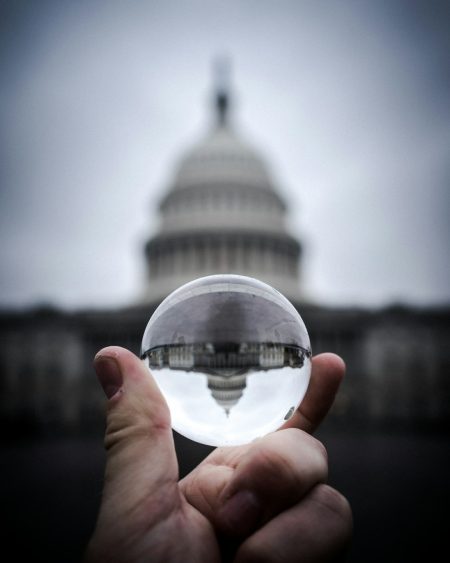
Representative Ritchie Torres has introduced legislation to restrict elected officials’ use of prediction markets. This bill follows a controversial bet concerning Venezuelan leader Nicolás Maduro, igniting debates on ethics and public trust.
The proposed measure seeks to address a growing concern about the intersection of political office and speculative financial instruments. While prediction markets offer unique insights into public sentiment and future events, their use by lawmakers raises significant questions regarding potential conflicts of interest and the integrity of public service. The initial report on this development emerged from www.theblock.co, highlighting the urgency of the ethical discussion.
Prediction markets allow participants to bet on the outcome of future events, from elections to economic indicators. For elected officials, engaging in such markets, especially concerning geopolitical events or policy decisions, can create a perception of leveraging insider information or personal gain from public office.
The ethics of political prediction markets
The core of the debate surrounding the Torres prediction market bill centers on ethical boundaries. Critics argue that public officials, privy to sensitive information and influential in policy-making, possess an inherent advantage in these markets. This could lead to scenarios where personal financial interests might subtly influence official decisions, eroding public confidence.
A study by the U.S. Office of Government Ethics often emphasizes the importance of avoiding even the appearance of impropriety. When an official makes a bet on, for instance, the political future of a foreign leader or the passage of a specific bill, it blurs the lines between public duty and private speculation. The controversial bet involving Nicolás Maduro, though details remain scarce, appears to have served as a catalyst, spotlighting this precarious balance.
Conversely, some proponents of prediction markets suggest they can aggregate dispersed information, potentially offering valuable insights into complex situations. They argue that banning officials from these platforms might limit a source of collective intelligence. However, the prevailing view, especially in the wake of recent controversies, leans towards stricter regulation to safeguard the impartiality expected of public servants.
Legislative responses and future implications
Representative Torres’s bill aims to set a clear precedent, establishing specific prohibitions for elected officials participating in prediction markets. While the exact language and scope of the legislation are still under review, it is expected to cover a broad range of speculative platforms where outcomes are tied to political, economic, or social events that could be influenced by, or directly impact, government actions.
This legislative effort mirrors broader discussions about financial transparency and accountability in politics. Similar concerns have historically led to regulations on stock trading by members of Congress, such as the STOCK Act. The Torres prediction market bill represents an adaptation of these ethical principles to the evolving landscape of digital finance and decentralized platforms.
The passage of such a bill could have significant implications. It would not only reinforce public trust by minimizing perceived conflicts of interest but also send a strong message about the ethical standards expected from those in power. It could also pave the way for similar regulations at state and local levels, creating a more uniform ethical framework for public officials across the nation.
The introduction of the Torres prediction market bill underscores an ongoing challenge: how to adapt traditional ethical guidelines to new financial technologies. While prediction markets offer novel ways to gauge public opinion and forecast events, their potential for misuse by elected officials demands careful consideration. The debate will likely continue, shaping future policies on transparency and integrity in government.