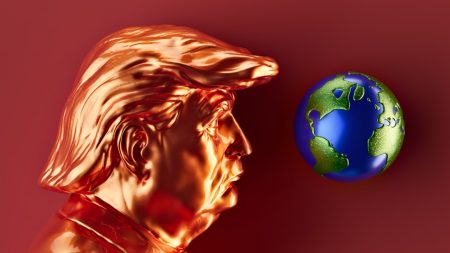
The distinctive approach to US foreign policy, dubbed “Trump’s Jungle Rules,” has reshaped international diplomacy, prioritizing unilateral power projection over established global norms. This strategy, marked by a disregard for alliances and multilateral institutions, positions the United States as a primary source of global instability, according to recent analyses.
This shift diverges sharply from decades of US foreign policy, which often emphasized international cooperation and institution-building. Under this doctrine, the US is seen to exercise power wherever it perceives an advantage, unconstrained by the intricate web of agreements and partnerships that historically underpinned its global leadership.
The implications extend beyond diplomatic circles, touching upon global trade, security alliances, and environmental accords. Critics argue that this transactional approach erodes trust and predictability, making international cooperation on pressing global challenges increasingly difficult and precarious.
The erosion of international norms and alliances
The ‘America First’ agenda has systematically challenged pillars of the international order. Withdrawals from agreements like the Paris Climate Accord and the Iran nuclear deal signaled a clear departure from multilateral commitments. This transactional worldview prioritizes immediate national gain over collective security, eroding global trust.
As Ian Bremmer noted in a January 2026 commentary on Project Syndicate, America’s unilateral power exercise is uncoupled from norms and alliances. He highlighted that this approach makes the United States a significant source of global instability, preying on the weak and vulnerable rather than building consensus. This sentiment is echoed by many international relations experts.
This sentiment is echoed by many international relations experts, who warn of the long-term damage to global governance structures. A briefing from the Council on Foreign Relations outlines how such unilateral actions can undermine international law and institutions, creating a vacuum that other powers may seek to fill.
Economic nationalism and its global repercussions
Economic nationalism, a cornerstone of this foreign policy, manifests through aggressive trade policies designed to protect domestic industries. Tariffs imposed on goods from China and European allies, for example, ignited trade wars that disrupted global supply chains and created uncertainty for businesses worldwide. This approach often overlooks the interconnectedness of modern economies.
While aiming to bring manufacturing jobs back to the US, these policies have frequently resulted in retaliatory tariffs, harming American exporters and consumers. A 2023 report by the Peterson Institute for International Economics detailed the economic costs of these trade disputes, indicating negative impacts on both US and global GDP. This underscores the complexity of disentangling global trade.
Furthermore, the US has often bypassed established dispute resolution mechanisms, such as those of the World Trade Organization. This undermines the very institutions designed to ensure fair and predictable international commerce. Such actions foster an environment of economic unpredictability, making long-term planning challenging for multinational corporations and smaller businesses alike.
The legacy of ‘Trump’s Jungle Rules’ will likely be a more fragmented and less predictable international system. Nations may increasingly prioritize self-reliance and regional blocs over broader global cooperation, adapting to a world where traditional leadership roles are questioned. The challenge for future administrations will be to navigate this altered landscape, potentially rebuilding trust and re-engaging with multilateralism while addressing persistent global threats.