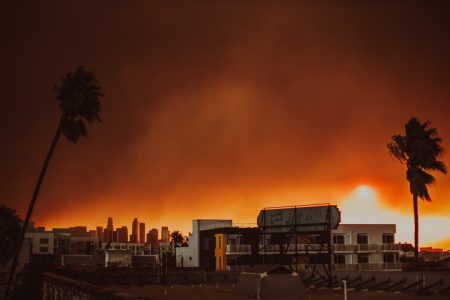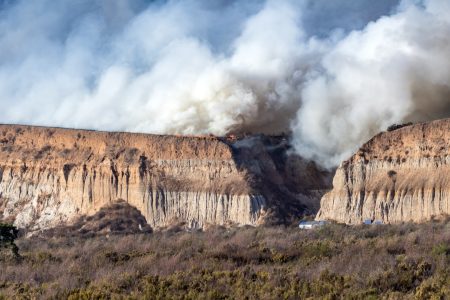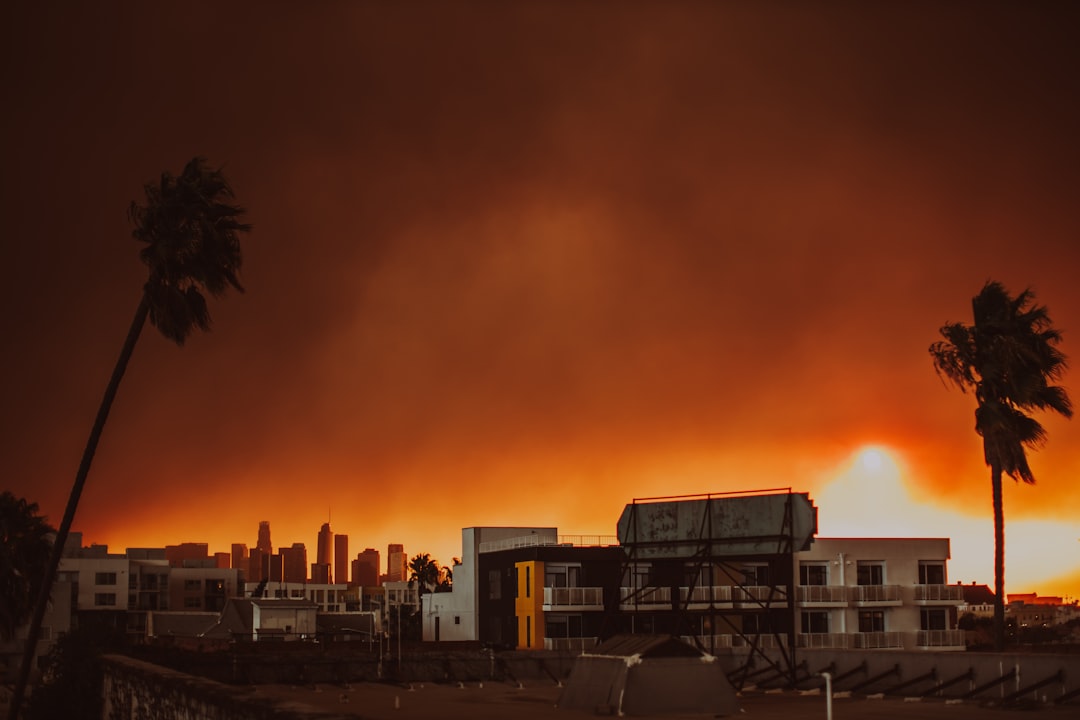
One year after the devastating Los Angeles wildfires, new perspectives from journalist and author Jacob Soboroff reveal critical insights into America’s readiness for an escalating era of natural disasters. The simultaneous conflagrations in the Pacific Palisades and Altadena exposed significant systemic vulnerabilities, challenging existing emergency protocols and highlighting the urgent need for enhanced U.S. disaster response strategies.
These fires, which became the costliest wildfire event in U.S. history, underscored a troubling pattern: despite clear warnings, communities were largely unprepared for the scale and speed of the destruction. Soboroff’s examination, as discussed in an interview from Rapid Response, hosted by Robert Safian, and summarized by Fast Company, points to a broader national challenge in adapting to increasingly frequent and intense climate-driven events.
The lessons gleaned from Los Angeles extend far beyond Southern California, offering a stark mirror to how the nation might confront future crises. From communication breakdowns to resource allocation and community resilience, the aftermath of these fires provides a crucial blueprint for understanding and improving the efficacy of national emergency management.
Systemic failures and the call for better preparedness
The Los Angeles wildfires exposed glaring gaps in preparedness, despite forewarnings of extreme weather conditions. The National Weather Service had predicted hurricane-force Santa Ana wind gusts exceeding 80 miles per hour, labeling it a “particularly dangerous situation.” Yet, as Soboroff notes, the sheer intensity and simultaneous nature of the Palisades and Eaton fires overwhelmed local capabilities. The Palisades fire, for instance, stemmed from a holdover fire from an arson incident a week prior, while the Eaton fire was attributed to faulty electrical equipment, illustrating diverse ignition sources that demand comprehensive prevention.
This scenario highlights the need for a more integrated and proactive U.S. disaster response framework. A recent FEMA report from late 2023 emphasized the urgent need for boosting nationwide resilience, citing an increase in complex, cascading disaster events. Such events often involve multiple hazards, like wildfires exacerbated by extreme winds, testing the limits of emergency services and evacuation plans. The report calls for greater investment in pre-disaster mitigation and community-level training to handle such complex scenarios effectively.
Furthermore, the response demonstrated a critical need for improved inter-agency coordination. Dr. Emily Carter, a disaster management expert at the National Institute of Emergency Preparedness, stated, “When fires are burning on opposite ends of a major metropolitan area with unprecedented wind speeds, the coordination challenges become immense. We need seamless communication protocols and pre-positioned resources to manage concurrent, large-scale events.” This underscores that effective U.S. disaster response hinges not just on resources, but on the agility and synchronization of various governmental and non-governmental entities.
Building resilience for an age of increasing risks
The recovery efforts in Los Angeles also shed light on the vital role of community and the potential for innovative solutions in building long-term resilience. While systemic failures were evident, stories of “unlikely heroics,” as described by Soboroff, illustrate the power of local action and mutual aid when formal systems falter. These grassroots responses often fill critical gaps, providing immediate relief and support that can be difficult for large agencies to deliver at the hyper-local level.
Looking forward, the lessons from the Los Angeles wildfires strongly advocate for investing in climate-resilient infrastructure and advanced early warning systems. A 2024 analysis by NOAA’s Climate.gov indicates that climate change continues to fuel more extreme wildfire seasons, making proactive measures essential. This includes developing fire-resistant building codes, managing vegetation in wildland-urban interfaces, and deploying sophisticated sensor networks that can detect and track fires more rapidly.
Moreover, enhancing public education and evacuation drills can significantly improve outcomes. “Understanding the ‘go-time’ message and having a personal disaster plan is as crucial as any government-led initiative,” remarks David Chen, a former state fire marshal, emphasizing individual responsibility within the broader U.S. disaster response strategy. Integrating these individual and community-level preparations with robust governmental frameworks will be key to navigating an increasingly volatile future.
The Los Angeles wildfires serve as a potent reminder that the U.S. disaster response mechanism requires continuous adaptation and significant investment. As climate change intensifies the frequency and severity of natural catastrophes, learning from past failures and fostering a culture of proactive resilience, from federal policy to individual households, is not merely an option but an imperative. The insights from these fires must drive a national commitment to better prepare for the inevitable challenges ahead.