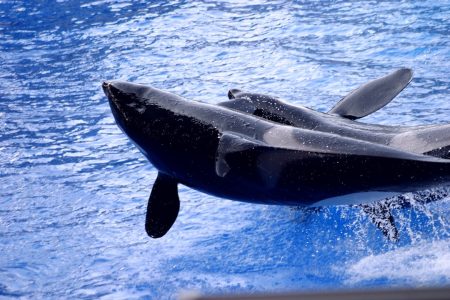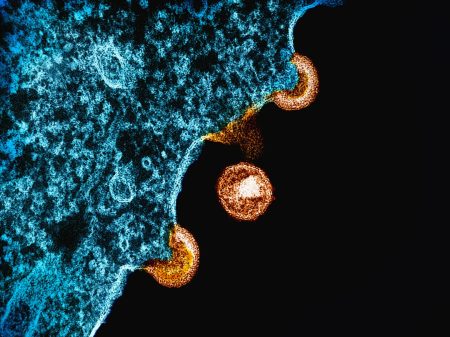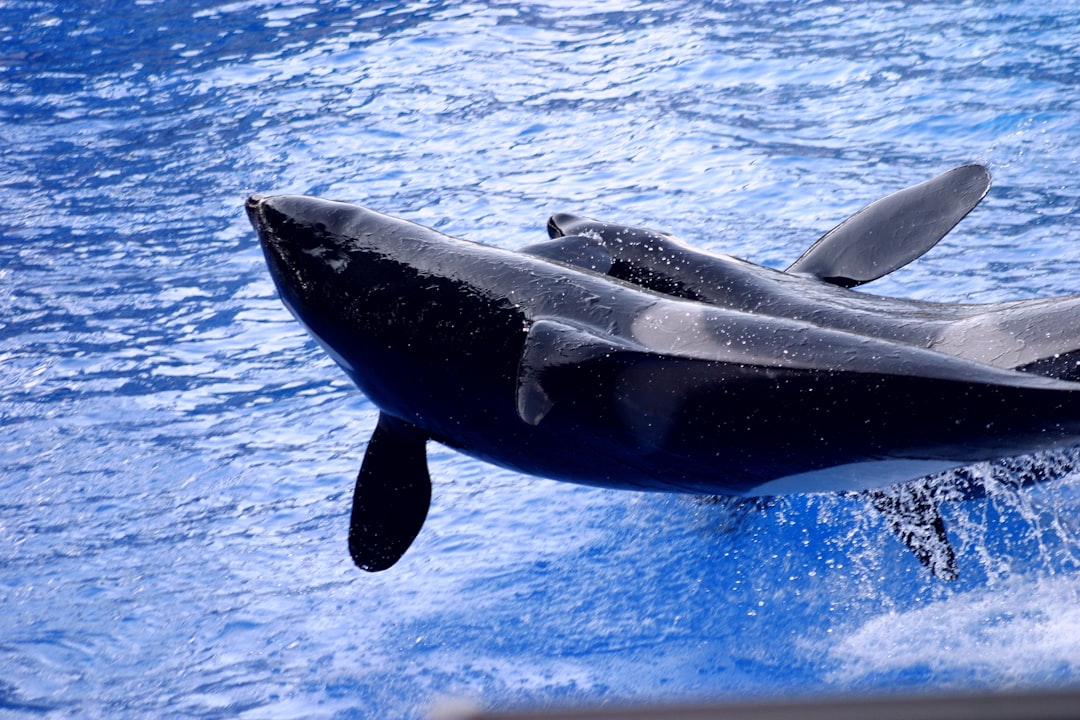
In a significant discovery announced in January 2026, an international team of scientists, led by researchers from Arizona State University, identified two previously unknown viruses residing within Caribbean pilot whales and orcas.
This groundbreaking find, detailed on ScienceDaily.com, expands our understanding of the hidden viral diversity thriving beneath the ocean’s surface. It prompts urgent questions about marine life health and the intricate ecological balance.
The oceans, vast and largely unexplored, represent a colossal reservoir of biological diversity, including an intricate world of microorganisms. This new revelation underscores how much remains to be learned about complex marine interactions.
The presence of these new whale viruses could have profound implications for cetacean health, broader marine biodiversity, and even the evolutionary history of these magnificent creatures.
Researchers utilized advanced genetic sequencing techniques on archived tissue samples from deceased whales. These samples were collected through long-standing collaborations with artisanal whalers on the island of St. Vincent.
This meticulous approach allowed scientists to peer into the genetic makeup of these animals, revealing viral agents that had evaded detection until now.
Unveiling the circovirus family in cetaceans
The study, published in the journal Virology, specifically identified seven complete circovirus genomes. Five came from short-finned pilot whales and two were found in orcas.
These represent two entirely novel species, named shofin circovirus and orcin circovirus. They are distinctly different from the only other known cetacean circovirus, the beaked whale circovirus, identified previously in the Pacific Ocean.
According to Arvind Varsani, a virologist at ASU’s School of Life Sciences and Biodesign Institute, and first author Matthew De Koch, genetic analysis highlighted unique features.
The viruses’ capsid proteins, their outer shells, showed unusually large surface-exposed loops. These structures were nearly twice the size found in porcine circovirus 2, a well-studied terrestrial counterpart.
This genetic distinctiveness suggests that circoviruses infecting whales form a specific evolutionary lineage. They potentially share ancient roots in cetacean history, indicating a long co-existence.
Questions of health and ecological impact
While the discovery of these new whale viruses is significant, their precise impact on whale health and their modes of transmission remain largely unknown. This uncertainty poses a challenge for marine biologists.
Previous research on the beaked whale circovirus hinted at a potential link to immunosuppression. This pattern is observed with circoviruses in some land mammals and birds, raising concerns for marine giants.
The scientific community now faces the critical task of understanding how these newly identified circoviruses spread among cetaceans. It’s also vital to determine whether they contribute to disease or stress in these populations.
Further genetic data from a wider array of species are essential to fully test the hypothesis of an ancient co-evolutionary relationship, as noted by the research team. This comprehensive approach is crucial.
This ongoing exploration is vital for marine conservation efforts globally, especially for species already facing threats from climate change, pollution, and human activity. Understanding pathogens is key to protecting vulnerable populations.
The identification of shofin circovirus and orcin circovirus represents more than just adding names to a list of pathogens; it opens a new chapter in marine virology. This field is rapidly expanding our knowledge of ocean life.
Future research will undoubtedly focus on monitoring these viruses, understanding their ecological roles, and assessing their potential long-term effects on the health and survival of whale and orca populations worldwide.
Protecting these complex ecosystems demands a comprehensive understanding of all their inhabitants, seen and unseen. This discovery highlights the constant need for vigilance and scientific inquiry into our planet’s hidden biological worlds.