A groundbreaking new simulation tool is shedding light on the perplexing phenomenon of dark matter halos collapse, a process where self-interacting dark matter (SIDM) triggers dramatic structural changes within these cosmic envelopes. This research, detailed by physicists from the Perimeter Institute, offers a clearer understanding of how galaxies are shaped and could even influence the formation of black holes.
For nearly a century, dark matter has remained one of the universe’s most profound mysteries, its invisible gravitational pull dictating the large-scale structure of the cosmos. While it cannot be observed directly, its influence is undeniable, guiding the evolution of galaxies embedded within vast dark matter halos.
Recent work by James Gurian and Simon May, published in Physical Review Letters, introduces a novel computational approach that bridges critical gaps in modeling how SIDM particles interact. This innovation allows scientists to explore particle behaviors previously deemed too complex or impractical to simulate accurately, as reported in a ScienceDaily.com report on January 19, 2026.
The enigmatic nature of self-interacting dark matter
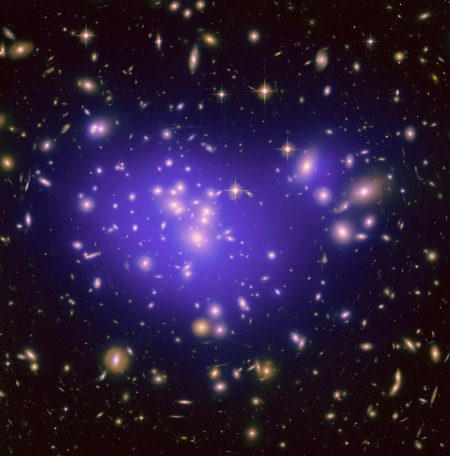
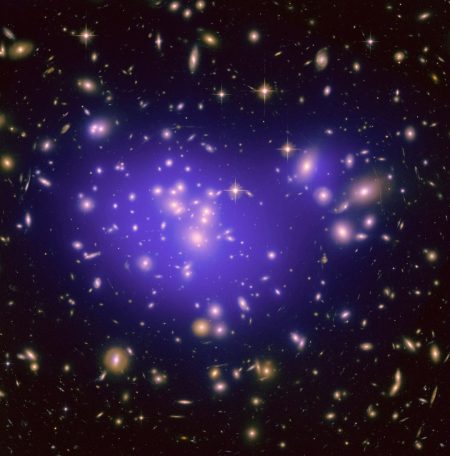
Self-interacting dark matter represents a theoretical form of dark matter where its particles collide with each other, yet remain aloof from baryonic matter – the ordinary protons, neutrons, and electrons that make up everything we can see. These elastic self-interactions play a crucial role in the dynamics of dark matter halos, the dense concentrations of dark matter cradling galaxies.
“Dark matter forms relatively diffuse clumps which are still much denser than the average density of the universe,” explains James Gurian, a Perimeter postdoctoral fellow and co-author of the study, referring to these halos where galaxies like the Milky Way reside. The energy transfer resulting from SIDM collisions can initiate a process known as gravothermal collapse.
This counterintuitive gravitational phenomenon causes systems to heat up as they lose energy, rather than cooling down. Gurian notes that SIDM “tends to transport energy outwards in these halos,” leading to the inner core becoming “really hot and dense as energy is transported outwards,” eventually driving it towards a dramatic collapse.
Simulating cosmic collapse: a new computational frontier
Accurately simulating SIDM structures has long presented a significant challenge for cosmologists. Existing methods typically excel only at extreme ends of the spectrum: either when dark matter is sparse and collisions are rare, or when it is exceptionally dense and interactions are frequent. The crucial intermediate range remained largely inaccessible.
To address this gap, Gurian and Simon May, now an ERC Preparative Fellow at Bielefeld University, developed KISS-SIDM, a new code that bridges these disparate simulation approaches. This software offers enhanced accuracy while drastically reducing computational demands, making complex simulations feasible even on a laptop.
“Before, if you wanted to check different parameters for self-interacting dark matter, you needed to either use this really simplified fluid model, or go to a cluster, which is computationally expensive,” Gurian states. The publicly available KISS-SIDM tool opens new avenues for researchers to explore the nuances of dark matter physics.
The increasing interest in interacting dark matter models stems from puzzling anomalies observed in galaxies that defy standard cosmological explanations. As Neal Dalal, a Perimeter Institute research faculty member, suggests, these observations “may require new physics in the dark sector.” The KISS-SIDM simulation tool represents a vital step forward, offering unprecedented precision and accessibility, which could soon unravel more secrets of the universe’s invisible scaffolding.