The United States’ clean energy sector experienced a remarkable boom in 2025, with solar, wind, and battery storage dominating new power additions to the grid, defying significant policy challenges. This robust US clean energy growth occurred even as President Trump’s administration actively sought to boost fossil fuels and halt renewable projects.
A year after President Trump took office, the resilience of the clean energy market became undeniably clear. Despite executive orders and legislative actions aimed at slowing its progress, the industry demonstrated an intrinsic momentum driven by economic viability and increasing demand.
The initial days of the administration saw a declaration of an “energy emergency,” followed by pauses in permitting for wind projects and a clear directive to prioritize traditional energy sources. These moves created uncertainty, but the underlying market forces proved more powerful than anticipated.
The unstoppable surge: data and projections for 2025-2026
Data from 2025 paints a compelling picture of US clean energy growth. Nearly all new electricity generating capacity added to the grid originated from solar, wind, and battery storage technologies. For instance, in September 2025, solar alone constituted a staggering 98% of new capacity, according to reports. Looking ahead, the U.S. Energy Information Administration (EIA) projects that all net new generating capacity in 2026 will come from renewable energy sources and batteries, signaling a sustained trajectory.
This expansion is not merely a statistical anomaly. It reflects a fundamental shift in energy economics, where renewables are increasingly cost-competitive and preferred by utilities and consumers alike. Jim Spencer, president and CEO of Exus Renewables North America, highlighted the “unabated” demand from data centers, stating, “As much as we can deliver, they’re buying it.” This strong market signal continues to drive investment and development across the sector.
Policy headwinds and industry resilience
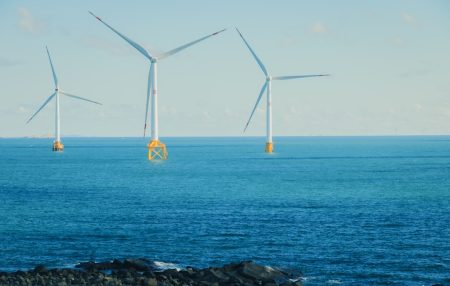
The path to this growth was far from smooth, marked by direct policy interventions from the Trump administration. On his first day, permitting for some wind projects was paused, and an offshore wind project faced a stop-work order just months later. The “One Big Beautiful Bill Act” phased out a longstanding tax credit for clean energy, and the EPA ended the “Solar for All” program, impacting low-income communities.
Additionally, a Department of Interior memo paused permitting for wind and solar on public lands, leading to the cancellation of a massive solar project in Nevada that could have powered two million homes. Grants for R&D in clean energy tech were also pulled, as reported by Fast Company in January 2026.
Despite these concerted efforts, the industry demonstrated remarkable resilience. States and developers often fought back, winning lawsuits that allowed projects to continue. Sean Gallagher, senior vice president of policy at the Solar Energy Industries Association (SEIA), acknowledged the challenges: “We saw some smaller companies go under because financing became challenging.” Yet, many clean energy developers remain fully booked with new projects, pushing forward with significant investments like Exus Renewables’ $400 million credit facility for new solar and wind projects.
While the policy uncertainty has put an estimated 117 gigawatts of solar and battery storage projects at risk due to federal permitting hurdles, the overall momentum of the US clean energy growth has been sustained by market demand and state-level commitments. The repeated stop-work orders on projects like Revolution Wind, though disruptive, were often overturned by preliminary injunctions, allowing construction to proceed.
The continued expansion of clean energy in the U.S. underscores a powerful market dynamic, where economic incentives and growing demand for sustainable power often supersede political directives. As 2026 unfolds, the industry is poised for further advancements, driven by innovation and the undeniable appeal of reliable, cleaner energy solutions for a diversifying grid. This trajectory suggests a future where clean energy remains a cornerstone of the nation’s power infrastructure, irrespective of short-term policy shifts.