Scientists sent common bacteria-infecting viruses to the International Space Station, revealing that microgravity profoundly alters their evolution and interaction dynamics. This surprising research on viruses in space evolution, detailed in a recent study, could revolutionize the fight against drug-resistant infections on Earth.
The findings, reported by ScienceDaily on January 18, 2026, highlight how the unique conditions of space push microbes to adapt in unexpected ways. Understanding these adaptations offers a novel perspective on microbial biology, moving beyond Earth-bound observations.
Such investigations are critical as the global health community grapples with the escalating crisis of antimicrobial resistance. Exploring how pathogens and their viral predators evolve in an extraterrestrial environment could uncover vulnerabilities previously unseen.
Microgravity reshapes viral and bacterial coevolution
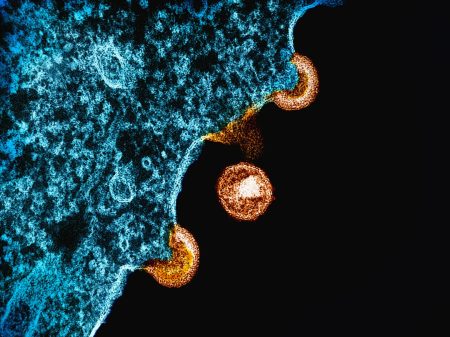
In a groundbreaking study published in PLOS Biology, researchers, including Phil Huss from the University of Wisconsin-Madison, observed how T7 phages interacted with E. coli in microgravity. While initial infection was delayed, both viruses and bacteria underwent distinct genetic mutations compared to their Earth counterparts. Space-station phages developed specific mutations that enhanced their infectivity and ability to bind to bacterial receptors.
Simultaneously, the E. coli accumulated mutations offering protection against phages and boosting their survival in near-weightless conditions. This evolutionary arms race, typically studied on Earth, takes on a new dimension in space, where altered physics of collisions and bacterial physiology create unique selective pressures. The University of Wisconsin-Madison team’s work underscores the profound impact of microgravity on fundamental biological processes.
Phil Huss explained, “Space fundamentally changes how phages and bacteria interact: infection is slowed, and both organisms evolve along a different trajectory than they do on Earth.” He emphasized that by studying these space-driven adaptations, they identified new biological insights, leading to more effective strategies against pathogens.
Engineering phages for terrestrial healthcare
The implications of these findings extend far beyond space exploration. The genetic changes observed in space-station phages, particularly in their receptor binding proteins, were linked to increased activity against E. coli strains resistant to T7 phages on Earth. This includes strains responsible for urinary tract infections, which are often challenging to treat with conventional antibiotics.
By understanding the specific mutations that enhance phage infectivity in microgravity, scientists can potentially engineer phages with superior activity against drug-resistant bacteria. This opens a promising avenue for phage therapy, an alternative approach to antibiotics that uses viruses to target and destroy bacterial pathogens. The research, supported in part by the Defense Threat Reduction Agency, provides a blueprint for leveraging extraterrestrial biology to solve pressing terrestrial health challenges.
This pioneering research underscores the value of the International Space Station as a unique laboratory for biological discovery. The insights gained from observing viruses in space evolution could accelerate the development of innovative treatments, offering hope in the ongoing battle against antibiotic-resistant infections and reshaping our understanding of microbial adaptation.