Around 445 million years ago, Earth underwent a dramatic transformation that reshaped the future of life. The Late Ordovician Mass Extinction saw a rapid climate collapse devastate ocean ecosystems, as massive glaciers spread and shallow seas dried out. This catastrophic event, wiping out roughly 85% of all marine species, paradoxically set the stage for an explosion of vertebrate diversity and the rise of jawed animals.
The Ordovician period, from 486 to 443 million years ago, presented a world vastly different from today. Gondwana dominated the Southern Hemisphere, surrounded by warm, shallow seas. A greenhouse climate, with no ice at the poles, fostered rich marine ecosystems bursting with strange and diverse life forms, including lamprey-like conodonts, trilobites, and enormous nautiloids. Early ancestors of jawed vertebrates, or gnathostomes, were then rare and unremarkable, as detailed by organizations like The Geological Society of America.
This vibrant prehistoric world faced an abrupt end. The climate rapidly shifted from greenhouse to icehouse, leading to the Late Ordovician Mass Extinction (LOME). This devastating period saw massive glaciers lock up water, radically altering ocean chemistry and ultimately wiping out most life on the planet. Yet, from this devastation emerged an unexpected outcome that would define future evolution.
The two waves of the Late Ordovician Mass Extinction
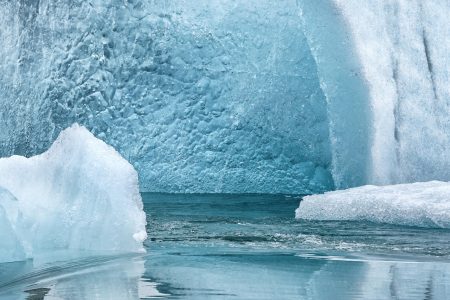
While the ultimate causes remain debated, the fossil record clearly distinguishes a “before and after” for the Late Ordovician Mass Extinction, as noted by Professor Lauren Sallan of the Macroevolution Unit at OIST. This extinction unfolded in two distinct phases. First, Earth transitioned rapidly from a warm greenhouse state to a cold icehouse climate. Expanding glaciers across Gondwana drained shallow seas, obliterating crucial marine habitats.
Several million years later, just as ecosystems began a slow recovery, the climate reversed. Melting ice caps flooded the oceans with warmer water, rich in sulfur and critically low in oxygen. This second wave overwhelmed species that had adapted to colder conditions, leading to further widespread extinctions. The dual impact left marine life reeling and ecosystems severely disrupted.
How jawed vertebrates gained a lasting advantage
During these repeated environmental crises, surviving vertebrates were largely confined to refugia—isolated pockets of biodiversity separated by deep ocean barriers. Within these refuges, jawed vertebrates appear to have held a crucial advantage, according to a new study published in Science Advances. Scientists from the Okinawa Institute of Science and Technology (OIST) revealed how this event set the stage for an explosion of vertebrate diversity.
Professor Sallan explains, “We have demonstrated that jawed fishes only became dominant because this event happened.” The research team, led by first author Wahei Hagiwara, an OIST PhD student, meticulously assembled an extensive fossil database spanning two centuries of late Ordovician and early Silurian paleontology to understand this shift. This massive undertaking reconstructed ecosystems within these refugia.
Their analysis revealed a steady, striking rise in jawed vertebrate diversity following the extinction pulses. The isolation provided by refugia, combined with the extreme environmental pressures, acted as a powerful evolutionary filter. While competitors faded, jawed vertebrates diversified over millions of years, gaining an unexpected edge that reshaped life on Earth forever. As reported by ScienceDaily.com on January 11, 2026, this ancient reset helped determine which creatures would dominate the planet.
The Late Ordovician Mass Extinction stands as a stark reminder of Earth’s volatile past and the profound impact of climate change on biodiversity. While catastrophic for most marine life, this ancient reset was a pivotal moment. It illustrates how extreme environmental pressures can unexpectedly drive evolutionary pathways, leading to the dominance of entirely new forms. Understanding such deep-time events offers crucial insights into the resilience and adaptability of life, even in the face of planetary upheaval.