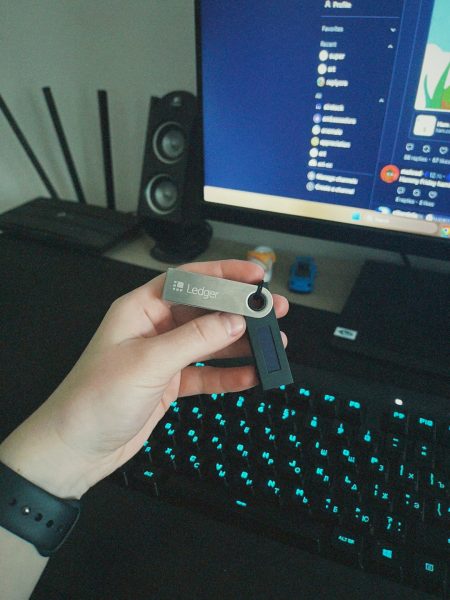
Andreessen Horowitz’s crypto arm recently highlighted that privacy will become the primary competitive advantage in the crypto space by 2026, shifting focus from mere decentralization to robust user data protection. This foresight from a major venture capital firm underscores a pivotal change in the blockchain industry’s strategic priorities, signaling a future where anonymity and control over personal data are paramount.
This prediction emerges as the crypto landscape matures, facing increased scrutiny from regulators and a growing demand from users for more secure and confidential transactions. The initial allure of transparency on public blockchains is now tempered by concerns over surveillance and the potential misuse of financial data, pushing developers and investors towards privacy-enhancing technologies. The shift reflects a broader societal trend valuing digital sovereignty.
The emphasis on robust crypto privacy solutions is not merely a technical challenge but a strategic imperative, as noted in recent industry discussions, including observations from The Block. Firms failing to integrate advanced privacy features might find themselves at a significant disadvantage, unable to attract users who prioritize discretion and data security. This creates a fertile ground for innovation in zero-knowledge proofs and other cryptographic techniques.
The evolving landscape of crypto privacy
The pursuit of enhanced privacy in blockchain is driving significant innovation, particularly in areas like zero-knowledge proofs (ZKPs), secure multi-party computation (MPC), and fully homomorphic encryption (FHE). These technologies allow transactions or computations to occur without revealing underlying data, addressing a critical need for both individual users and institutional players. According to a 2024 report by CoinDesk Research, investments in privacy-focused protocols surged by 45% year-over-year.
Many projects are now integrating privacy-by-design principles, moving beyond basic obfuscation to create truly anonymous environments. For instance, new layer-1 and layer-2 solutions are emerging with built-in privacy features, aiming to offer scalable and confidential transactions. These advancements are crucial for sectors like decentralized finance (DeFi) and enterprise blockchain, where data sensitivity is paramount and regulatory compliance often demands confidentiality.
Building the next generation of Web3 infrastructure
The push for crypto privacy is fundamentally reshaping how Web3 infrastructure is being built and funded. Venture capitalists, including a16z, are increasingly channeling capital into startups focused on privacy-preserving tools and protocols, anticipating their long-term value. This includes a renewed interest in privacy coins, alongside the development of private smart contract platforms that can execute complex logic without exposing sensitive information.
Dr. Elena Petrova, a blockchain security researcher at the MIT Blockchain Lab, states: “The next wave of killer applications in Web3 will undoubtedly be those that seamlessly blend functionality with robust privacy guarantees.” This sentiment highlights that usability and privacy must go hand-in-hand for widespread adoption. Developers are challenged to create user-friendly interfaces that abstract away the complexity of cryptographic privacy mechanisms, making them accessible to a broader audience.
As the crypto industry moves towards 2026, the competitive landscape will increasingly favor platforms and applications that can offer superior privacy without compromising on performance or user experience. The strategic emphasis on crypto privacy by influential firms like Andreessen Horowitz signals a clear direction for future development, positioning data protection as a core differentiator and a cornerstone of the next generation of digital assets and decentralized services.