Spot Bitcoin ETFs registered their most challenging week since February 2025, witnessing a substantial $1.33 billion in net outflows as investors pulled back from digital asset exposures. This marked decline, reported by financial data outlets like The Block, reflects a broader shift in market sentiment and a reassessment of risk within the cryptocurrency space. The unexpected withdrawal has prompted analysts to scrutinize the factors driving this significant capital reallocation.
The recent downturn comes after a period of considerable excitement following the approval of these investment vehicles, which initially drew billions in new capital. Many had anticipated sustained growth, viewing spot Bitcoin ETFs as a gateway for institutional and retail investors to gain exposure to Bitcoin without directly holding the asset. However, the current figures suggest a more volatile reality for these instruments, challenging previous bullish projections.
This reversal highlights the inherent volatility and speculative nature still prevalent in the crypto market, even with regulated investment products. The substantial outflows indicate that while ETFs provide accessibility, they do not insulate investors from broader market corrections or shifts in confidence. Understanding the underlying drivers of this capital flight is crucial for assessing the future trajectory of digital asset investments.
Driving forces behind the recent capital flight
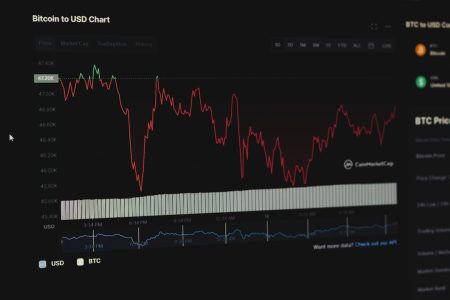
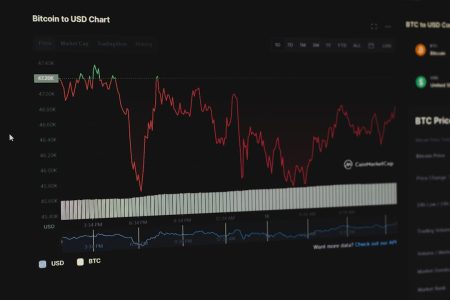
Several factors likely contributed to the significant withdrawal from Spot Bitcoin ETFs. A primary driver appears to be profit-taking by early investors, particularly as Bitcoin’s price experienced fluctuations after reaching recent highs. Data from CoinDesk’s market analysis showed a period of consolidation and slight corrections, which often triggers investors to secure gains, especially in volatile assets.
Macroeconomic concerns also play a role. Rising inflation expectations and the potential for tighter monetary policies from central banks, such as the Federal Reserve, can make riskier assets less attractive. “When traditional markets face uncertainty, speculative assets like cryptocurrencies and their derivatives often feel the impact first,” notes Dr. Elena Petrova, a senior economist at the International Monetary Fund.
Furthermore, competition among the newly launched Spot Bitcoin ETFs might be intensifying, leading to a natural rebalancing of portfolios. While initial inflows were distributed across various products, some investors might be consolidating positions into preferred funds or exiting the market altogether if their initial investment thesis no longer holds. The sheer number of options could contribute to a more dynamic, and at times, chaotic flow of capital.
Implications for the broader crypto market
The substantial outflows from Spot Bitcoin ETFs carry significant implications for the broader cryptocurrency ecosystem. A prolonged period of net outflows could exert downward pressure on Bitcoin’s price, affecting the entire digital asset market given Bitcoin’s dominance. Investor confidence, a crucial element in crypto valuations, could also be tested.
Despite the recent setback, the long-term view for institutional adoption of digital assets through ETFs remains robust for many analysts. “This is a natural market correction, not a fundamental rejection of Bitcoin as an asset class,” states Michael Saylor, Executive Chairman of MicroStrategy, in a recent interview with Bloomberg. He suggests that such volatility is inherent in emerging markets and that sophisticated investors understand this dynamic.
The current situation serves as a critical stress test for the Spot Bitcoin ETF market. It highlights that while these products offer a regulated pathway to crypto exposure, they are not immune to market cycles, investor psychology, or broader economic headwinds. The industry will closely watch subsequent weeks to determine if this was an isolated correction or the beginning of a more sustained trend.
The performance of these ETFs will continue to be a key indicator of institutional appetite for Bitcoin. While the recent outflows present a challenge, they also offer an opportunity for the market to mature, differentiate between genuine long-term interest and short-term speculation, and adapt to evolving investor demands. The journey of mainstream crypto integration remains complex, but these instruments are undeniably central to its progression.